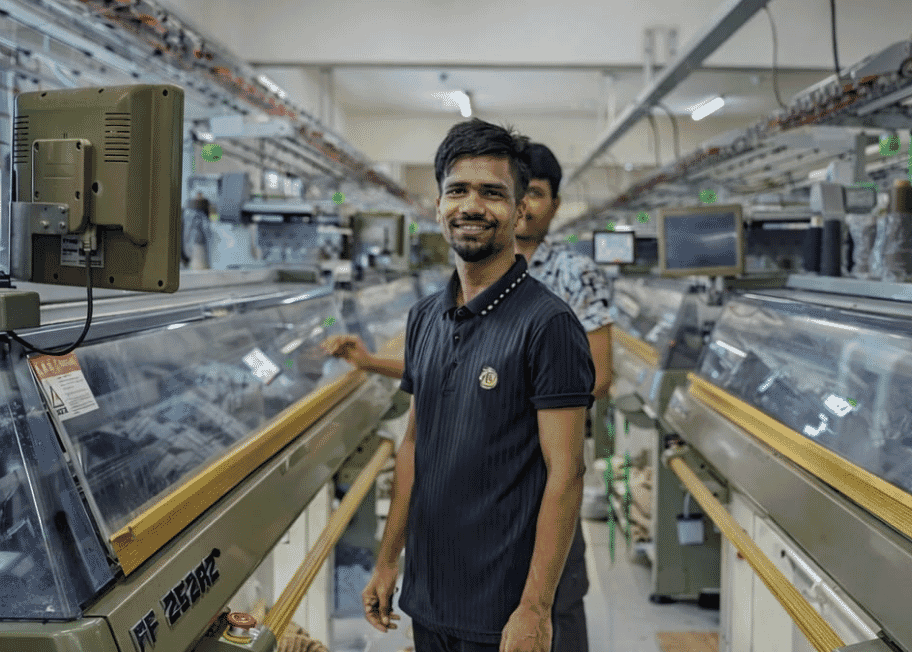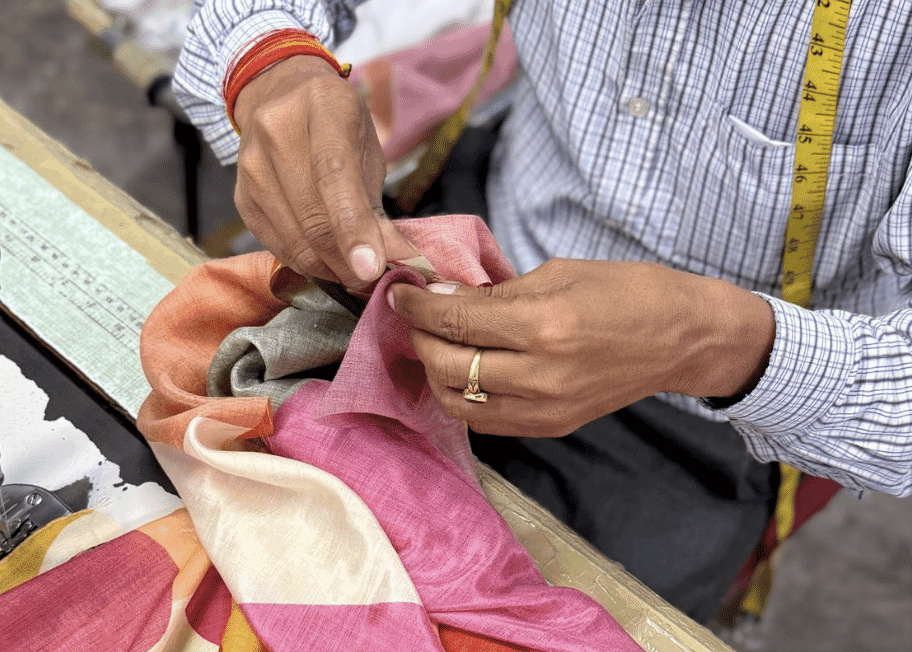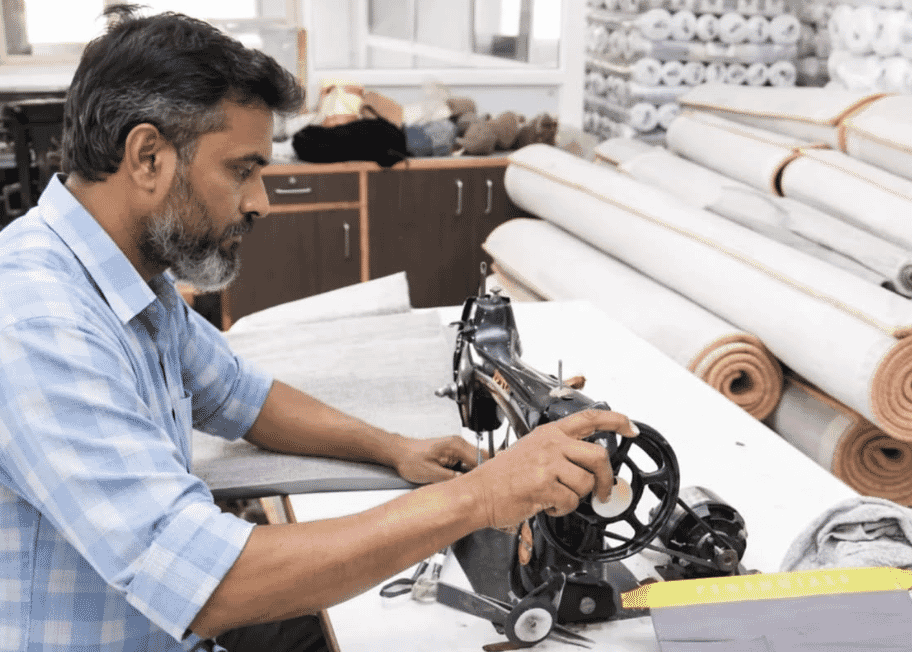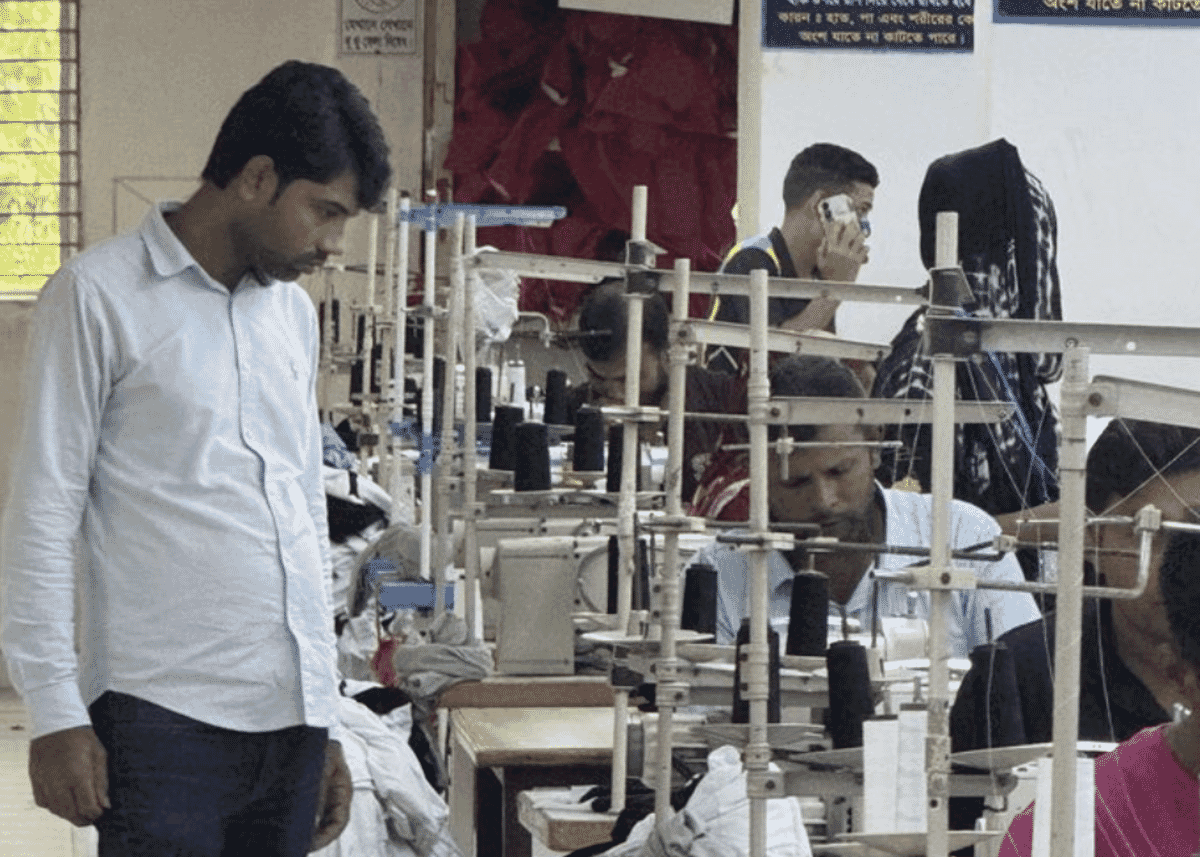
Towel manufacturers in India work to a specification, not to a photograph. Two towels that look identical on a shelf can differ widely in grams per square metre, by cotton staple length and by whether the loops were combed. Those differences are the entire product.
India can make a towel from its own cotton chain: the fibre, the spinning, the weaving, the dyeing and the making-up. Towels, though, come from home textile centres rather than from the garment clusters most clothing brands know, and that changes where you look.
This guide covers where towels are made in India, what GSM actually means and which cotton matters. It sets out what drives a towel minimum and a towel price, how to write a towel specification, how US duty works on cotton towels, and where towel programmes go wrong.
Note: India Clothing Factory is a group of documented clothing factories in India, producing garments for brands from 100 pieces per style. Our group makes clothing, not towels: this is an editorial guide to India's towel centres, and we do not place towel production. We name no towel makers and recommend none.
Key takeaways
- Towel and home textile centres include Solapur, Karur and Panipat. They are home textile centres, not apparel clusters.
- GSM is the specification. It is mass per unit area, a number a mill can be held to.
- Long-staple combed cotton gives a towel that sheds less and stays absorbent longer.
- Minimums are set by loom set-up and the dye lot, not by the making-up. Ask each mill for its number.
- New towels often carry softening finishes that reduce absorbency. Test after washing, not on delivery.
- GOTS reported 17,800 certified facilities in 95 countries in 2025. Check a supplier's certificate in the GOTS database.
- Cotton terry towels fall under HTS 6302.60.00 (9.1%), plus the 10 percent Section 301 tariff on goods of India since 24 July 2026.
Where Are Towel Manufacturers in India Located?
In home textile centres that many apparel buyers never visit, because home textiles is a separate trade with separate suppliers. A towel enquiry sent to a garment cluster can come back as a quote from somebody buying the product in.
Solapur, Maharashtra is the name most tied to terry towels: "Solapur Terry Towel" is a registered Geographical Indication in India (GI Registry, application no. 9). It is the obvious place to start a terry programme.
Karur, Tamil Nadu is recognised by India's Directorate General of Foreign Trade as a Town of Export Excellence for handlooms (DGFT, Appendix 1B), and it is a home textile centre: kitchen linen and other made-ups as well as terry.
Panipat, Haryana is listed by the same DGFT appendix for woollen blankets and for carpets, other textile floor coverings and bed linen. Towels are made there too, but ask whether a Panipat supplier weaves terry itself or buys it in.
Citation Capsule: Indian towels come from home textile centres rather than apparel clusters. Solapur in Maharashtra holds the registered Geographical Indication "Solapur Terry Towel"; Karur in Tamil Nadu is a DGFT Town of Export Excellence for handlooms; Panipat in Haryana is listed by DGFT for blankets, floor coverings and bed linen. Each has its own supplier base, separate from the garment clusters.
Related reading: Textile manufacturers in India · Fabric manufacturers in India · The Indian textile industry
What Kinds of Towel Does India Produce?
The full range, and the differences between them are more technical than they appear. Terry construction, where loops are woven on the surface, is the usual bath towel construction, but within it the variation is considerable. Ask for the GSM and the pile construction rather than the product name. GSM is mass per unit area, which has a published test method behind it (ASTM D3776), so it is a number a mill can be held to rather than a description.
| Type | Weight, relative | What to specify |
|---|---|---|
| Bath towel | Light to heavy | GSM with a tolerance, size, pile and hem |
| Hand towel and face cloth | Usually the same weight as the bath towel | The same GSM basis as the bath towel |
| Kitchen and tea towel | Lighter | Terry or flat woven, and the weave |
| Waffle and honeycomb | Lighter | Flat structure, quick drying |
| Beach towel | Mid | Velour or printed face, print method |
Our editorial guide. We give no GSM bands because mills use different conventions; ask each mill for its GSM and its measurement basis.
Notice that heavier is not automatically better. A heavier towel holds more water and takes longer to dry, which suits a retail bathroom better than a gym or a hotel.
Citation Capsule: Indian towel production covers bath and hand towels, kitchen and tea towels, waffle and honeycomb flat structures, and beach towels. GSM, mass per unit area under ASTM D3776, is the number to specify with a tolerance; heavier towels absorb more and dry more slowly, which suits retail more than institutional use.
Why Is GSM the Whole Specification?
Because it determines how much cotton is in the towel, and much of what a customer notices about a towel follows from that: absorbency, drying time, drape, perceived quality and price.
It is also a number that is often missing from a first enquiry. A brand asking for a good quality bath towel has asked for nothing measurable, and the quote that comes back will be built on whatever weight the mill assumed.
Specify GSM with a tolerance and ask for it to be verified on bulk. Towel weight is straightforward to check. A towel delivered 8 percent under specification is 8 percent less cotton, and the difference is invisible to the eye.
Which Cotton Makes a Good Towel?
Long-staple, combed, and spun at the right count for the loop. Staple length is the length of the individual cotton fibre, and longer fibres produce yarn with fewer exposed ends, which means a towel that sheds less, pills less and stays absorbent longer.
Combing removes the short fibres before spinning. A combed cotton towel costs more and generally holds its performance across more washes than a carded one.
The third variable is whether the loops are twisted or zero-twist. Zero-twist yarn generally gives a softer, more absorbent towel; twisted yarn is generally more durable. Neither is better, and the choice should follow the use rather than the sample-room impression.
Citation Capsule: Towel quality is determined by cotton staple length, whether the yarn is combed, and loop twist. Long-staple combed cotton produces fewer exposed fibre ends, reducing shedding and pilling and maintaining absorbency across more wash cycles. Zero-twist yarn yields a softer and more absorbent towel while twisted yarn is more durable, so the choice should follow end use rather than initial handle.
What Construction Choices Matter?
Several, and each is a decision somebody makes whether or not you make it: border style, hem construction, edge finishing, pile and whether the towel is dobby, jacquard or plain terry. Specify them or accept whatever runs fastest on the loom.
Construction decisions to specify
- Border type: plain, dobby, jacquard or velour, each with a different cost and look
- Hem construction: double-turned and stitched, with stitches per inch specified
- Selvedge and edge finish, since edges and hems are common failure points
- Loop density and pile height, which affect feel independently of GSM
- Whether the towel is sheared, which changes handle and shedding behaviour
Hem and edge construction are where towels often fail in use. They cost little to specify and they take the strain of repeated laundering.
What Minimums Apply to Towels?
Ask each mill, because the number is set upstream of the making-up. A towel is a woven product, so the loom has to be set for your construction and the dye bath filled for your shade, and neither cost falls with a smaller order.
| What you are buying | What sets the minimum |
|---|---|
| Stock towel, existing design and colour | Nothing upstream: it exists |
| Stock construction, your colour | The dye lot |
| Your border design, dobby | Loom set-up for the border |
| Jacquard border or woven logo | Jacquard set-up |
| Certified organic cotton | Certified yarn availability plus the dye lot |
| Printed beach towel | Print method and screen set-up |
Our editorial guide to what drives a towel minimum. We give no quantities: ask each mill for its minimum per design and colour.
The simplest option for a small programme is a stock construction in a stock colour with your own woven or printed label. That gets you a branded product without committing to a loom set-up.
Citation Capsule: Towel minimums in India are set by loom configuration and dye-lot size rather than by making-up. Stock constructions in existing colours need no upstream set-up, a custom colour needs a dye lot, and a jacquard woven border needs a jacquard set-up, so each step away from stock raises the minimum. Ask each mill for its number per design and colour.
Skip the search: the India factory directory ($49) lists documented factories by category, city and capability, with the verification status of each. One-time payment, instant download.
What Do Towels Cost?
Largely by weight, because cotton content is a large part of the cost. A towel quote that seems low against a comparable product is often lighter, and the difference will be in a specification field somebody left open. Conversion from GSM to a per-piece price needs the finished size. A 70 by 140 centimetre bath towel at 500 grams per square metre contains roughly 490 grams of cotton before hemming, and at the yarn price of the day that content sets a floor below which an honest quote cannot go.
That arithmetic is the most useful check in the category. Work out the cotton content from size and GSM, compare it against the quote, and any price that implies cotton below market is telling you the GSM is not what was stated. The same arithmetic applies to fabric bought by the metre.
What Should You Test?
Four things, and the timing of one of them matters most. New towels are often treated with softening finishes that make them feel good and can reduce absorbency until they wash out. Test absorbency after a few washes rather than on the delivered product. A towel that beads water on first use may simply be finished; a towel that still beads after several washes has a genuine problem.
Weight, shrinkage and colour fastness are the other three. Terry can shrink more than flat fabric because the loops contract, so a towel that arrives at its stated size before washing may be smaller afterwards.
Towel testing that actually predicts the product
- Absorbency after a few washes, not on delivery, because finishes can mask it
- GSM on bulk, verified against the specified tolerance
- Shrinkage after several washes, measured against the stated size
- Colour fastness to washing and rubbing, tested at the laundry temperature used
- Shedding and lint over the first washes
The absorbency timing is the one that changes conclusions: judged on delivery, the finish can make a good towel look poor and a poor one look good.
Can You Buy Certified Organic Towels?
Yes. Global Standard reported 17,800 GOTS-certified facilities worldwide across 95 countries in 2025, up 15.3 percent year on year (Global Standard, 2025). India has GOTS-certified suppliers in the cotton chain a towel runs through; check a supplier in the GOTS certified suppliers database rather than accepting a logo.
The requirements are the same as in apparel. Every stage has to be within the certified scope, including dyeing. The claim requires a transaction certificate covering your specific lot, rather than a supplier certificate covering the company (Global Organic Textile Standard).
Expect a premium and a higher minimum. Certified organic yarn is dearer and held in fewer counts, which usually raises the workable minimum against a conventional towel of the same construction.
Citation Capsule: Certified organic towels are available from India's GOTS-certified cotton chain; Global Standard reported 17,800 GOTS-certified facilities across 95 countries in 2025. Certification must cover every processing stage including dyeing, and a claim requires a transaction certificate for the specific lot. Certified yarn usually raises the workable minimum against a conventional towel of the same construction.
Where Towel Programmes Fail
Four failures come up again and again: GSM below specification, absorbency judged on delivery before the finish has washed off, shrinkage beyond the size claim, and edge and hem failure.
GSM below specification. Invisible to the eye, straightforward to measure, and a quiet way for a towel programme to lose value. Weigh the bulk.
Absorbency judged on delivery. Covered above, and it causes both false rejections and false acceptances.
Shrinkage beyond the size claim. A towel sold at one size that measures smaller after washing is a labelling problem as well as a quality one.
Edge and hem failure. Towels often fail at the hem before the pile wears out. Specify the hem construction and the stitches per inch, and inspect it specifically.
What Changes When You Import Towels?
The tariff classification, principally. Home textiles sit in different tariff lines from apparel: cotton terry towels fall under HTS 6302.60.00, toilet linen and kitchen linen of terry toweling of cotton, at a general rate of 9.1 percent (USITC, checked 31 October 2026). Since 24 July 2026, a 10 percent Section 301 tariff applies to goods of India generally, unless a product is exempted (USTR, July 2026). It sits on top of the ordinary rate. The 18 percent reciprocal tariff announced in the joint statement of 6 February 2026 (The White House, 2026) no longer applies: it rested on IEEPA, which the Supreme Court held on 20 February 2026 does not authorise tariffs (Supreme Court of the United States). Confirm the classification for your exact product rather than carrying across a figure from apparel.
Freight behaves differently too. Towels are dense relative to garments, so a container holds more weight of towels than of most clothing. Our guide to shipping from India to the USA covers the freight options.
How Do You Choose Between Towel Manufacturers in India?
Go to a home textile centre, such as Solapur, Karur or Panipat depending on the product, rather than to a garment cluster where a towel quote may come from a reseller. Specify GSM with a tolerance, name the cotton and the combing, and state the hem construction. Those three lines turn a vague enquiry into a comparable one.
And test absorbency after a few washes, not on delivery. It is the piece of advice that changes the most decisions in this category.
Frequently Asked Questions
Where are towels made in India?
In home textile centres rather than garment clusters. Solapur in Maharashtra holds the registered Geographical Indication Solapur Terry Towel, Karur in Tamil Nadu is a DGFT Town of Export Excellence for handlooms, and Panipat in Haryana is listed by DGFT for blankets, floor coverings and bed linen. Each has its own supplier base.
What GSM should a bath towel be?
It depends on the use. Heavier towels hold more water and dry more slowly, which suits a retail bathroom; lighter towels dry faster, which suits gyms and hotels. Mills use different GSM conventions, so specify GSM with a tolerance, confirm the measurement basis (ASTM D3776 covers mass per unit area) and weigh the bulk.
What is the minimum order for towels in India?
It varies by mill, so ask each one. The minimum is set by loom set-up and dye-lot size rather than by making-up: a stock towel in an existing colour needs no upstream set-up, a custom colour needs a dye lot, and a jacquard woven border needs a jacquard set-up, so each step away from stock raises the number.
Why do new towels not absorb water?
Often because they are treated with softening finishes that improve the initial handle and can reduce absorbency until they wash out. Test absorbency after a few washes rather than on delivery. A towel that still beads water after several washes has a genuine problem.
Can I buy certified organic cotton towels from India?
Yes, from GOTS-certified suppliers; check them in the GOTS certified suppliers database. Certification must cover every processing stage including dyeing, and the claim requires a transaction certificate for your specific lot. Expect a price premium and a higher minimum than the conventional equivalent.
Our group makes garments, not towels. If your range includes clothing, tell us the garment and the quantity: our team replies within 24 hours, then we place it with the factory in our group built for it, from 100 pieces per style. No commissions. No markups. The factory bills you directly.
Get in contact Download the directory ($49)Need a tech pack? Get a factory-ready single-style tech pack for $79. See what's included.
Editorial note: all company names, certification marks and trademarks referenced here are the property of their respective owners. Our group makes clothing, not towels, and names no towel makers. This guide gives no towel prices, GSM bands or minimum quantities; tables are our editorial guides. Duty figures are as USITC and USTR state them (checked 31 October 2026) and the 2026 position is still moving. Always verify your own HTS classification and confirm terms directly with the mill before committing.
Sources
- Global Organic Textile Standard: public database of GOTS-certified suppliers.
- Geographical Indications Registry, Government of India: application no. 9, Solapur Terry Towel, status registered.
- Directorate General of Foreign Trade, Appendix 1B: Towns of Export Excellence (Karur: handlooms; Panipat: woollen blanket, and carpets, other textile floor coverings and bed linen).
- USITC Harmonized Tariff Schedule: 6302.60.00, toilet and kitchen linen of terry toweling of cotton, general rate 9.1%, and 9903.05.44 (+10% on products of India); checked 31 October 2026.
- Global Standard: Annual Report 2025, reporting 17,800 GOTS-certified facilities across 95 countries.
- The White House: United States-India Joint Statement of 6 February 2026, announcing the 18 percent reciprocal tariff under Executive Order 14257, an IEEPA order.
- Supreme Court of the United States: Learning Resources, Inc. v. Trump, decided 20 February 2026 (IEEPA does not authorise tariffs).
- Office of the United States Trade Representative: Notice of actions in the forced labor Section 301 investigations, July 2026 (10 percent on goods of India from 24 July 2026).
- ASTM International: D3776/D3776M: test methods for mass per unit area, the published basis of a GSM specification.