Textile manufacturers in India and clothing manufacturers are different businesses, and conflating them is why so many sourcing enquiries land in the wrong inbox. A textile manufacturer makes yarn, fabric or finished textile products. A clothing manufacturer cuts and sews garments from fabric somebody else made. In India these are usually separate companies in separate cities.
The exception is the composite mill, which spins, weaves, processes and sometimes sews under one roof. There are far fewer of these than the industry's reputation suggests, and they behave very differently from the fragmented majority.
This guide maps the segments of Indian textile manufacturing, explains which one you actually need, covers where each is concentrated, what the certification landscape looks like, and how to approach a mill rather than a garment factory.
Note: India Clothing Factory is a group of documented clothing factories in India, producing for brands from 100 units. Ranges in this guide are given as market ranges, not as quotes from a specific factory. We confirm exact MOQ and price with the factory when you send a brief.
Key takeaways
- Indian textile manufacturing splits into six segments: spinning, weaving, knitting, processing, technical textiles and home textiles.
- A composite mill does several of those under one roof and is the exception, not the rule.
- The sector directly employs more than 45 million people and is overwhelmingly composed of small and medium enterprises.
- India is one of the largest bases of GOTS-certified facilities, and that certification sits in the cotton chain rather than the synthetic one.
- A mill sells by the metre, the kilo or the beam. If you want garments, you are in the wrong conversation.
- Mill minimums are set by loom set-up and dye bath capacity, which is why they sit far above a sewing line's.
- Home textiles is one of India's strongest export segments and behaves differently from apparel fabric.
What Is a Textile Manufacturer, and Do You Need One?
A company that converts fibre into yarn, yarn into fabric, or fabric into a finished textile product that is not a garment. If your product is a shirt, you need a garment manufacturer who buys from one of these. If your product is the cloth itself, or a bedsheet, towel or technical fabric, the mill is your counterparty.
The distinction matters commercially because the two quote in different units. A mill quotes per metre, per kilogram or per beam. A garment factory quotes per piece. Asking a spinning mill for a price per T-shirt produces either confusion or a subcontracted answer with a margin attached.
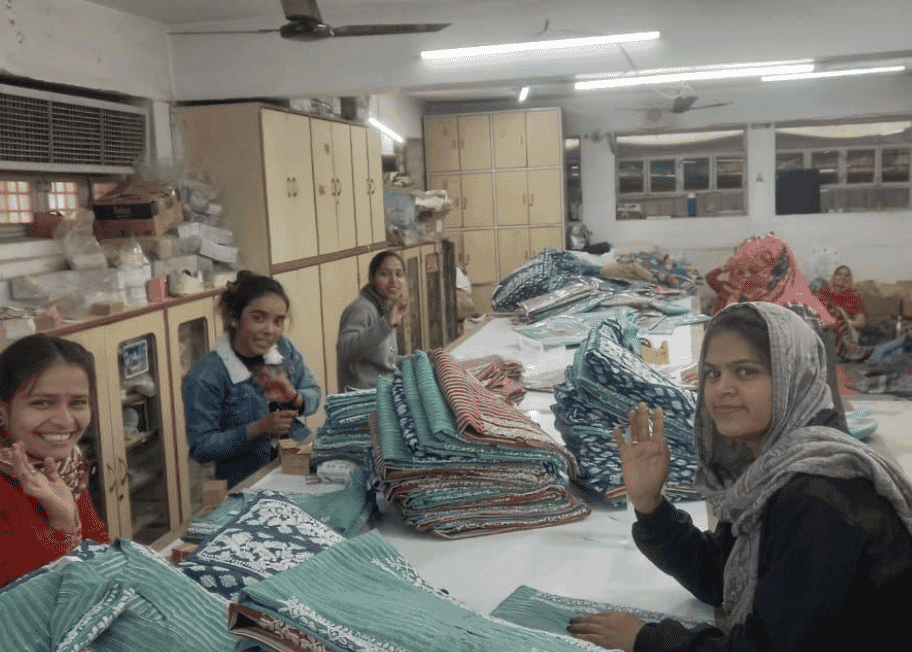
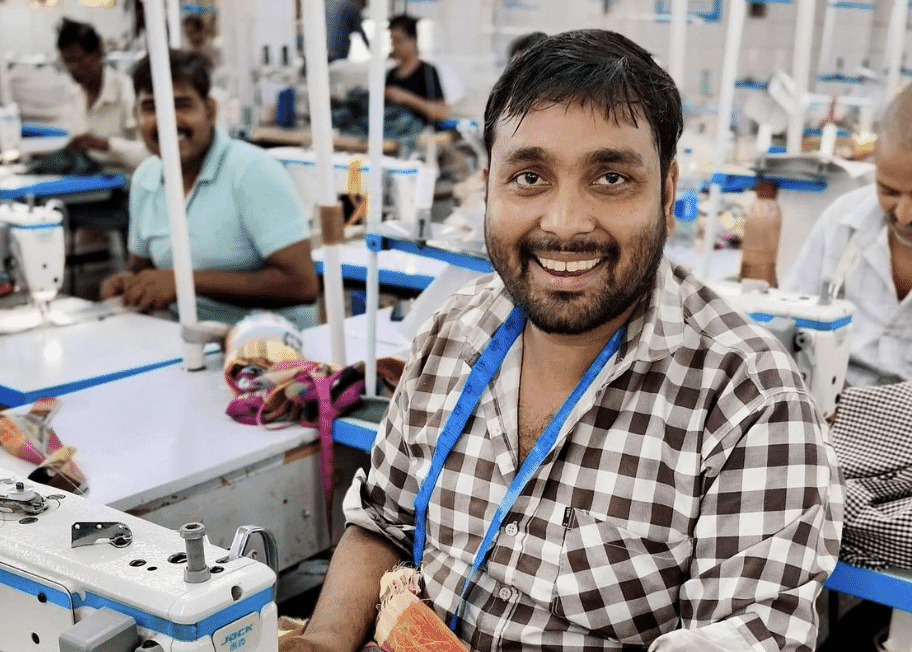
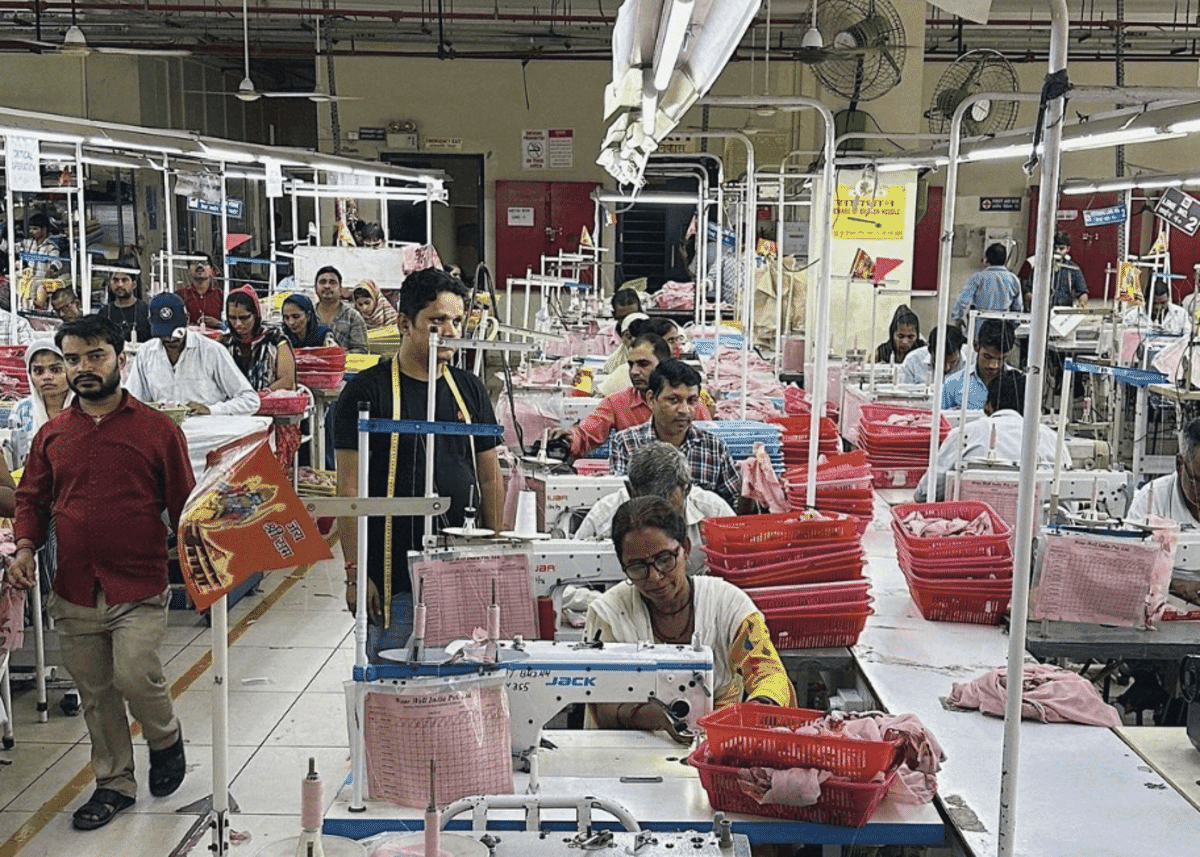
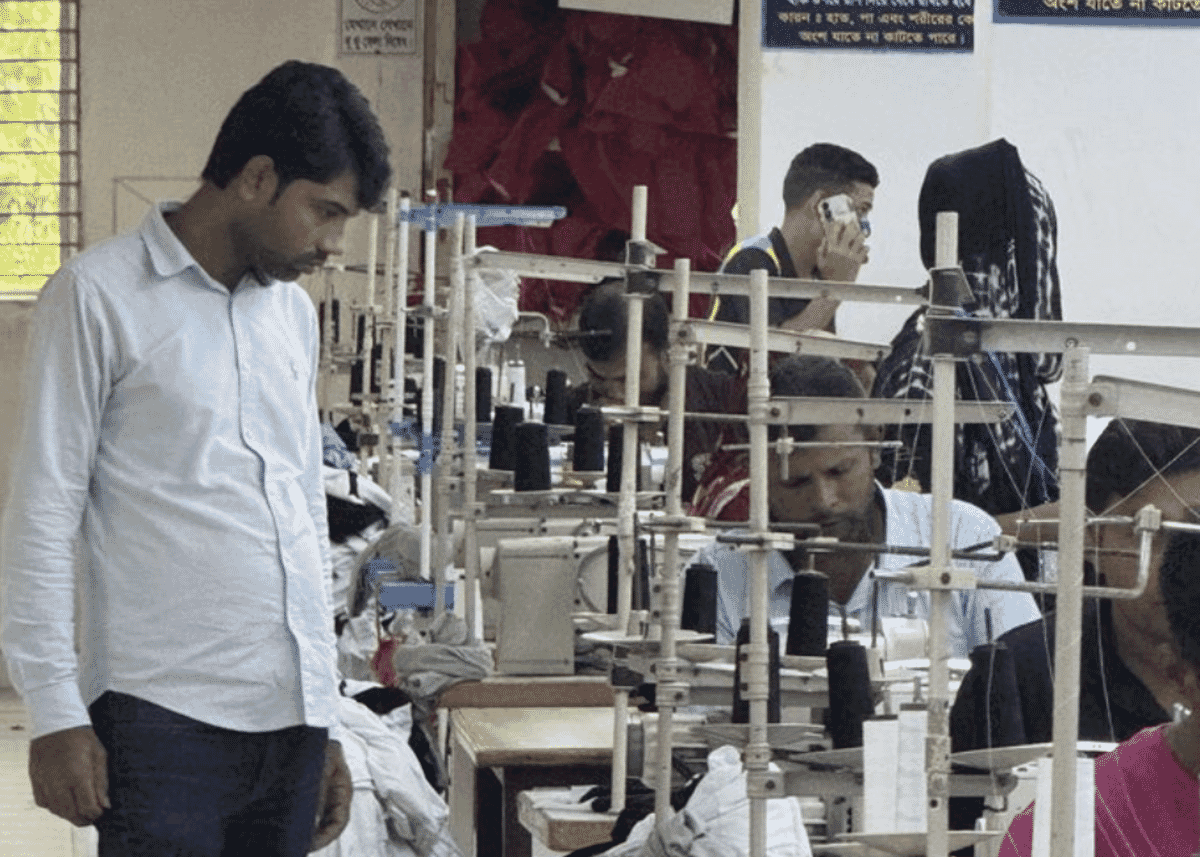
India's textile sector directly employs more than 45 million people, with women making up over half the workforce (Ministry of Textiles, February 2026). That scale is spread across a very large number of small units rather than concentrated in a few large ones, which shapes everything downstream.
Citation Capsule: A textile manufacturer converts fibre into yarn, yarn into fabric, or fabric into finished non-garment textile products, and quotes per metre, kilogram or beam. A clothing manufacturer cuts and sews garments and quotes per piece. More than 45 million people work directly in Indian textiles and over half of them are women (Ministry of Textiles, 2026). That is why the sector is a policy priority as well as a supply base. Our guide to the Indian textile industry sets out its structure, exports and clusters.
Related reading: Fabric manufacturers in India · Clothing manufacturers in India · Surat Textile Market · The garment manufacturing process · Clothing suppliers in India
What Are the Segments of Indian Textile Manufacturing?
Six, and they are genuinely separate businesses with separate economics. A company strong in one is rarely strong in another, and the marketing language used across the industry obscures this more than it reveals it. Ask which segment a company actually operates in before reading its capability list.
| Segment | What it produces | Sells by | Where it concentrates |
|---|---|---|---|
| Spinning | Yarn from cotton, viscose, polyester and blends | The kilogram, by count | Tamil Nadu, Gujarat, Maharashtra |
| Weaving | Woven greige and finished fabric | The metre or the beam | Surat, Bhiwandi, Erode, Panipat |
| Knitting | Jersey, rib, interlock, fleece | The kilogram | Tiruppur, Ludhiana, Kolkata |
| Processing | Dyeing, printing, finishing | The metre, as a conversion charge | Surat, Tiruppur, Pali, Ahmedabad |
| Technical textiles | Industrial, medical, geotextile, filtration | Specification and test certificate | Gujarat, Maharashtra, Tamil Nadu |
| Home textiles | Bedsheets, towels, furnishing, rugs | The piece or the set | Panipat, Karur, Solapur, Bhadohi |
Segment structure and geographic concentration compiled from Ministry of Textiles cluster data and India Brand Equity Foundation sector profiles. Every cluster contains exceptions to its headline specialism.
The segment most foreign buyers underestimate is the last one. Home textiles is one of India's strongest export positions and it is a different trade from apparel: different clusters, different minimums, different buyers and different seasonality. Anything you learn sourcing shirts transfers only partially to sourcing towels.
Citation Capsule: Indian textile manufacturing comprises six segments. Spinning is concentrated in Tamil Nadu and Gujarat, weaving in Surat, Bhiwandi and Panipat, and knitting in Tiruppur, Ludhiana and Kolkata. Processing spans Surat, Tiruppur and Pali, technical textiles Gujarat and Maharashtra, and home textiles Panipat, Karur, Solapur and Bhadohi. Each sells in different units and carries different minimums.
What Is a Composite Mill and Why Does It Matter?
A mill that performs several stages under one management, typically spinning through weaving through processing, and occasionally garmenting as well. It is the structure most foreign buyers imagine when they picture Indian textile manufacturing, and it represents a small minority of actual capacity.
Where a composite mill exists, it solves the accountability problem that fragmentation creates. When yarn, weaving, dyeing and finishing are four companies, a fault in the finished cloth generates four explanations and no responsibility. Inside one mill there is one answer and one remedy.
The trade-off is minimum and price. A composite mill is built around volume and its minimums reflect the whole chain rather than the last stage of it. For a small brand, the fragmented route is usually cheaper and the composite route is usually calmer, and which one is right depends on whether your constraint is money or risk.
Where Are Textile Manufacturers in India Concentrated?
In clusters that are specialised by fibre and process rather than distributed evenly. This is the practical geography of Indian textiles, and it decides which city should be answering your enquiry before you assess any individual company. Choose the city before you choose the company.
Two cluster facts have real commercial consequence. Tiruppur is vertically integrated in knits, which is why small knit runs are easier to place there than in most Indian clusters. And Panipat and Karur dominate home textiles, which is a separate trade that most apparel-focused sourcing guides never mention.
Skip the search: the India factory directory ($49) lists documented factories by category, city and capability, with the verification status of each. One-time payment, instant download.
How Do You Approach Textile Manufacturers in India?
With a specification, in the units they sell in, and with a realistic volume. Mills are industrial businesses selling a commodity with technical parameters, and the enquiries they ignore are the ones that read like a retail request. Tell them the construction, not the end product. For woven fabric that means yarn count, ends and picks per inch, width and finish. For knits it means gauge, GSM, yarn count and the knit structure. For yarn it means count, fibre, and whether it is combed, carded or open end.
Give a volume in their units and a realistic delivery window. A mill that would decline 500 metres will sometimes accept it as a first order inside a stated annual programme, and will always decline it presented as the whole opportunity.
What a mill needs in a first enquiry
- Construction, not product: count, GSM, width, structure and finish
- Volume in their unit: metres, kilograms or beams, with an annual estimate if you have one
- Delivery window, since mill capacity is booked forward rather than on demand
- Certification requirement stated up front, because it narrows the field immediately
- End use, which lets them propose a construction that costs less than the one you specified
The last line is the one that returns most. Mills know their own product better than any buyer does, and a stated end use frequently produces a cheaper alternative that performs identically.
Why Are Mill Minimums So Much Higher?
Because the unit of production is the set-up, not the order. A loom has to be warped, a dye bath has a capacity, a rotary screen has to be engraved, and none of those costs scale down with your quantity. The minimum is the point where the set-up cost stops dominating the price.
| What you are buying | Indicative minimum | What sets it |
|---|---|---|
| Stock fabric already produced | 50 to 100 metres | Nothing. It exists |
| Yarn, standard count | 200 to 500 kg per shade | Dye lot size |
| Knitted fabric, stock yarn | 100 to 300 kg per colour | Machine set-up and dye bath |
| Dyed woven fabric, existing construction | 300 to 600 metres per colour | Dye bath capacity |
| Commissioned weave | 2,000 metres and up | Warping and loom set-up |
| Home textile programme | 500 to 2,000 pieces per design | Weaving set-up plus made-up conversion |
Indicative market ranges, quoted per colour or per design rather than per order. They are not quotations and vary with construction, fibre and capacity.
The strategic move for a small brand is to stop fighting this and route around it. Stock fabric and digital printing are the two places where the set-up cost is genuinely low, and they are the reason a small collection is possible in India at all.
Citation Capsule: Textile mill minimums are set by production set-up rather than order size: loom warping, dye bath capacity and screen engraving are fixed costs that do not scale down. Minimums rise with how much work the mill has to do for you. There is almost none on fabric that already exists, a dye bath on a commissioned colour, and a loom set-up on commissioned weaving from 2,000 metres. That is why fabric rather than sewing sets the floor on most garment programmes.
No tech pack yet? Factories quote from specifications, not from photographs. A factory-ready single-style tech pack is $79: measurements, construction, fabric, trims and labelling in the format an Indian factory costs from.
What Certifications Do Indian Textile Manufacturers Hold?
A wider range than most countries, and India's position on organic certification is a real strength rather than a marketing claim. Global Standard reported 17,800 GOTS-certified facilities worldwide across 95 countries in 2025, up 15.3 percent year on year (Global Standard, 2025), and India is one of the largest national bases in that count.
That certification concentrates in the cotton chain. If your product is organic cotton, India is one of the strongest sourcing countries for it, and the certificate is verifiable by number in a public database (Global Organic Textile Standard). If your product is recycled polyester, the relevant scheme is different and the certified base is a different set of companies (Textile Exchange).
Product safety certification is a separate axis again. OEKO-TEX Standard 100 certifies that a textile has been tested for harmful substances, which is a different claim from organic or recycled content and is frequently confused with them (OEKO-TEX).
Check every certificate by number in the issuing database rather than accepting a document. In a chain where five companies touch the same cloth, scope is the field that gets overstated: a mill certified for one process will describe itself as certified without qualifying which one.
Citation Capsule: India is one of the largest national bases of GOTS-certified textile facilities, out of 17,800 certified facilities across 95 countries (Global Standard, 2025), a 15.3 percent annual increase. GOTS certification concentrates in the cotton chain, recycled content is certified under separate Textile Exchange standards, and OEKO-TEX Standard 100 certifies testing for harmful substances rather than fibre origin.
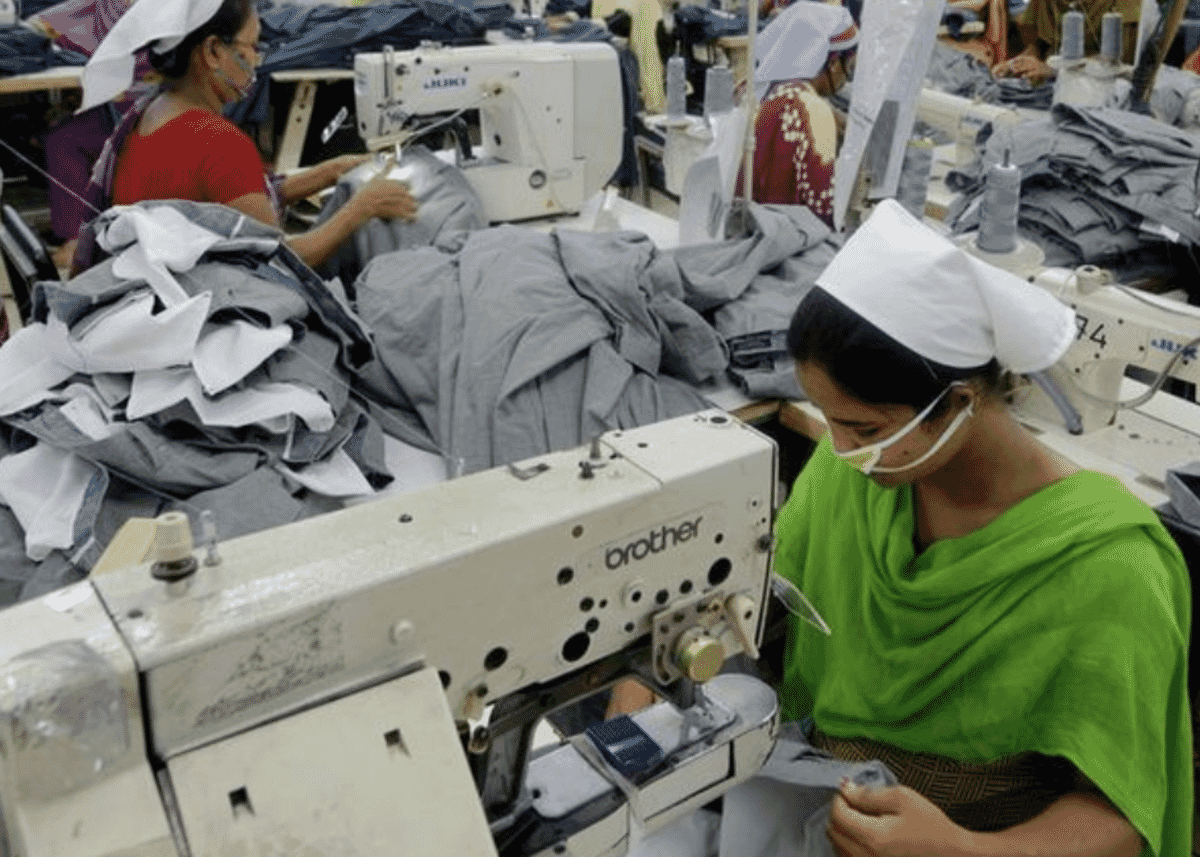
Citation Capsule: A composite mill performs several textile stages under one management, typically spinning through weaving through processing. It represents a minority of Indian capacity. Its advantage is single-point accountability for the finished cloth, replacing the four separate explanations that a fragmented chain of yarn, weaving, dyeing and finishing companies produces when a fault appears.
Five specification lines a mill can actually hold you to
- GSM with a tolerance, stated as g/m² with an ounce conversion for US buyers
- Cuttable width, separate from the full width including selvedge
- Shrinkage limit after a named wash cycle, which is where disputes concentrate
- Colour fastness to washing and rubbing, against a named test method
- Certification scope, naming which process the certificate covers
Adjectives cannot be tested and therefore cannot be enforced. Every line here is measurable, which is what makes it a specification rather than a hope.
Why Is Home Textiles a Separate Business?
Because it is made in different clusters, sold to different buyers and priced on different terms. India is one of the world's principal suppliers of bedsheets, towels and furnishing textiles (Ministry of Textiles). The trade runs on programme volumes rather than seasonal collections.
Panipat handles furnishing, blankets and made-ups. Karur is the furnishing and kitchen textile cluster. Solapur makes terry towels and Bhadohi makes hand-knotted rugs. None of these is where you go for apparel fabric and none of them behaves like an apparel supplier.
Minimums are quoted per design and per size rather than per metre, lead times are longer because made-up conversion follows weaving, and buyers are typically retailers rather than brands. If home textiles is your category, essentially none of the apparel sourcing playbook transfers unchanged, and our guide to home textile manufacturers covers it separately. Towels are a different trade again.
Where Sourcing From a Mill Goes Wrong
Four patterns, and all four are variations on the same underlying problem: a fragmented chain in which nobody owns the finished result. They are scope creep on certification, shade variation between lots, the trader standing in front of the mill, and specification by adjective.
Scope creep on certification. A mill certified for weaving describes itself as certified, and the dyeing stage that your claim actually depends on sits with an uncertified subcontractor. Check the scope on the certificate, not the logo on the letterhead.
Shade variation between lots. Two dye lots of the same shade are never identical. Where a programme repeats, specify a shade band and hold a reference swatch rather than assuming continuity.
The trader in front of the mill. Most enquiries to Indian textile manufacturers reach a trading company. That is workable, and it is only a problem when you believe otherwise. Ask for the mill name and the GST number.
Specification by adjective. Soft, premium, export quality and similar words mean nothing and cannot be tested. GSM, count, shrinkage and fastness can.
Choosing a Textile Manufacturer in India
Decide first whether you need fabric or garments, because that answer sends you to a completely different set of companies. If you need garments, buy the fabric inside the garment price and let the factory carry the risk of a bad roll.
If you genuinely need fabric, pick the cluster from the fibre and the process, then specify in the units a mill sells in. Construction, volume, delivery window and certification requirement, in one message, will get you a serious answer from a serious company.
And verify certification by number. India's strength in certified organic cotton is real and it is also the claim most often stretched, and the difference between the two is a database lookup that takes a couple of minutes. Our guide to sustainable clothing manufacturers in India walks through that check field by field.
Frequently Asked Questions
What is the difference between a textile manufacturer and a clothing manufacturer?
A textile manufacturer converts fibre into yarn, yarn into fabric, or fabric into finished non-garment products, and quotes per metre, kilogram or beam. A clothing manufacturer cuts and sews garments from fabric someone else made, and quotes per piece. In India these are usually separate companies in separate cities.
What are the main segments of Indian textile manufacturing?
Six: spinning, concentrated in Tamil Nadu and Gujarat; weaving in Surat, Bhiwandi and Panipat; knitting in Tiruppur, Ludhiana and Kolkata; processing across Surat, Tiruppur and Pali; technical textiles in Gujarat and Maharashtra; and home textiles in Panipat, Karur, Solapur and Bhadohi.
Why are textile mill minimums so high?
Because the unit of production is the set-up rather than the order. Warping a loom, filling a dye bath and engraving a rotary screen are fixed costs that do not scale down. Stock fabric runs from 50 to 100 metres, dyed woven fabric from 300 to 600 metres per colour, and commissioned weaving from 2,000 metres.
Is India a good source for organic cotton fabric?
Yes. India is one of the largest bases of GOTS-certified facilities, out of 17,800 certified facilities across 95 countries (Global Standard, 2025). Verify any specific claim by checking the certificate number and its scope in the GOTS database rather than accepting a PDF.
Can I buy fabric in India without going through a trader?
Yes, but most enquiries reach a trading company first. Ask for the mill name and GST number, and specify in the units a mill sells in: construction, count, GSM, width and finish rather than a finished product description. A serious specification is what separates enquiries mills answer from those they ignore.
Tell us the product, the fabric and the quantity from 100 units. We place your production with the factory in our group built for it, normally within 24 hours, and the fabric is bought and inspected inside the garment price. No commissions. No markups. The factory bills you directly.
Get in contact Download the directory ($49)Need a tech pack? Get a factory-ready single-style tech pack for $79. See what's included.
Editorial note: all company names, certification marks and trademarks referenced here are the property of their respective owners. MOQ, cost and lead-time figures are indicative market ranges, not quotes from any individual factory, and they vary by product, fabric and season. Always confirm terms directly with the factory before committing.
Sources
- Global Organic Textile Standard: public database of GOTS-certified suppliers.
- Textile Exchange: certified company finder for recycled content and responsible fibre standards.
- Ministry of Textiles, Government of India: Status of textile manufacturing units, employment and workforce composition, February 2026.
- Global Standard: Annual Report 2025, reporting 17,800 GOTS-certified facilities across 95 countries, up 15.3 percent.
- Ministry of Textiles, Government of India: Annual reports on cluster development and segment performance.
- OEKO-TEX: Standard 100 scope, distinguishing harmful-substance testing from fibre origin claims.
Further Reading
Background references for this topic. These are not cited above.
- Sheng Lu, FASH455, University of Delaware (2025): WTO-based analysis of global textile and apparel trade.
- OEKO-TEX Label Check: public verification of certificate numbers.
- India Brand Equity Foundation: Textile industry segments, cluster composition and capacity data.
- Invest India: Textiles and apparel sector profile covering segment structure and enterprise composition.