Sustainable clothing manufacturers in India make the one claim in this market that is easy to verify and constantly overstated. India has more GOTS-certified facilities than any other country, about 28 percent of the total, which is a real and checkable advantage (Sourcing Journal, 2026). It also attracts plenty of unsupported sustainability claims, because the certified base is large enough that proximity to it sounds like membership of it.
The difference between a certified supplier and a supplier near certified capacity is a certificate number and a scope field. Both are public. Neither takes more than a couple of minutes to check.
This guide to sustainable clothing manufacturers in India covers what sustainability actually means in an Indian supply chain, which certifications carry weight, how to verify a claim, what certified production costs and what minimums it carries, and which claims to treat as decoration.
Note: India Clothing Factory is a group of documented clothing factories in India, producing for brands from 100 units. Certification facts in this guide come from the issuing bodies and the other publications listed under Sources, checked on 24 October 2026. Costs and minimums are described in general terms, not as quotes. We confirm exact MOQ and price with the factory when you send a brief.
Key takeaways
- India has the most GOTS-certified facilities of any country, about 28 percent of the total in 2025. This is the strongest single argument for sourcing certified cotton here.
- Three schemes cover three different claims: GOTS for organic, Textile Exchange for recycled, OEKO-TEX for substance testing.
- A supplier certificate says a company can make certified goods. A transaction certificate says yours were.
- Scope is the field that gets stretched. A mill certified for weaving is not certified for dyeing.
- Certified organic fabric costs more than conventional and can carry a higher minimum. Ask for both prices side by side.
- Social and environmental audits are a separate system: BSCI, SMETA and WRAP, none implied by a product certificate.
- Water and effluent are India's real environmental pressure point, and it sits in dyeing.
What Does Sustainable Actually Mean Here?
Four separate things that get compressed into one word, and separating them is the entire skill. Fibre origin, chemical safety, social conditions and environmental impact are different claims, verified by different bodies, and holding one says nothing about the other three.
A supplier described as sustainable might mean they use certified organic cotton, or that their fabric is tested for harmful substances, or that their factory passed a social audit, or that they have an effluent treatment plant. Those are four different facts about four different parts of the business.
The practical consequence is that you have to decide which claim your brand is actually making before you assess any supplier. A brand selling on organic fibre needs GOTS. A brand selling on safe chemistry needs OEKO-TEX. A brand answering a retailer's compliance questionnaire needs an audit. Conflating them produces a supplier who satisfies none of them fully.
Citation Capsule: Sustainability in Indian apparel manufacturing covers four distinct claims verified by different bodies. These are fibre origin through GOTS or Textile Exchange, chemical safety through OEKO-TEX, social conditions through amfori BSCI, SMETA or WRAP, and environmental impact through effluent and water management. Holding certification in one category implies nothing about the others.
Related reading: Indian textile industry · Fabric manufacturers in India · Textile manufacturers in India · Wholesale Clothing India · Surat Textile Market
Which Certifications Actually Carry Weight?
Six schemes come up most often, and each covers something specific and narrow. Other credible labels exist, but memberships, self-declarations and marketing schemes look very similar in a supplier presentation, so ask which scheme it is and for the certificate or audit number.
| Scheme | What it covers | Verifiable how |
|---|---|---|
| GOTS | Organic fibre content plus processing, chemical and social criteria | Certificate number in the public GOTS database |
| Textile Exchange standards GRS, RCS, OCS | Recycled or organic content, with chain of custody | Certified company finder and transaction certificates |
| OEKO-TEX Standard 100 | Testing for harmful substances in the finished textile | Label check by certificate number |
| amfori BSCI | Social audit against a code of conduct | Audit report, held on the amfori platform |
| SMETA via Sedex | Ethical trade audit methodology | Audit report shared through Sedex |
| WRAP | Facility certification for responsible production | Certificate held by the facility, with a certification level |
Sources: the issuing bodies' own published scope documentation. The third column is the only one that matters when assessing a claim, because it is what makes the claim checkable.
GOTS is the broadest of the six because it covers fibre, processing chemistry and social criteria together (Global Organic Textile Standard). That breadth is why it is the certification worth asking for when a brand can only ask for one.
Citation Capsule: Six schemes come up most often in Indian apparel. GOTS covers organic fibre content with processing and social criteria, and the Textile Exchange standards GRS, RCS and OCS cover recycled and organic content with chain of custody. OEKO-TEX Standard 100 covers harmful substance testing, and amfori BSCI, SMETA and WRAP cover social and facility auditing. Each is verifiable by certificate or audit number.
How Do You Verify Sustainable Clothing Manufacturers in India?
By certificate number, in the issuing body's own database, checking three fields. Existence is the easy part and it is not where claims fail. Scope, validity and transaction coverage are where they fail. Check all three before repeating a claim to a customer.
Scope names which processes and product categories the certificate covers. A company certified for knitting and not for dyeing has a genuine certificate and cannot deliver a certified finished garment on its own (Global Organic Textile Standard).
Validity is the expiry date. Certificates lapse and PDFs do not, which is why a document emailed to you proves considerably less than a database lookup does (GOTS certified supplier database).
Transaction certificates cover your specific lot rather than the company. This is the field almost no first-time buyer asks about and the one that supports or fails a hangtag claim.
Checking a certification claim properly
- Ask for the certificate number, not a PDF, and look it up yourself
- Read the scope field for the processes and product categories covered
- Check the expiry date, because lapsed certificates circulate freely
- Ask for a transaction certificate covering your lot, at shipment
- Match the certified legal entity against the company invoicing you
A supplier who produces a certificate number within a day is used to being asked. One who sends a scan and changes the subject has told you what you needed to know.
Why Is India Strong on Organic Cotton?
Because India has more GOTS-certified facilities than any other country and because the whole cotton chain is domestic. Global Standard reported 17,800 GOTS-certified facilities worldwide across 95 countries in 2025, up 15.3 percent year on year (Global Standard, 2025). India has the largest share, 27.8 percent, followed by China, Turkey and Bangladesh (Sourcing Journal, 2026).
Depth matters as much as the headline. Certification is only useful if every stage your product passes through is certified, and in a fragmented industry that means the certified base has to be dense rather than merely present. In Indian cotton it is dense, which is why a fully certified chain is achievable here.
The advantage is specific to organic cotton. It does not carry over automatically to synthetics, which are certified under a different standard, or to wool, where much of the fibre is imported.
Citation Capsule: India holds the largest national share, 27.8 percent, of the 17,800 GOTS-certified facilities recorded across 95 countries in 2025 (Global Standard; Sourcing Journal, 2026), a total up 15.3 percent year on year. The density of that certified base within the domestic cotton chain is what makes a fully certified garment achievable in India. A single uncertified processing stage breaks the chain of custody for the finished product.
Skip the search: the India factory directory ($49) lists documented factories by category, city and capability, with the verification status of each. One-time payment, instant download.
What Does Certified Production Cost?
More on fabric, often a higher minimum, and a documentation overhead. The size of the fabric premium varies by mill, fibre and scheme, so ask for the certified and conventional price side by side. The fabric premium is the visible cost; the minimum is what tends to stop small brands, because certified fabric is usually held in fewer shades and fewer weights.
| What changes | Effect | Why |
|---|---|---|
| Fabric price | Higher than conventional | Fibre premium plus certified processing |
| Minimum order | Often higher than conventional | Narrower availability of certified stock fabric |
| Lead time | Can be longer | Certified capacity is booked further forward |
| Colour range | Narrower | Certified dyestuff restrictions |
| Documentation | Transaction certificates per shipment | Chain of custody requirements |
| Audit exposure | Higher, and this is the point | The certification is what makes it checkable |
General directions, not quotations. The size of each effect varies with fibre, certification scheme and the depth of certified capacity in a given construction.
The minimum row is the one to plan around. Ask for the certified fabric minimum before you design the range: it can sit above the garment minimum you planned for, and that is a business model decision rather than a sourcing detail.
What About Social and Labour Conditions?
A separate system entirely, with its own audits and its own databases. A GOTS certificate includes social criteria, but for most buyers the recognised instruments are amfori BSCI (amfori), SMETA through Sedex (Sedex) and WRAP facility certification (WRAP). Ask for the audit report rather than the badge. An audit produces findings and corrective actions, and the useful information is in what was found and what was done about it rather than in the fact that an audit happened.
Recency matters. An audit from three years ago describes a factory that may have changed management, moved floors or taken on subcontractors since. Ask for the date before you ask for anything else.
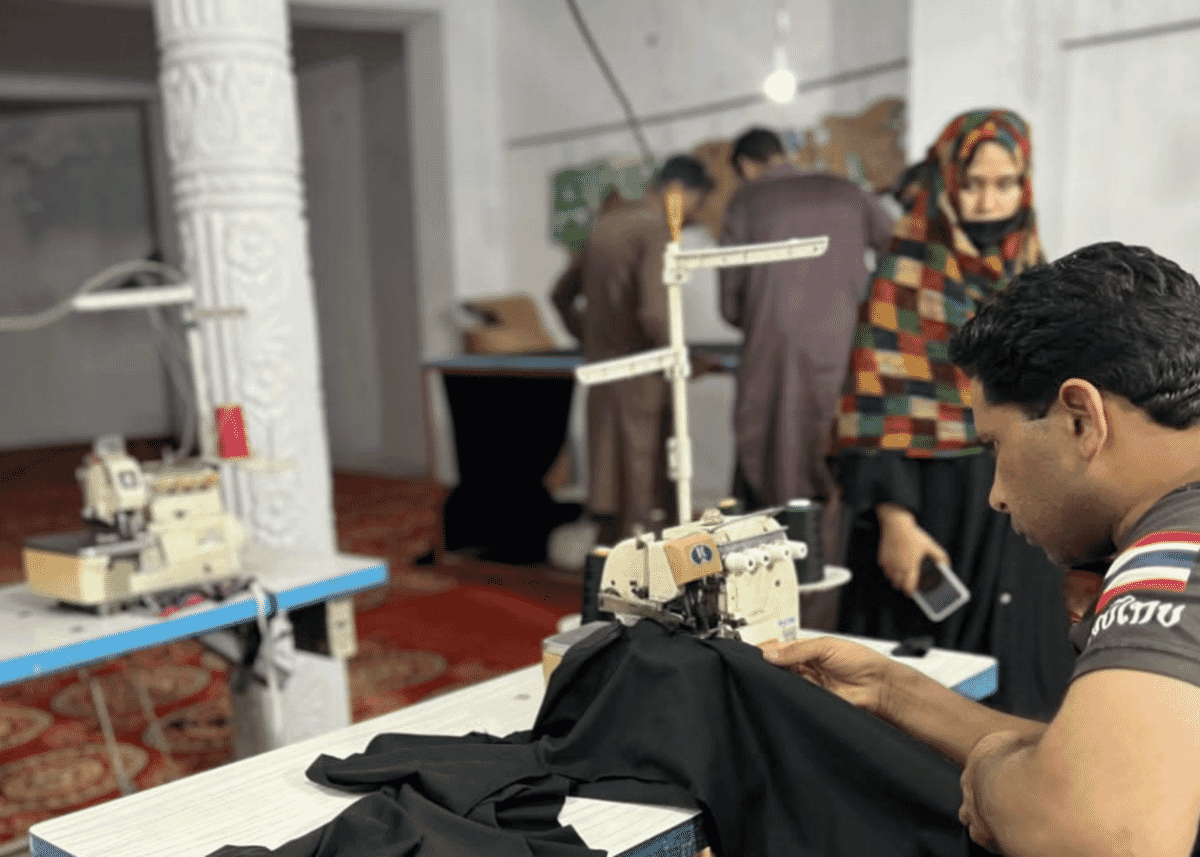
Where Is India's Real Environmental Pressure Point?
Water, and specifically dyeing effluent. Dyeing and finishing is the most water- and chemical-intensive stage of making a garment, and in India it is concentrated in clusters where many small units discharge into shared systems. For a brand, this is the area where certification does the most work, because GOTS and OEKO-TEX (STeP for facilities, Standard 100 for the product) both address processing chemistry rather than fibre alone. A certified dyeing stage is a meaningfully different proposition from an uncertified one, and it is exactly the stage most often subcontracted.
Ask where dyeing happens and whether that unit holds its own certification. In a fragmented industry the dyeing house is frequently a separate company from the one quoting you, and it is the part of your supply chain with a large impact and the least visibility.
Citation Capsule: Dyeing, finishing and effluent management are the most water- and chemical-intensive stage of textile production, and in India this stage is concentrated in clusters where many small units share discharge infrastructure. Because dyeing is frequently subcontracted to a separate company, it is both a high-impact and the least visible stage of the chain. That is why certified processing scope matters more than certified fibre alone.
What About Recycled Polyester and Non-Cotton Fibres?
A different standard and a different certified base. Recycled content is certified under Textile Exchange standards rather than GOTS, so India’s GOTS lead says nothing on its own about recycled capacity. Check the supplier in the Textile Exchange certified company finder (Textile Exchange).
That makes recycled polyester a normal sourcing exercise rather than an automatic advantage: find the certified capacity by number and pay close attention to chain of custody documentation.
The claim most often overstated in this area is recycled content percentage. Global Recycled Standard certification records a content claim, and a supplier describing fabric as recycled without naming a percentage and a certificate is describing an input rather than a product.
For blends, check that the certification covers the blend as produced rather than one component of it. A fabric with certified recycled polyester and uncertified cotton is not a certified fabric, and the distinction appears in the scope field rather than in the conversation.
Citation Capsule: Recycled content in textiles is certified under Textile Exchange standards including the Global Recycled Standard rather than under GOTS. India’s GOTS lead does not by itself indicate recycled capacity, which is checked in the Textile Exchange database. A recycled claim requires a named content percentage and a certificate; certification covering one component of a blend does not certify the blend as produced.
Which Claims Should You Treat as Decoration?
Anything without a number behind it. This is not cynicism; it is the only workable filter in a market where the vocabulary is unregulated. Eco-friendly, green, conscious and responsible name no standard; organic without a certificate names no scheme; and member of, supporter of and partner with describe a subscription rather than an audit.
Eco-friendly, green, conscious, responsible. These describe nothing and certify nothing. They are not dishonest, they are simply empty, and a supplier using them exclusively has not told you anything.
Organic without a certificate. In textiles, an organic claim is normally backed by GOTS or OCS certification. A supplier using the word without a GOTS or OCS certificate number is describing an intention.
Sustainable fabric with no scheme named. Ask which standard and which certificate. Recycled polyester has GRS; organic cotton has GOTS or OCS; there is a scheme for essentially every legitimate claim.
Member of, supporter of, partner with. Membership of an initiative is not certification of a product. Both can be true and only one is checkable.
Turning a vague claim into a checkable one
- Which standard? Name the scheme, not the adjective
- What certificate number? And which body issued it
- What scope? Which processes and product categories it covers
- Valid until when? Expiry, not issue date
- Transaction certificate for my order? Confirmed in writing before production
These five questions take one email and resolve almost every sustainability claim you will encounter. A supplier who can answer them is already running a certified programme; one who cannot is describing a neighbourhood.
How Do You Choose Between Sustainable Clothing Manufacturers in India?
Decide which claim you are making before you shortlist anyone. Organic fibre, safe chemistry, audited labour and low environmental impact are four separate commitments with four separate verification routes, and a supplier chosen for one will not automatically satisfy the others.
Then verify by number and read the scope. India's certified base for organic cotton is the largest of any country, which means there is no reason to accept an unverified claim here. The certified alternative exists and is findable.
And plan for the minimum rather than the premium. A higher fabric price is usually manageable. A higher minimum is the thing that changes your launch plan, and it is better discovered now than after the range is designed.
Frequently Asked Questions
Is India good for sustainable clothing manufacturing?
For certified organic cotton, it is one of the strongest sources: India has more GOTS-certified facilities than any other country, about 28 percent of the total in 2025, and the whole cotton chain is domestic. That advantage is specific to organic cotton. Recycled and synthetic fibres are certified under separate standards, so check that certified base on its own terms.
How do I verify a sustainability claim from an Indian supplier?
By certificate number in the issuing body's own database, checking three fields: scope, which names the processes and product categories covered; validity, since certificates lapse; and transaction certificates, which cover your specific lot rather than the company. A PDF proves considerably less than a database lookup.
What is the difference between a supplier certificate and a transaction certificate?
A supplier certificate says a company is certified to produce certified goods within a defined scope. A transaction certificate says a specific shipment was produced under that certification. Only the second supports a claim on a hangtag, and it is the document most first-time buyers never ask for.
How much more does certified organic production cost?
More than conventional on fabric, and the premium varies by mill, fibre and scheme, so ask for the certified and conventional price side by side. Certified fabric can also carry a higher minimum, a narrower colour range, a longer lead time and per-shipment documentation. For a small brand the minimum, rather than the price, is often what changes the plan.
Does a GOTS certificate cover labour conditions?
It includes social criteria, but most buyers and retailers look for a separate social audit: amfori BSCI, SMETA through Sedex, or WRAP facility certification. Ask for the audit report and its date rather than the badge, since the findings and corrective actions carry the information.
Tell us the standard, the product and the quantity from 100 units. Our team checks the certificate number, scope and validity with the factory before we place your production, and tells you plainly if the certified scope your claim needs is not available. No commissions. No markups. The factory bills you directly.
Get in contact Download the directory ($49)Need a tech pack? Get a factory-ready single-style tech pack for $79. See what's included.
Editorial note: all company names, certification marks and trademarks referenced here are the property of their respective owners. Certification facts come from the published sources listed below and were checked on 24 October 2026. Costs, minimums and lead times are described in general terms, not as quotes from any individual factory, and they vary by product, fabric and season. Always look up the certificate yourself and confirm terms directly with the factory before committing.
Sources
- Global Organic Textile Standard: public database of GOTS-certified suppliers.
- Textile Exchange: certified company finder for recycled content and responsible fibre standards.
- amfori BSCI: social audit system documentation.
- Global Standard: Annual Report 2025, reporting 17,800 GOTS-certified facilities across 95 countries.
- Sourcing Journal (29 April 2026): India has the most GOTS-certified facilities (27.8 percent), followed by China, Turkey and Bangladesh.
- Global Organic Textile Standard: The standard itself, covering fibre, processing chemistry and social criteria.
- Global Organic Textile Standard: Guidance on who needs to be certified and how scope is defined along the chain.
- Sedex: SMETA audit methodology and how findings and corrective actions are recorded.
- Worldwide Responsible Accredited Production: Facility certification programme and certification levels.
Further Reading
Background references for this topic. These are not cited above.
- OEKO-TEX Label Check: public verification of certificate numbers.
- Textile Exchange: Organic cotton market reporting and certified content standards.
- Fairtrade International: Textile standard covering supply chain and labour requirements.