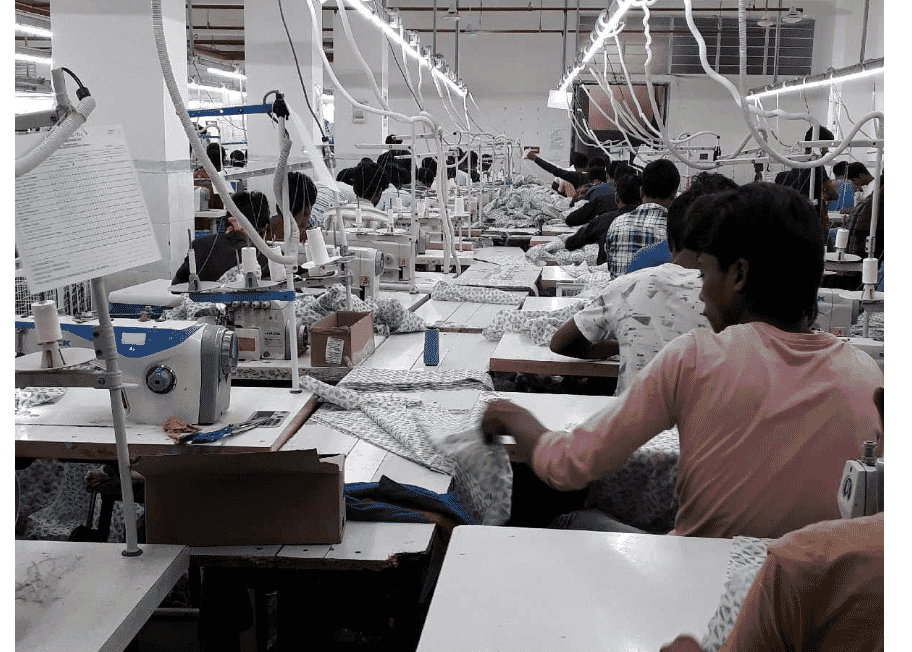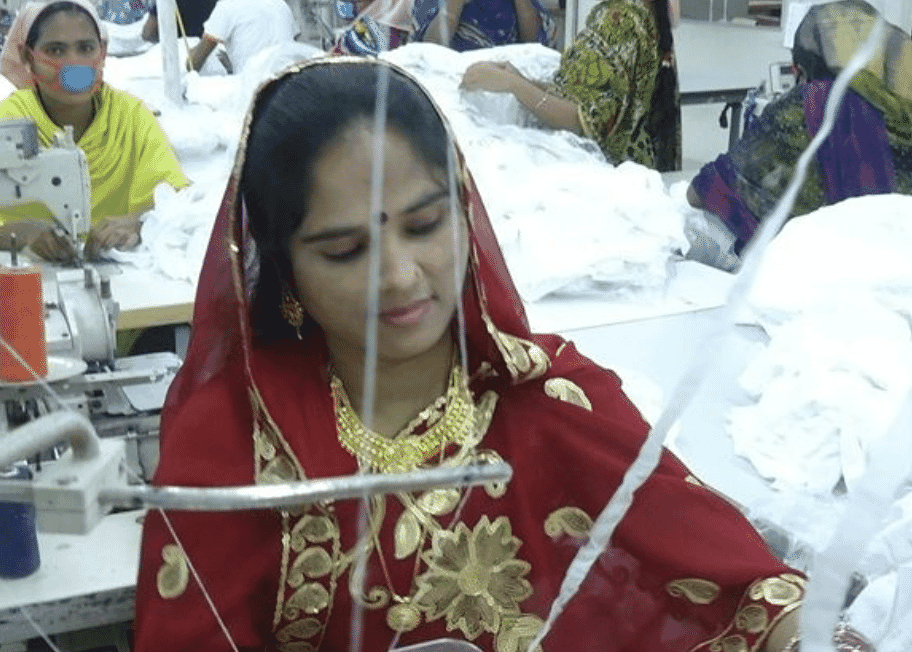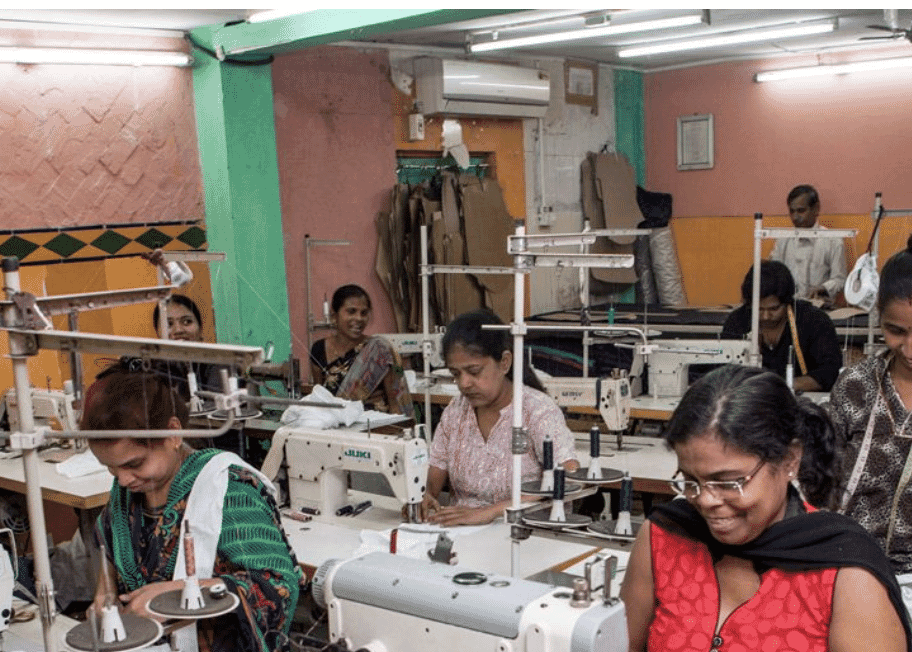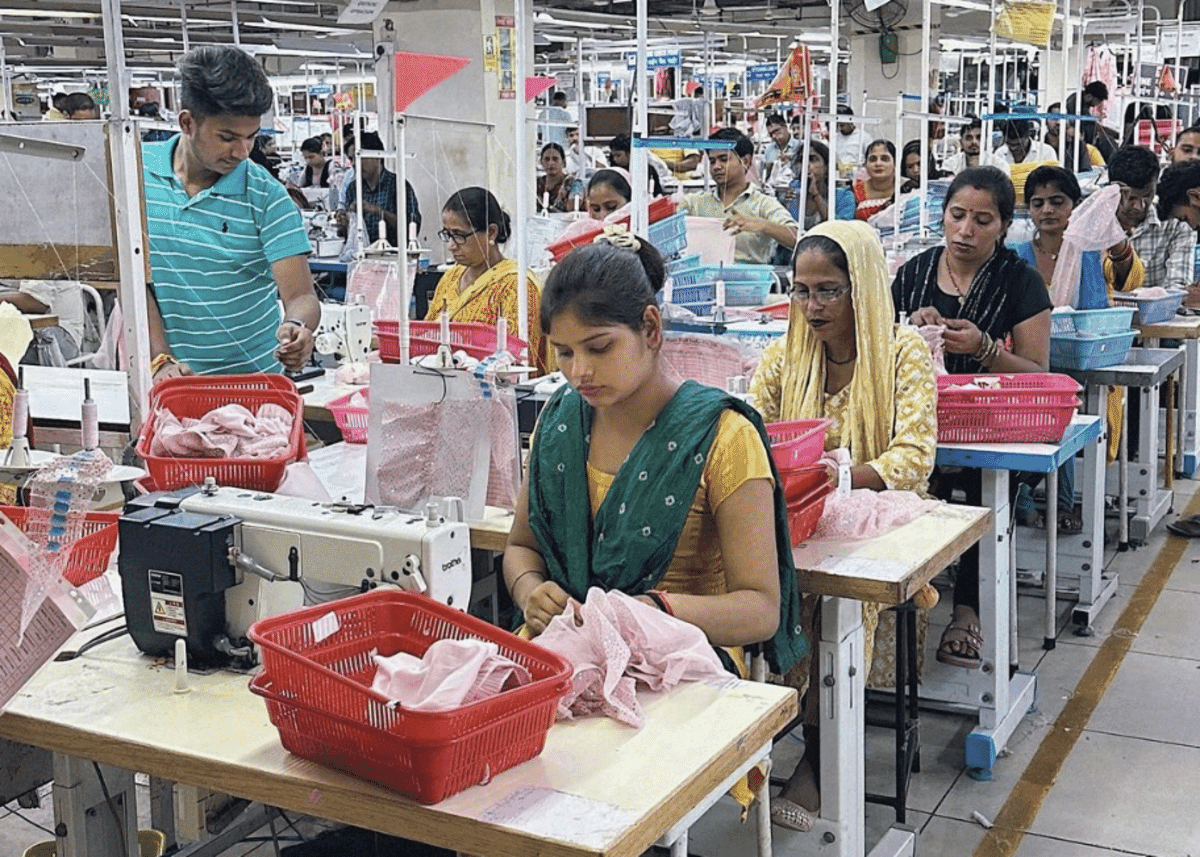
Wholesale clothing from India means two completely different transactions, and the search term covers both. One is buying garments that already exist, in whatever sizes and labels somebody else decided on. The other is having your own product made and calling the bulk price wholesale. They have different minimums, different margins and different customs treatment.
Most boutiques who start with the first end up at the second within two seasons, usually after a delivery arrives with the wrong size grading and no way to reorder it.
This guide to wholesale clothing in India covers what you can actually buy wholesale from India, what the price bands look like by category, what a lot costs to land in the United States after the 2026 tariff change, and the point at which producing your own becomes cheaper than buying somebody else's.
Note: India Clothing Factory is a group of documented clothing factories in India, producing for brands from 100 units. Ranges in this guide are given as market ranges, not as quotes from a specific factory. Ranges come from published industry sources. We confirm exact MOQ and price with the factory when you send a brief.
Key takeaways
- Wholesale and bulk production are not the same purchase. One is stock that exists, the other is capacity you are booking.
- Ready stock clears from as little as 20 to 50 pieces per style. Production starts at 100 in knits and far higher in wovens.
- The 10 percent Section 301 tariff on goods of India, in force since 24 July 2026, sits on top of ordinary duty and applies to wholesale lots exactly as it applies to production orders.
- You cannot put your own woven label on most ready stock, and US labelling rules apply regardless of how you bought it.
- Wholesale margin looks better per piece and worse per season, because the reorder does not exist.
- Indian wholesale markets are domestic-facing. Export documentation, not price, is where the transaction usually breaks down.
- Switch to production when a style sells through twice. Before that, wholesale is cheaper learning.
What Does Wholesale Clothing From India Actually Mean?
It depends entirely on who is using the word. An Indian exporter saying wholesale usually means bulk production at a factory price. A US or UK boutique saying wholesale usually means buying finished stock by the carton. The first is a manufacturing relationship. The second is a stock purchase, and India is far better set up for the first than for the second.
| Ready stock wholesale | Bulk production | |
|---|---|---|
| What you buy | Garments already made, in the sizes and colours that exist | Capacity, fabric and a spec you control |
| Typical minimum | 20 to 50 pieces per style, sometimes per carton | From 100 pieces in knits, 300 and up in wovens |
| Lead time | Days to ship, once payment clears | 8 to 16 weeks including sampling |
| Your label | Rarely, and never a woven main label already sewn | Yes, including care labels and packaging |
| Reorder | Only while that stock lasts | Repeatable against the sealed sample |
| Who carries design risk | The seller, which is why it is stock | You |
Comparison of the two transactions the phrase covers. Minimums are market ranges compiled from published industry sources, not quotes from a named supplier.
Read that table before you read any price. A $3.40 ready-stock tee and a $3.40 produced tee are not comparable products, because one of them can be reordered in March and the other cannot.
Citation Capsule: Wholesale clothing from India covers two distinct transactions: purchase of existing ready stock, typically from 20 to 50 pieces per style with immediate despatch but no reorder capability, and bulk production. That starts from around 100 pieces in knits, takes 8 to 16 weeks, and can be repeated against a sealed sample.
Related reading: Clothing manufacturers in India · Supplier, trader or factory · Buying House in India · Agent fees and dual commission · Private Label Clothing Manufacturers India
What Are Your Routes Into Indian Wholesale?
Five, and they sort by how much of the export burden you take on. Physical markets are cheapest and hardest. Export houses are dearest and easiest. B2B platforms sit in the middle and carry the highest proportion of listings that are not what they say they are.
| Route | How it works | Export documentation | Realistic for |
|---|---|---|---|
| Physical wholesale markets | You or an agent buys in person, by the lot | Almost never handled. Domestic sale, you arrange export | Buyers already travelling to India |
| B2B platforms | Listings from traders, wholesalers and some factories | Varies by seller and is frequently overstated | Building a shortlist, not for a first purchase |
| Export houses | Companies set up to sell abroad, holding an IEC code | Handled, and priced in | First-time importers who want it to work |
| Factory surplus and overruns | Excess from a production run, sold as a lot | Usually handled, since the factory already exports | Opportunistic buying, never a stock plan |
| Production at wholesale price | You commission the run and pay the factory price | Handled by the exporter of record | Anyone with a style that has already sold through |
Sources: International Trade Administration guidance on Indian distribution channels and import documentation. The documentation column is where most first purchases fail, not the price column.
The route nobody warns you about is the first. India's wholesale markets are magnificent and they are built for the Indian domestic trade. A seller there has no reason to hold an Importer Exporter Code, and without one the goods cannot leave the country in their name (DGFT). Buyers discover this after paying.
Citation Capsule: There are five routes into Indian wholesale clothing: physical wholesale markets, B2B platforms, export houses, factory surplus lots, and commissioned production at factory price. Physical markets serve India's domestic trade and sellers there commonly hold no Importer Exporter Code. That is compulsory under Directorate General of Foreign Trade rules for goods to be exported in a seller's own name.
Skip the search: the India factory directory ($49) lists documented factories by category, city and capability, with the verification status of each. One-time payment, instant download.
Which Wholesale Clothing Markets in India Matter?
Four, and they are specialised in the same way the manufacturing clusters are (Ministry of Textiles). Buying cotton knits in a synthetic market is how people end up with polyester tees they believed were cotton. The markets are not interchangeable and the traders in them will not correct your assumption for you.
Surat, Gujarat. Synthetic fabric and printed textiles, at a scale nothing else in the country approaches. This is a fabric market more than a garment market, and it feeds the rest of India. If your product is polyester, viscose blend or digitally printed, the supply chain starts here. Our guide to the Surat textile market covers how to buy into it.
Tiruppur, Tamil Nadu. Cotton knitwear, and the only cluster where wholesale and production genuinely overlap, because the units are small and vertically integrated. A Tiruppur wholesaler is frequently a knitting unit with surplus, which is a materially better counterparty than a pure trader (ITA).
Delhi, Gandhi Nagar and Karol Bagh. Enormous volume across every category, overwhelmingly domestic, and the hardest place in India for a foreign buyer to operate without a representative. Prices here are the lowest you will see quoted and the export overhead is entirely yours.
Ludhiana, Punjab. Winterwear, hosiery, sweaters and socks. Seasonal by nature, which means stock availability swings hard through the year and the best lots go early.
Citation Capsule: India's four principal wholesale clothing markets are specialised by fibre. Surat handles synthetic and printed textiles, and Tiruppur cotton knitwear, where wholesalers are frequently knitting units selling surplus. The Delhi markets handle high-volume domestic trade across all categories, and Ludhiana wool, hosiery and winterwear on a seasonal availability cycle.
What Do Indian Wholesale Prices Look Like?
Low enough to be misleading. A wholesale quote from India is almost always ex-works and almost never includes the things that turn it into a landed cost. Read every number below as a starting point that roughly doubles by the time the goods are in your stockroom. Our guide to shipping from India to the USA breaks down freight, transit time and duty by mode.
| Category | Indicative wholesale band | What moves it most |
|---|---|---|
| Cotton jersey tee, basic | $2.50 to $4.50 | Yarn count and fabric weight, not the sewing |
| Printed cotton kurta or tunic | $4.00 to $8.00 | Print method: screen, block or digital |
| Rayon or viscose dress | $5.00 to $10.00 | Fabric quality, which varies enormously at this price |
| Cotton woven shirt | $6.00 to $12.00 | Fabric construction and whether it is washed |
| Block-printed scarf or stole | $2.00 to $6.00 | Fibre, and hand versus screen printing |
| Acrylic or wool-blend sweater | $7.00 to $15.00 | Yarn content and gauge |
Market ranges compiled from published industry sources and expressed ex-works in USD. They are not quotes from any named supplier and will move with fibre, order size and season.
Two things distort those bands. Fibre substitution is the first: cotton-look viscose sells at a cotton price to buyers who did not ask for a fabric composition test. Sizing is the second, because garments cut to Indian domestic size charts run small against US and UK grading, and a lot bought on price arrives unsellable in your largest sizes.
No tech pack yet? Factories quote from specifications, not from photographs. A factory-ready single-style tech pack is $79: measurements, construction, fabric, trims and labelling in the format an Indian factory costs from.
What Minimums Apply to Wholesale Versus Production?
Wholesale minimums are set by how the seller breaks a lot. Production minimums are set by fabric. That is why a wholesaler can sell you 30 pieces and a factory cannot, and it is also why the wholesaler cannot sell you 30 more in six weeks.
Ready stock breaks by carton, and a carton is usually 20 to 50 pieces of one style in a ratio of sizes the seller decided. You rarely control that ratio. If your customer base is concentrated in two sizes, a standard ratio leaves you with dead stock in the other four, and that dead stock is where the apparent margin advantage goes.
Production minimums behave differently and more predictably. In cotton knits using stock yarn, 100 pieces is workable. In wovens needing commissioned fabric, the mill's weaving minimum sits upstream of the sewing line and pushes the floor to around 1,000. Our guide to low-MOQ production in India sets out where the line actually falls.
Before you agree a wholesale lot
- Ask for the size ratio in writing, not the piece count. The ratio is the risk
- Ask for a fabric composition, and test it on arrival if the price looks too good
- Ask whether the lot can be repeated, and accept that the honest answer is usually no
- Ask who holds the IEC code and whose name goes on the export documents
- Ask for photographs of the actual lot, not the catalogue image of the style
The size ratio question is the one experienced buyers ask first and new buyers ask after their first season of unsold extra-large stock.
What Does It Cost to Land a Wholesale Lot in the United States?
Roughly a quarter more than the goods, before freight. Since 24 July 2026, goods of India pay a 10 percent tariff under Section 301 unless a product is exempted (USTR, July 2026), and that rate is additional to the ordinary duty in the tariff schedule rather than a replacement for it. The 18 percent reciprocal tariff announced in February 2026 (The White House, 2026) no longer applies: it rested on IEEPA, which the Supreme Court held on 20 February 2026 does not authorise tariffs (Supreme Court of the United States).
Work it on a carton of basic cotton tees. The ordinary rate on that classification is 16.5 percent (USITC). Add the Section 301 rate and about a quarter of customs value is duty before anything moves inland.
One further trap on small lots. Duty and brokerage do not scale down neatly, so a 200-piece test order carries a much heavier per-unit administrative cost than a container does. That does not make test orders wrong. It means the unit economics of the test are not the unit economics of the business.
Citation Capsule: Wholesale clothing lots imported from India into the United States in 2026 carry ordinary Harmonized Tariff Schedule duty. A 10 percent Section 301 tariff, in force since 24 July 2026, applies on top unless a product is exempted. On cotton knit T-shirts, where the ordinary rate is 16.5 percent, total duty reaches about 26.5 percent of customs value before freight and brokerage.
Try it free: pressure-test your landed cost with the India production cost calculator. 60 seconds, no email required.
Can You Put Your Own Label on Wholesale Stock?
Not on most of it, and the parts you can change are the parts that matter least. A main woven label is sewn into the neck during production. Removing and replacing it on finished stock is relabelling, it looks like relabelling, and on any garment with a set-in neck tape it damages the garment.
Hangtags and swing tickets are yours to change freely. Care and content labels are not optional decorations: US rules require fibre content, country of origin and care instructions to be present and accurate, and the obligation follows the goods regardless of how you acquired them (US Customs and Border Protection).
This is the practical reason brands graduate from wholesale to production faster than they planned. Not price. The inability to put their own name in the neck of the garment in a way that survives a customer looking at it.
Citation Capsule: Ready stock bought wholesale cannot carry a buyer's own main woven label, which is sewn into the neck during production. Hangtags may be replaced freely. US Customs and Border Protection requires fibre content, country of origin and care information to remain present and accurate on imported apparel, regardless of the route by which it was acquired.
Four checks that prevent the four failures
- Written fibre composition before payment, and a burn test on arrival
- The seller's size chart in centimetres, compared against your own grading
- The IEC code holder named, so you know the goods can legally leave India
- A photograph of the actual lot, with the carton count and size ratio visible
- A written answer on repeatability, because a no you expected costs nothing
Each of these takes one message to ask and prevents a failure that costs a season. None of them is an unusual request to a company that exports regularly.
Where Wholesale Buying From India Goes Wrong
Four failure modes, in the order they usually arrive. None of them is exotic and all of them are cheap to prevent before payment and expensive to fix afterwards. They are fibre substitution, size grading that does not match your market, no exporter of record, and a reorder that does not exist.
Fibre substitution. Viscose sold as cotton, or a cotton blend sold as 100 percent cotton. It is the single most common complaint in Indian wholesale and it is detectable with a burn test in thirty seconds and a lab test for certainty.
Size grading. Domestic Indian size charts are cut smaller than US and UK equivalents across the range. A lot labelled small through extra-large will not fit the same customers your existing stock fits.
No exporter of record. The goods are bought, paid for, and cannot legally leave India in the seller's name. This is the one that strands money, and one question about the IEC code prevents it entirely.
The reorder that does not exist. A style sells out in three weeks, you go back, and the lot is gone. If that possibility would hurt your business, you needed production and bought wholesale.
When Should You Stop Buying Wholesale and Start Producing?
When a style sells through twice. That is the signal, not a revenue threshold, because sell-through is what tells you the demand is in the product rather than in the novelty. Two clean sell-throughs mean the reorder problem has become your binding constraint.
At that point the arithmetic flips. Production lets you fix the fabric, control the size grading, sew in your own label and repeat the run against a sealed sample. The unit price is often similar and sometimes lower, because you are buying at a factory price rather than through a wholesaler's margin.
The cost is time and commitment: 8 to 16 weeks including sampling, and a minimum you have to sell. Brands that make this move with a proven style rarely regret it. Brands that make it with an untested one have simply bought a more expensive way to be wrong.
Buying Wholesale From India Without Getting Burned
Treat wholesale as market research you can resell rather than as a supply chain. It is very good at that. You learn what your customers buy, at low commitment, with no sampling cycle and no fabric decisions. Ask the three questions that carry the risk before you pay: the fibre composition, the size ratio, and who holds the IEC code (Textile Exchange). Build the margin model on landed cost, because the quoted price is roughly two thirds of the real number once duty and freight land on it.
And watch for the second sell-through. When it comes, the wholesale route has told you everything it can, and continuing to use it starts costing you the business it helped you find.
Frequently Asked Questions
What is the minimum order for wholesale clothing from India?
Ready stock typically breaks by carton at 20 to 50 pieces per style, in a size ratio the seller decides rather than one you choose. Commissioned production is different: cotton knits using stock yarn are workable from 100 pieces, while wovens needing fabric commissioned from a mill usually start around 1,000 pieces.
What duty do I pay importing wholesale clothing from India to the USA?
Since 24 July 2026, ordinary Harmonized Tariff Schedule duty plus a 10 percent Section 301 tariff, unless the product is exempted. On cotton knit T-shirts the ordinary rate is 16.5 percent, so total duty is about 26.5 percent of customs value. The 18 percent reciprocal tariff announced in February 2026 no longer applies. Confirm your own classification before modelling margin.
Can I sell wholesale Indian clothing under my own brand?
Only partly. Hangtags and swing tickets can be replaced freely, but the main woven label is sewn in during production and cannot be swapped cleanly on finished stock. Care and fibre content labelling must remain accurate under US rules whatever route you bought through. Brands wanting their own label in the neck need production, not wholesale. Our guide to private label clothing manufacturers in India explains the three models and who owns the pattern.
Are Indian wholesale markets suitable for foreign buyers?
They are built for India's domestic trade. Sellers in markets such as Gandhi Nagar in Delhi frequently hold no Importer Exporter Code, which is compulsory for goods to be exported in their name, so the export burden falls entirely on you. Export houses cost more and handle the documentation.
How do I avoid being sold viscose as cotton?
Ask for a written fibre composition before payment, request photographs of the actual lot rather than the catalogue image, and run a burn test on arrival. For anything where the fibre claim carries the price, a lab test is inexpensive relative to a lot you cannot sell as described.
Tell us the style, the fabric and the quantity from 100 units. We place it with the factory in our group built for that product, normally within 24 hours, and you work with the factory directly. No commissions. No markups. The factory bills you directly.
Get in contact Download the directory ($49)Need a tech pack? Get a factory-ready single-style tech pack for $79. See what's included.
Editorial note: all company names, certification marks and trademarks referenced here are the property of their respective owners. MOQ, cost and lead-time figures are market ranges compiled from the published sources listed below, not quotes from any individual factory, and they vary by product, fabric and season. Tariff figures were correct at the date of publication and the 2026 position is still moving. Always verify your own HTS classification and confirm terms directly with the factory before committing.
Sources
- USITC Harmonized Tariff Schedule: the current classification schedule and duty rates.
- Textile Exchange: Materials guidance covering fibre categories, blend content and claim requirements.
- Ministry of Textiles, Government of India: Annual reports covering cluster structure and segment capacity.
- The White House: United States-India Joint Statement of 6 February 2026, announcing the 18 percent reciprocal tariff under Executive Order 14257, an IEEPA order.
- Supreme Court of the United States: Learning Resources, Inc. v. Trump, decided 20 February 2026 (IEEPA does not authorise tariffs).
- Office of the United States Trade Representative: Notice of actions in the forced labor Section 301 investigations, July 2026 (10 percent on goods of India from 24 July 2026).
- US Customs and Border Protection: Textiles and apparel priority trade issue, covering labelling, fibre content and origin requirements.
- Directorate General of Foreign Trade: Importer Exporter Code module, the compulsory registration for exporting goods from India.
- International Trade Administration: India distribution and sales channels, describing wholesale and intermediary structures.
Further Reading
Background references for this topic. These are not cited above.
- ASTM International: Standards covering textile test methods including dimensional change, colour fastness, abrasion and yarn count.
- International Trade Administration: India import requirements and documentation for goods moving in and out of India.
- India Brand Equity Foundation: Textile industry structure, cluster composition and trade data for India.