Private label means the garment is made to your specification and carries your brand. It is what most people mean when they say they want to manufacture clothing. It differs from white label, which is an existing product with your label sewn in. It also differs from full custom development, which starts with a blank sheet.
Private label clothing manufacturers in India work across all three models. The three carry different minimums, different costs and different amounts of work from you. Choosing the wrong one is the most common reason a first collection costs twice what was budgeted. It is also why a first collection can arrive looking like everybody else's.
This guide covers what each model actually involves and where it happens. It sets out what minimums and prices apply and what labelling the law requires. It also covers who owns the pattern, and when moving up from white label is worth the extra commitment.
Note: India Clothing Factory is a group of documented clothing factories in India, producing for brands from 100 units. This guide gives no price ranges; we confirm MOQ and price with the factory when you send a brief.
Key takeaways
- White label is an existing garment with your label. Private label is made to your spec. Custom starts from nothing.
- Our group's private label minimum is 100 pieces per style. Above that, the fabric sets the floor.
- The cost difference against white label is mostly sampling and pattern work, not unit price.
- US rules require fibre content, country of origin, the responsible business and care instructions on every garment, whatever the model.
- Pattern ownership is negotiable and usually unaddressed. Put it in the purchase order.
- Your label in the neck is the practical dividing line. White label cannot deliver it credibly.
- Move up when a style has sold through twice. Before that, white label is cheaper learning.
What Is Private Label Manufacturing?
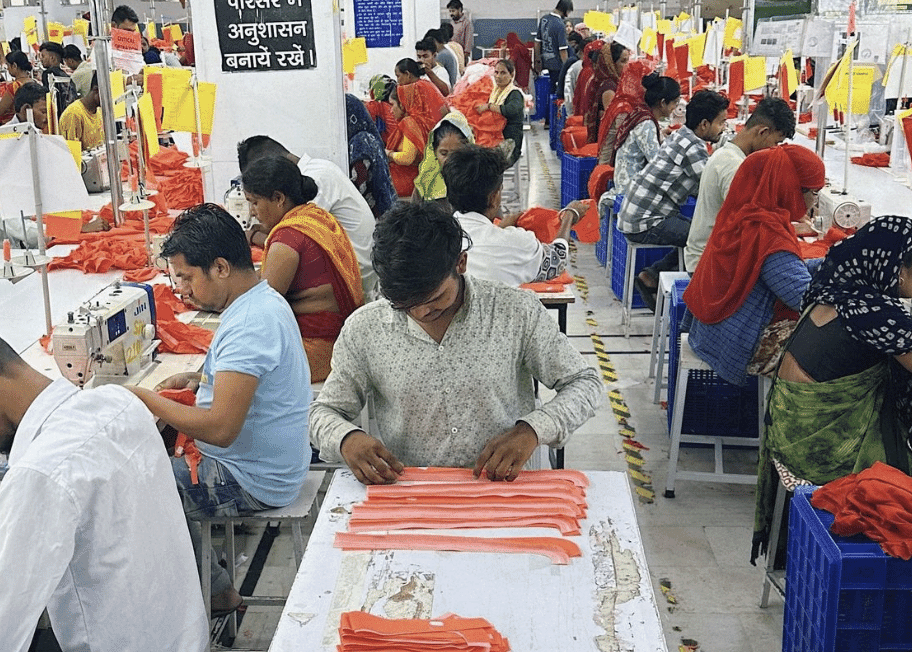
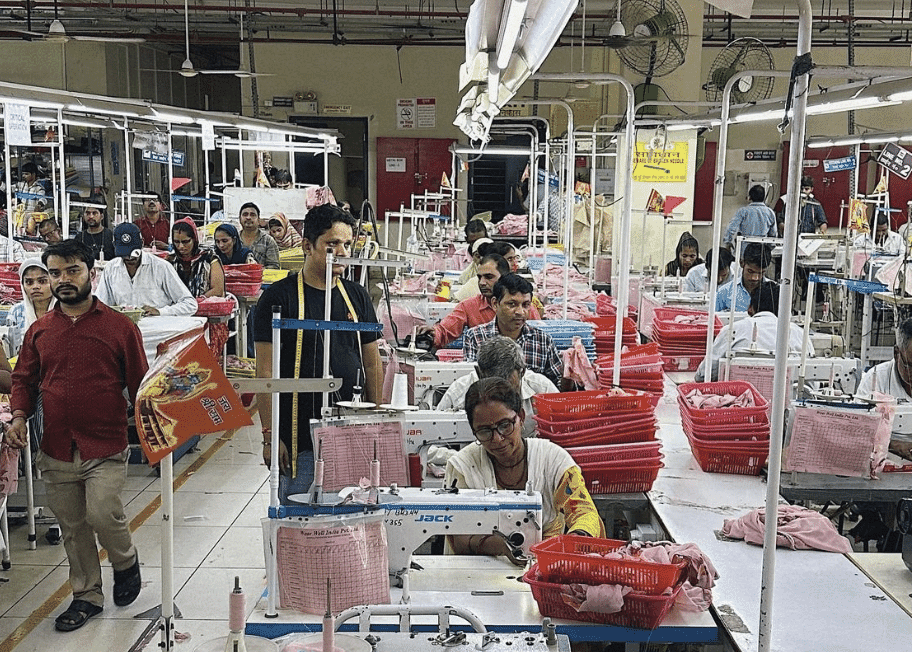
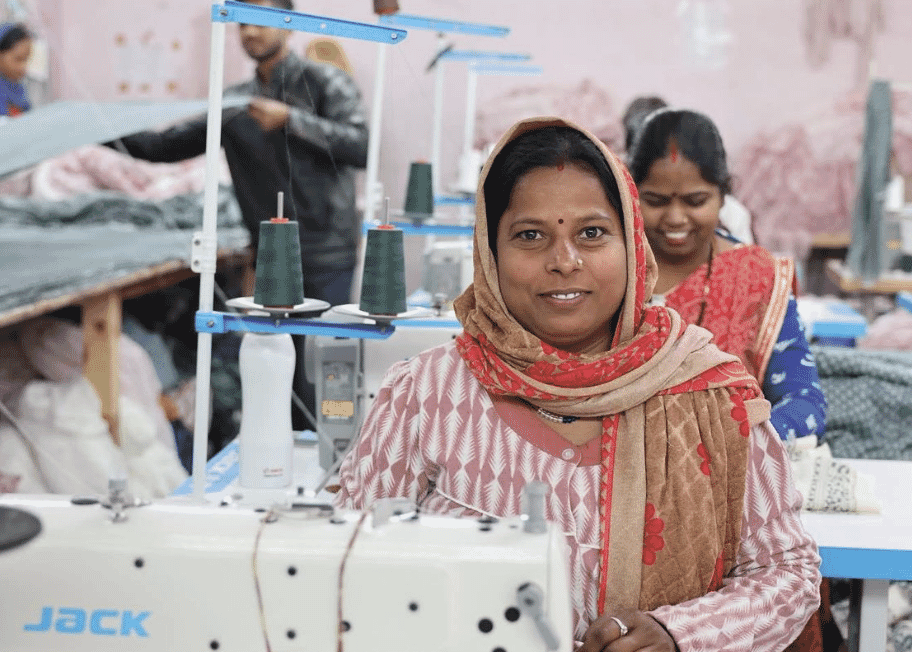
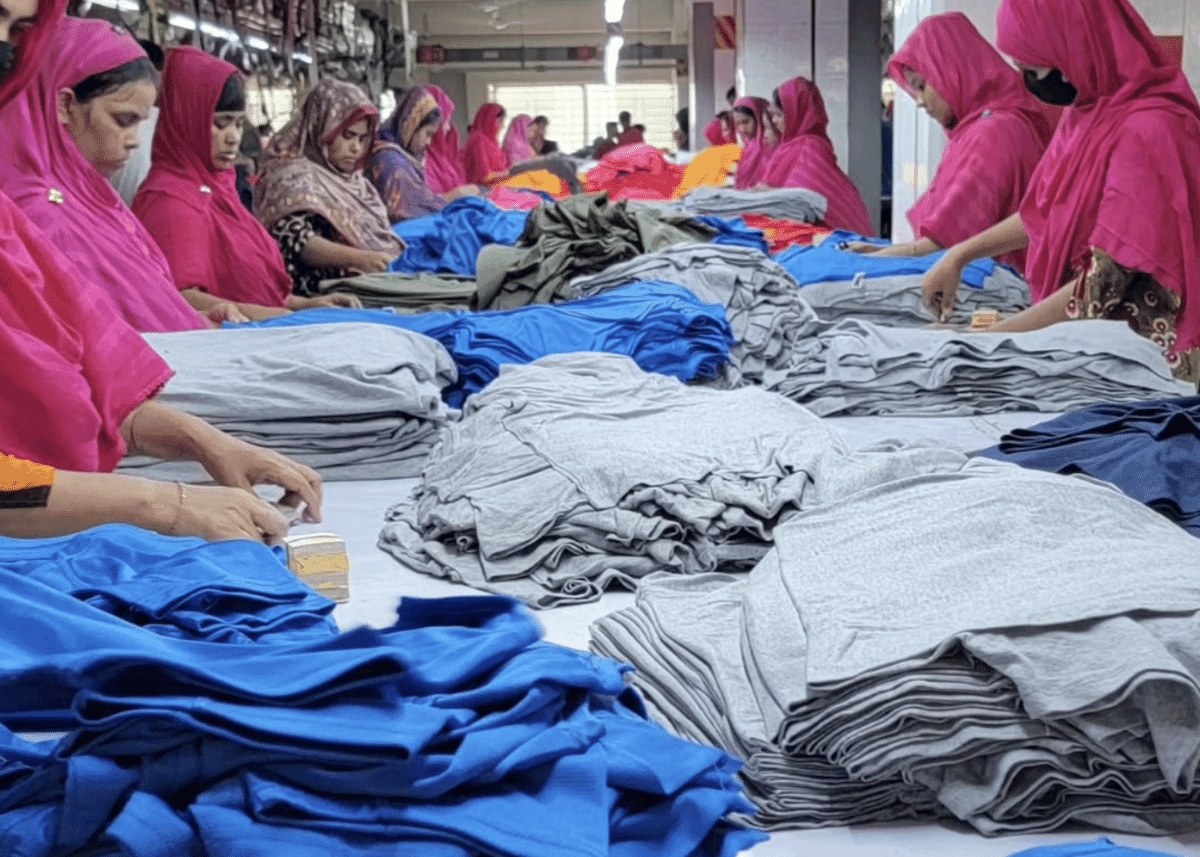
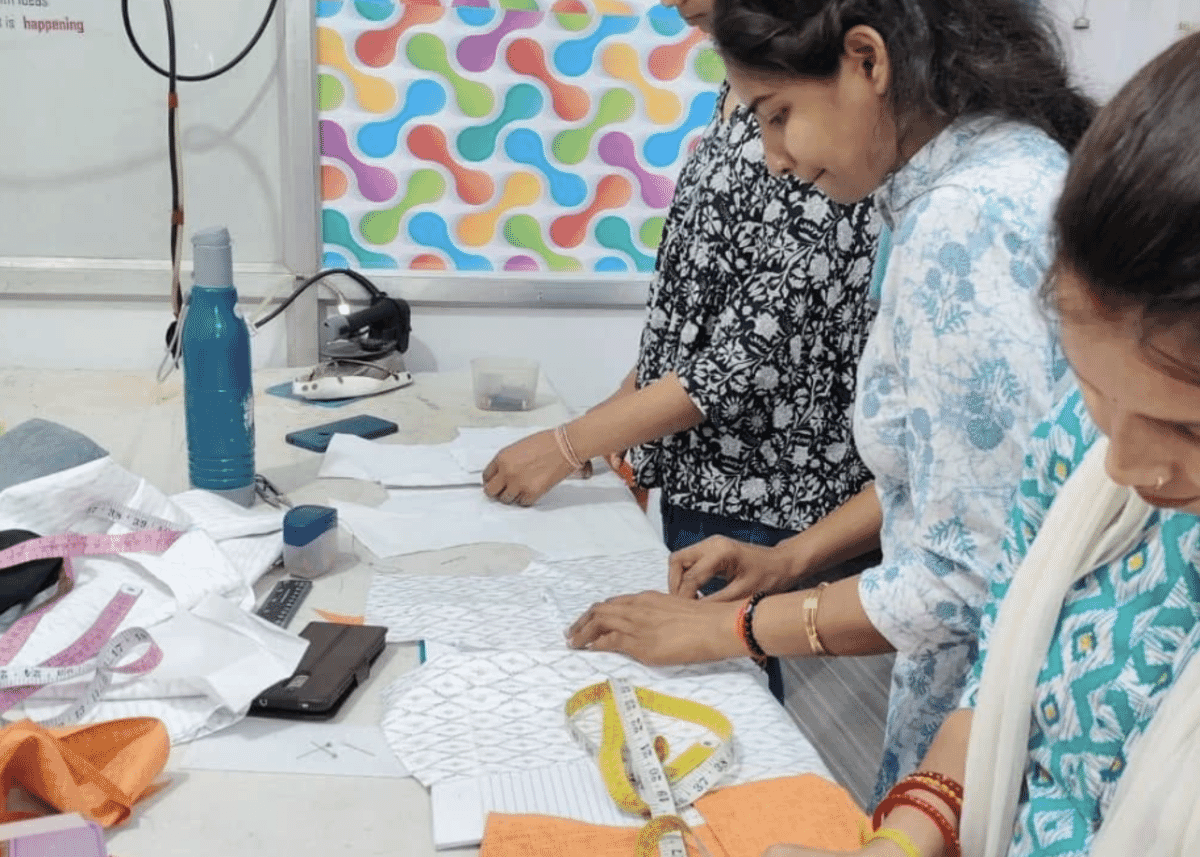
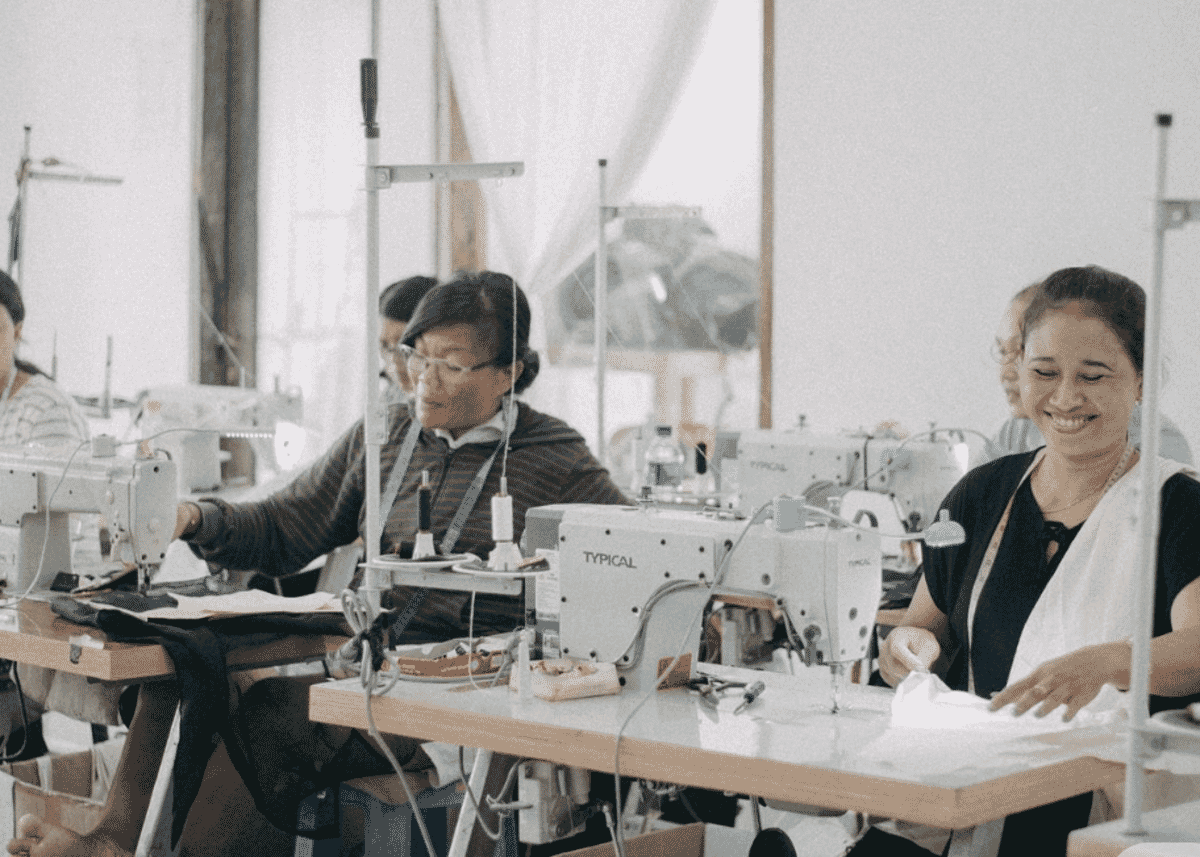
Production of a garment made to your specification, carrying your brand, sold only by you. The factory supplies the manufacturing and usually the fabric sourcing; you supply the design, the specification and the commercial risk. The defining feature is exclusivity of the product rather than exclusivity of the factory. A private label unit typically runs several brands on the same floor using the same machinery. What makes your garment yours is the pattern, the fabric choice, the construction and the label, not the building.
That has a practical consequence brands sometimes find uncomfortable. Your factory is very likely making something similar for someone else, and the protection you have is in your pattern and your specification rather than in a relationship.
Citation Capsule: Private label manufacturing produces garments made to a buyer's own specification and sold under the buyer's brand. Exclusivity applies to the product rather than the factory: private label units typically run multiple brands on shared machinery. The buyer's protection lies in the pattern, specification and construction rather than in an exclusive manufacturing relationship.
Related reading: White label clothing manufacturers · Clothing manufacturers in India · Low-MOQ clothing manufacturers · Clothing Suppliers in India · Wholesale Clothing India · Buying House in India · Agent fees and dual commission · India Sourcing Company
Private Label, White Label or Custom: Which Is Which?
Three models on a spectrum of how much of the garment is yours. The vocabulary is used loosely in the trade, so it is worth pinning down before a conversation rather than after a quote. White label is theirs with your label on it, private label is yours made to your specification, and full custom starts from your own pattern.
| White label | Private label | Full custom | |
|---|---|---|---|
| Starting point | An existing factory style | Your specification, often from a block | A blank sheet |
| Who owns the pattern | The factory | Negotiable, usually unaddressed | You, if you say so |
| Minimum | Set by the factory's stock | From 100 per style with our group; fabric sets the real floor | Set by the fabric made for you |
| Sampling | One confirmation sample | 3 to 5 weeks, several rounds | Longer, from a blank pattern |
| Your label in the neck | Sometimes, on new production | Yes | Yes |
| Exclusivity | None. Others buy the same style | The style is yours | The style is yours |
| Best for | Testing a market cheaply | A brand with a proven style | A product that does not exist yet |
Our editorial summary of the three models. Minimums depend on fabric availability and construction.
Most brands should start in the first column and move to the second, and the trigger for moving is evidence rather than ambition. A style that has sold through twice justifies the pattern investment; a style that has not is an expensive way to test a hypothesis.
Where Are Private Label Clothing Manufacturers in India Located?
In every cluster, but the cluster is set by the product rather than by the model. Private label is a commercial arrangement, not a manufacturing technique, so the geography follows the garment exactly as it would for any other order.
Knit private label sits in Tiruppur, where minimums tend to be lowest and many small private label programmes start. Woven private label sits in Delhi NCR and Bangalore, often with higher minimums because the fabric constraint sits upstream at the mill.
Two practical notes. Units with established private label experience quote differently. They expect a tech pack and they cost from specification rather than from a photograph. They also ask questions about tolerances that a domestic-oriented unit will not. That questioning is a good sign rather than an obstacle.
Citation Capsule: Private label production in India follows the product rather than the model. Knit programmes concentrate in Tiruppur, where minimums tend to be lowest, and woven programmes in Delhi NCR and Bangalore where fabric constraints raise the floor. Units experienced in private label cost from technical specifications rather than photographs and question tolerances before quoting.
What Minimums Does Private Label Carry?
From 100 pieces per style with our group, and considerably more the moment fabric has to be made for you. The model does not change the minimum; the fabric does. Ask what fabric the factory already holds before you argue about the piece count.
The lever is colour, as it is everywhere in apparel. Four colourways are four dye lots, each with its own fabric minimum. The most reliable way to keep a private label launch small is to run one colour. Add the rest on the reorder.
What Does Private Label Cost?
A similar unit price to white label and a meaningfully higher upfront cost. The difference is not in the garment. It is in getting to the garment: pattern making, grading, sampling rounds and the time they take. Budget for pattern making, sampling rounds, fabric development, trims and testing before the first unit price matters.
Budget the development separately from the production. Pattern and grading plus several sampling rounds is a real cost with a real timeline. Brands who fold it into a per-unit calculation on a first order conclude that private label is expensive. What they are actually seeing is a one-off amortised across too few units.
On the reorder that cost disappears. The second run against an existing sealed sample and an existing graded pattern is simply production. That is why private label economics look completely different in season two.
Budget these separately from the unit price
- Pattern making and grading, a one-off per style that survives into every reorder
- Sampling rounds, usually several, each with a sample charge and a courier
- Fabric development or sourcing, where a specific hand or weight is required
- Labels, hangtags and packaging, which carry their own minimums, often higher than the garment
- Testing, for shrinkage, fastness and fibre composition before bulk is cut
Trims are the line that surprises people. A woven label minimum is frequently higher than a first garment order, and nobody mentions it until the purchase order is being written.
How Do You Start a Private Label Programme?
With a specification, a block and one style. Brands that start with a twelve-piece collection spend their first season managing complexity rather than learning what sells, and most of the twelve never reorder. The specification comes first because factories cost from documents. Points of measure with tolerances, construction details, fabric weight and composition, trims, labelling and packing. Without it, quotes are not comparable and the cheapest one is simply the one that assumed the least.
A block is an existing base pattern the factory already has, adjusted to your fit rather than drafted from scratch. Starting from a block cuts the development time substantially and gets you to a sellable garment in one season rather than two. Full drafting is worth it when the silhouette is genuinely the product, as our guide to the garment manufacturing process explains.
One style, in one colour, at the minimum. Everything you learn on that order makes the second one better: the factory, the fabric, the fit, the timeline. The second order is where a private label programme actually begins.
What Labelling Is Legally Required?
Fibre content, country of origin and the identity of the business responsible (its name or RN), plus care instructions under a separate FTC rule, present and accurate on every garment entering the United States. This applies to white label and private label identically, and the obligation is the importer's rather than the factory's (US Customs and Border Protection).
Country of origin is the line most often got wrong on a first order. It has to be on the garment, permanently and legibly. A garment made in India carries India, regardless of where your brand is based or where the fabric came from (FTC).
Fibre content must be right for the garment. This sounds obvious and it is the most common labelling failure. A specification changes during development and the label artwork does not change with it. Check the label against the final fabric composition before bulk is printed.
Citation Capsule: Apparel imported into the United States must carry fibre content, country of origin, the responsible business's name or RN and care instructions, permanently and legibly, whether produced under white label or private label arrangements. The obligation rests with the importer rather than the manufacturer. Country of origin reflects where the garment was made, not where the brand is based or where the fabric originated.
Who Owns the Pattern and the Design?
Whoever the purchase order says, and in many private label orders it says nothing. The default is therefore ambiguity, and ambiguity favours whoever physically holds the pattern, which is the factory. This matters at exactly one moment: when you want to move the style to another factory. A graded pattern developed at Factory A, paid for by you, is usually retained by Factory A. Reconstructing it elsewhere costs a sampling cycle you did not budget.
The fix is a clause and a file. Say in the purchase order that patterns, graded specifications and sealed samples developed for your styles are your property. Ask for the digital pattern file at approval. Many factories agree without objection; the ones who refuse have told you something useful about the relationship.
Design protection is a separate question and a weaker one. Industrial design rights cover the ornamental appearance of an article, and in most countries they have to be registered before they exist at all (WIPO). For a range that turns over every season, the practical protections are speed, fabric relationships and brand rather than legal instruments.
How Do You Control Quality on a Private Label Order?
With a sealed sample, written tolerances and an inspection you book yourself (SGS). In private label the factory is producing to your standard rather than to their own. The standard therefore has to exist in a form that can be checked.
The sealed sample is the contract. It is the approved pre-production sample, signed by both sides and retained at the factory, and it is what a disputed bulk garment gets compared against. A private label programme without one has no agreed standard at the moment a standard is needed.
Tolerances belong beside it as numbers at each point of measure. Take the measurement points from a published table of body measurements rather than inventing them per order (ASTM D5585), so that a disagreement about a bulk garment has somewhere to go.
Book the inspection yourself. An inspection arranged by the factory reports to the factory, costs about the same, and removes the only independent check in the process.
When Should You Move Up From White Label?
When a style has sold through twice. That is the signal because two clean sell-throughs indicate demand in the product rather than novelty. At that point the inability to reorder and to control the fit stops being an inconvenience and becomes the constraint on the whole business.
The arithmetic supports it too. The development cost is a one-off per style, recovered across every subsequent reorder. A style with a future is cheap to develop; a style without one is not.
Moving up with an untested style is simply a more expensive way to be wrong. White label exists precisely to let you be wrong cheaply, and using it for that is not a compromise.
Citation Capsule: The decision point for moving from white label to private label is two clean sell-throughs of a style, which indicates demand in the product rather than novelty. Private label development costs, principally pattern making, grading and sampling, are one-off per style and recovered across subsequent reorders, making development economical for proven styles and expensive for untested ones.
Why Do Trims Have Higher Minimums Than Garments?
Because trims are printed, woven or moulded in set-ups that do not scale down, exactly as fabric is. A woven label loom has to be set to your artwork, a button mould has to be cut, and neither cost falls because you only want a hundred garments.
The practical consequence is that a small first order often comes with more labels than garments, and that surplus is not waste. Labels keep, they carry into every reorder, and they are the cheapest component in the garment. The problem is only that nobody puts them in the first budget.
Two ways to manage it. Use a stock care label and a printed neck label on the first run, moving to a woven main label at the reorder (FTC). Or accept the surplus and treat it as prepaid inventory for the styles you already intend to repeat.
What to confirm before signing a private label purchase order
- The sealed sample is signed and retained at the production unit, not at an office
- Tolerances at every point of measure, not only the chest and length
- Pattern ownership, stated explicitly, with the digital file supplied at approval
- Trim minimums and lead times, so the labels do not delay the garments
- Who books the inspection, which should be you and not the factory
All five are free to agree before production and expensive to resolve afterwards. The pattern clause is the one factories most often leave out and the one you will most want when you move.
Citation Capsule: Trim components in private label apparel carry minimums frequently higher than a first garment order. Woven labels, printed care labels, custom hardware and printed polybags each carry their own set-up, and those minimums are set by tooling and set-up costs that do not scale down, and they belong in a launch budget rather than a per-unit calculation.
Where Private Label Programmes Fail
Four patterns, and the first is the most common. They are too many styles in season one, trim minimums nobody mentioned, the pattern that stayed at the factory, and label content that drifted from the fabric actually used.
Too many styles in season one. Twelve styles at minimum quantity is twelve sampling cycles, twelve fabric decisions and twelve chances for something to slip. Three is a season; twelve is a project.
Trim minimums nobody mentioned. Woven labels, hangtags and custom packaging carry their own minimums, frequently higher than a first garment order, and they arrive as a surprise at the purchase order stage.
The pattern that stayed at the factory. Covered above, and it only bites when you want to move, which is also when you have least leverage.
Label content that drifted from the fabric. Artwork approved in week two, fabric changed in week six, labels printed in week eight. Check one against the other before printing.
How Do You Choose Between Private Label Clothing Manufacturers in India?
Pick the cluster from the product, then pick a unit with private label experience within it. The difference between a unit that costs from a tech pack and one that costs from a photograph shows up in every conversation afterwards.
Start with one style in one colour at the minimum, and budget the development separately so the first-order unit economics do not mislead you. The second order is where the model actually proves itself.
And write down the two things nobody writes down: who owns the pattern, and what the tolerances are. Both are free to agree at the start and expensive to resolve later.
Frequently Asked Questions
What is the difference between private label and white label?
White label is an existing factory style with your label applied, available to anyone who buys it. Private label is made to your own specification and the style is yours. White label usually needs one confirmation sample; private label needs several sampling rounds, and our group's minimum is 100 pieces per style.
What is the minimum order for private label clothing in India?
Our group starts from 100 pieces per style. Above that, the fabric sets the real floor: your own colour means a dedicated dye lot, and fabric made for you carries the mill's own minimum, which can be far higher. The model does not set the minimum; the fabric does.
Does private label cost more than white label?
The unit price is similar. The difference is upfront: pattern making, grading and several sampling rounds, which is a one-off per style. On a first order spread across minimum quantity it looks expensive; on the reorder against an existing sealed sample it disappears entirely.
Who owns the pattern in a private label order?
Whoever the purchase order says, and most purchase orders say nothing, which leaves the pattern with the factory that physically holds it. State in writing that patterns, graded specifications and sealed samples developed for your styles are your property, and ask for the digital pattern file at approval.
What labelling do private label garments need for the USA?
Fibre content, country of origin and the name or RN of the business responsible, plus care instructions under a separate FTC rule, permanently and legibly on the garment. The obligation is the importer's. Country of origin reflects where the garment was made rather than where the brand is based. Fibre content must reflect the final fabric, which is where late specification changes cause failures.
Send the specification, the fabric and the quantity. Our team replies within 24 hours, then we place your production with the factory in our group built for your product. You deal with the factory directly. No commissions. No markups. The factory bills you directly.
Get in contact Download the directory ($49)Need a tech pack? Get a factory-ready single-style tech pack for $79. See what's included.
Editorial note: all company names, certification marks and trademarks referenced here are the property of their respective owners. This guide gives no prices or tariff rates; minimums vary by product, fabric and season. Confirm terms directly with the factory, and your HTS classification with your customs broker, before committing.
Sources
- Federal Trade Commission: Care Labeling Rule for textile wearing apparel.
- Federal Trade Commission: Textile and Wool Acts labelling guidance, covering fibre content, country of origin and manufacturer identification.
- WIPO: Industrial designs: what design rights cover and why registration is normally required for protection.
- SGS: Final random inspection service definition, covering batch sampling and acceptance criteria before shipment.
- US Customs and Border Protection: Textiles and apparel priority trade issue, covering labelling, fibre content and origin requirements.
- ASTM D5585: standard tables of body measurements, used for points of measure.