A sourcing agent in India is paid to find factories, negotiate prices and follow up on production. Whether that is worth paying for depends almost entirely on one question that most brands never ask: who else is paying them.
An agent paid only by you is an extension of your team. An agent paid by you and by the factory is holding two positions at once, and you will only ever see one of them. Both arrangements exist, and only one of them is visible to you.
This guide covers what agents actually do, the four ways they charge, how they differ from buying houses and factory groups, how to vet one, what belongs in the agreement, and the alternatives that cover the same functions for less.
Note: India Clothing Factory is a group of documented clothing factories in India, producing for brands from 100 pieces per style. It is not a sourcing agent or a buying house. There is no published standard rate for agent fees, so the percentages in this guide are labelled examples, not market benchmarks or quotes. We confirm exact MOQ and price with the factory when you send a brief.
Key takeaways
- Four fee models: commission on order value, retainer, per-project fee, or a margin on the goods. The last one is not an agency.
- There is no published standard commission rate: it is negotiated as a share of order value. Retainers suit larger programmes and carry a cleaner incentive.
- Dual commission is the central risk: a fee from you and a percentage from the factory. Ask both sides.
- An agent who will not name the factory is selling access, and access is the least valuable thing they do.
- Agents earn their fee on follow-up and quality, not on finding suppliers. Directories find suppliers.
- Vet on lane and category experience, not on how many factories they claim to know.
- On a small programme (as a rough rule of thumb, below about eight live styles), independent inspection plus a complete tech pack covers much of the same ground.
What Does a Sourcing Agent in India Do?
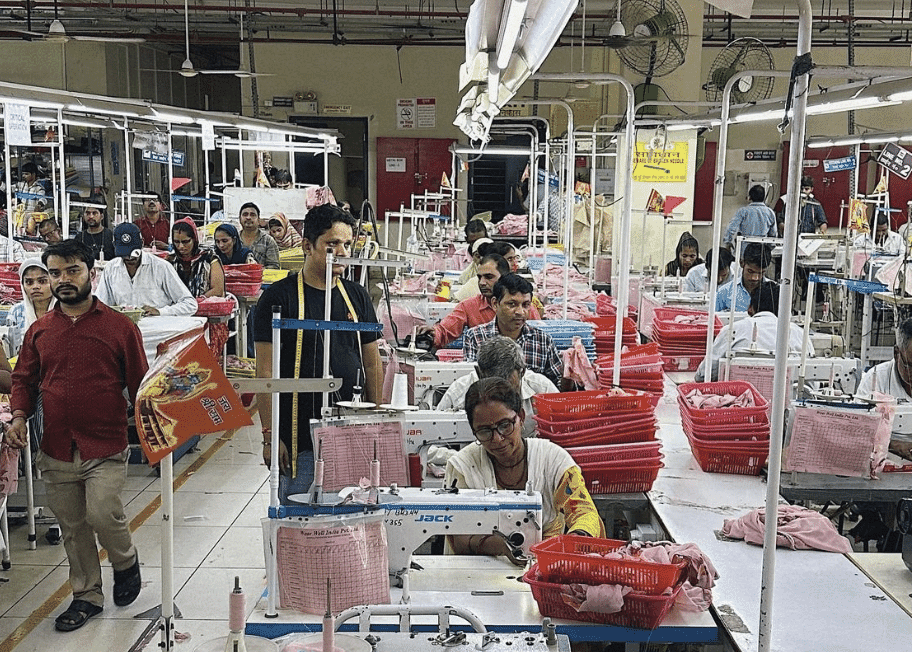
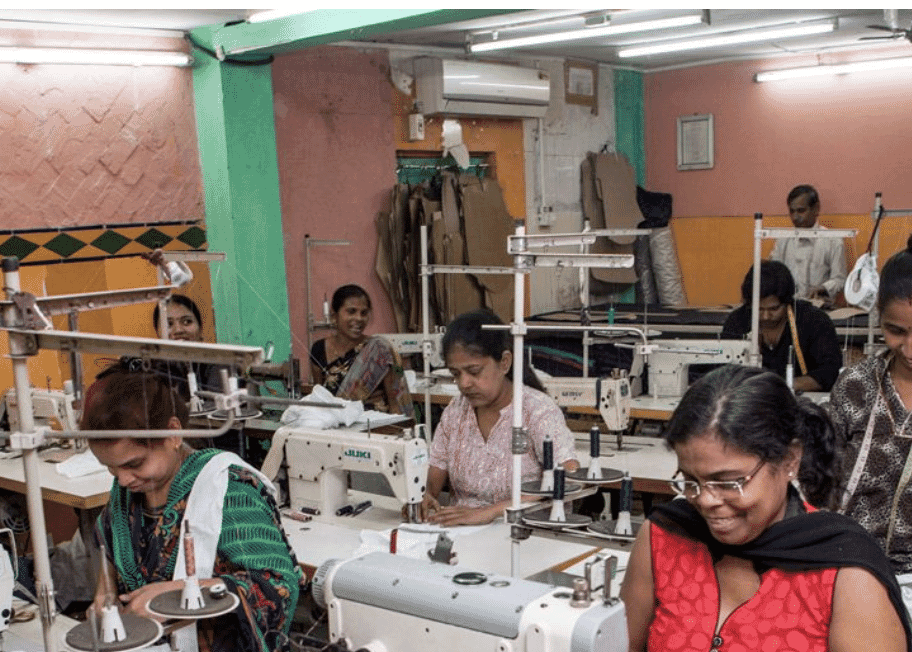
Five things: identifying factories, obtaining and comparing quotes, managing samples and approvals, following up production, and arranging quality checks. Many brands appoint an agent for the first and end up valuing the fourth.
Finding factories is the function agents market hardest and the one that has become least valuable. Directories, export council channels and trade fairs all produce long lists, and the work that remains is filtering, which an agent may or may not do better than you.
Following up is where the value actually sits. Someone in the country, in the time zone, who can telephone a merchandiser and physically visit a unit when fabric is late is doing something you cannot do from another continent. That is the service, and it is worth paying for when you have enough production to need it.
Citation Capsule: A sourcing agent in India performs five functions: identifying factories, obtaining and comparing quotes, managing samples and approvals, following up production, and arranging quality checks. Supplier identification, the function most heavily marketed, is the most easily replaced by directories and export council channels. Production follow-up in the local time zone is the function hardest to replicate remotely.

Related reading: Buying houses in India · Supplier, trader or factory · Clothing manufacturers in India · Wholesale Clothing India · Our group compared with a sourcing agent
How Do Sourcing Agents Charge?
Four ways, and the structure tells you more about the relationship than the rate does. There is no published standard rate in India: the level is negotiated and depends on order size and what is included. Some structures align the agent with you and some do not, and the difference is visible in the paperwork rather than in the pitch.
| Model | Typical level | Aligned with you? | Watch for |
|---|---|---|---|
| Commission on order value | A negotiated percentage; no published standard rate | Partly. They earn more when you buy more | Advice to increase order size, and reluctance to cancel |
| Monthly retainer | A fixed monthly fee | Yes, most cleanly | Drift in service level once the fee is fixed |
| Per-project or per-style fee | A fixed fee per style developed | Yes, for development work | Weak incentive to follow production after approval |
| Margin on the goods | Hidden in the unit price | No. They are a principal, not an agent | They are a trading company. That is fine, but know it |
Common fee structures; levels are negotiated case by case. The alignment column reflects the incentive the structure creates, not the integrity of any individual firm.
The fourth row is the one to identify early. If the agent invoices you for the garments rather than the factory invoicing you and the agent invoicing a fee, they are taking title and their margin is inside the unit price. That is a legitimate business and it is not an agency relationship.
Agent, Buying House or Factory Group: What Is the Difference?
Three models with different economics and different failure modes. The vocabulary is used loosely, so the reliable test in every case is who invoices you for the goods and how the intermediary is paid. An agent is paid a fee, a buying house is paid a percentage, and a factory group places your production with the factory that bills you directly.
A sourcing agent is typically an individual or a small firm working on commission or retainer, strongest on access and relationships, lightest on infrastructure. Quality depends heavily on the specific person.
A buying house is an agency with merchandising and quality staff, charging a disclosed percentage, and is effectively an outsourced buying office. Stronger on systems, more expensive, and, as a rule of thumb, worth it above roughly eight to ten live styles.
A factory group places production with the unit built for the product and charges a flat fee rather than a percentage of what you buy, with the factory invoicing you directly. The structural difference is that nobody between you and the factory earns more when your order grows.
Citation Capsule: Sourcing agents, buying houses and factory groups differ in payment structure and infrastructure. An agent typically works on commission or retainer with relationship-based access. A buying house provides merchandising and quality staff for a disclosed percentage. A factory group places briefs for a flat fee with the factory invoicing the buyer directly. The reliable test in each case is who invoices for the goods.
When Is an Agent Worth Paying?
When you have enough production for follow-up to be a real job and not enough to justify your own presence. That band moves with how complete your specifications are. Below it, the fee buys you less than it seems.
Run the arithmetic with your own rate. At an example commission of 10 percent, a $120,000 programme costs $12,000 a year, which buys quite a lot of independent inspection and a freelance merchandiser's part-time attention. The same 10 percent on a $1.2 million programme is $120,000, enough to pay for your own person in Tiruppur.
The variable that moves this most is specification quality. A complete tech pack removes much of the back-and-forth an agent exists to manage, which means the better your documentation, the less agency you need.
No tech pack yet? Factories quote from specifications, not from photographs. A factory-ready single-style tech pack is $79: measurements, construction, fabric, trims and labelling in the format an Indian factory costs from.
How Do You Find a Sourcing Agent in India?
Through referral from another brand, through trade fairs, and through the export council and trade-body networks. A cold search works less well, because the agents who rank highest are often the ones who invested in marketing rather than the ones with the best factory relationships.
The strongest signal is a brand in your category who has used them for more than two seasons. Ask that brand three specific questions: what the fee structure is, whether the agent has ever advised against an order, and how a quality dispute was handled.
The second question is the useful one. An agent who has never advised a client against placing an order is either extremely lucky or is being paid in a way that makes the advice expensive to give.
Questions that separate agents worth appointing
- Which categories have you shipped in the last twelve months? Not which you can do
- Which clusters do you physically visit, and how often? Presence, not coverage claims
- How are you paid, by me and by anyone else? Asked in exactly those words
- Will you name the factory before the first order? A no is an answer
- Give me two brand references in my category. Then ask those brands the fee question
The third question is the one that changes relationships. Asked directly and in writing, it converts an assumption into a term of business, and an agent who deflects it has answered it.
How Do You Vet a Sourcing Agent?
On category experience, verifiable presence and willingness to be transparent about factories and fees. Everything else, including the size of their claimed network, is marketing rather than capability. Ask for two factory addresses and the fee basis in writing, and treat a refusal on either as the answer.
| What to check | How | What a weak answer looks like |
|---|---|---|
| Category experience | Ask what they shipped last season, by product | A list of capabilities rather than shipments |
| Cluster presence | Ask where their office is and which units they visit | National coverage from one city |
| Fee transparency | Ask in writing about supplier-side payments | Assurances without a written undertaking |
| Factory disclosure | Ask whether you will know and visit the unit | Protecting relationships as a reason for secrecy |
| Quality process | Ask who inspects and who receives the report | Inspection arranged and summarised by them |
| References | Two brands in your category, contacted directly | Logos on a website with no names behind them |
Our team's vetting checklist. The third column describes answers that should prompt more questions before you sign.
The factory disclosure row deserves emphasis. Agents sometimes decline to name units on the grounds that you will go direct, which is a real commercial concern and an unworkable basis for a quality relationship. If you cannot know where your goods are made, you cannot audit, inspect or resolve anything: social compliance audits such as amfori BSCI assess conditions at a named production site.
Citation Capsule: Vetting a sourcing agent in India rests on category experience evidenced by recent shipments rather than claimed capability, and verifiable physical presence in the relevant cluster. It also rests on written transparency on supplier-side payments, willingness to disclose the manufacturing unit, and independent quality reporting. An agent who declines to name the factory prevents the buyer from auditing, inspecting or resolving quality issues.
What Is Dual Commission and How Do You Stop It?
An arrangement where the agent takes a fee from you and a percentage from the factory on the same order. It is rarely disclosed, and it quietly inverts the relationship you think you have. Require written disclosure of any supplier-side payment.
The mechanics are simple. Take an example: you pay 8 percent for representation, and the factory pays the agent 5 percent for bringing the order and keeping the business. Your agent now earns 13 percent, of which you can see 8, and on any question where your interest and the factory's diverge, more of their income sits on the other side.
Two things stop it. A written undertaking in the agreement that no payment flows to the agent from the supplier side, and asking the factory directly what they pay. The second is more effective than the first, and the fact that you asked changes the answer to every question that follows.
Citation Capsule: Dual commission occurs when a sourcing agent receives a fee from the buyer and an undisclosed percentage from the factory on the same order. It is prevented by a written undertaking in the agency agreement that no payment flows from the supplier side, and by asking the manufacturer directly what it pays the agent. The second method is the more effective of the two.
What Should Be in the Agreement?
Six clauses, and five of them are about money and information rather than about performance. Performance is hard to specify in advance; incentives are not. Specify the fee basis, disclosure of supplier-side payments, who owns the factory relationship, who owns patterns and designs, notice, and what happens on exit.
Six clauses worth insisting on
- Fee stated explicitly, as a percentage or retainer, never inside the unit price
- No supplier-side payment, as a written undertaking with a right to verify
- Factory disclosure, naming the manufacturing unit before production
- Inspection reports direct to you, unedited and unsummarised
- Fee on shipped and accepted value, not on orders placed
- Termination and factory continuity, so that ending the agency does not end the relationship
The last clause is the one agents resist hardest and the one that most protects you. Without it, the relationship you paid to build belongs to them.

What Should You Measure an Agent On?
Four things, and price is not one of them. Price is the metric agents report because it is the easiest to show movement on, and a lower price with a higher defect rate is a worse outcome that reads better on a summary.
On-time cargo readiness. The percentage of orders ready on the agreed date. It is the cleanest single measure of follow-up quality.
First-presentation inspection pass rate. How often an order passes final inspection without rework. High rates reflect genuine inline control rather than end-of-line sorting.
Sample cycles to approval. Rounds from proto to sealed sample. More rounds usually means the brief was communicated poorly, which is the agent's job.
Downstream claims. Returns and complaints from your own customers. It lags, and it is the only measure that reflects what you actually sold.
What Are the Alternatives?
Three, and many small brands with few live styles are better served by assembling them than by appointing an agency. They are independent inspection, a complete technical package, and placing production through a factory group that bills you factory-direct. Together they cover most of what an agency is paid for.
Independent inspection. Third-party pre-shipment inspection booked and paid by you reports to you, not to the agent. A final random inspection is carried out when production is complete and at least 80 percent of the goods are packed, using AQL sampling (SGS).
A complete technical package. Most of what a merchandiser manages is ambiguity in the specification. Removing the ambiguity removes much of the work, as the production process makes clear.
Placing production through a factory group. Where the fee is flat and the factory invoices you directly, nobody between you and the factory earns more as your order grows, and the factory relationship is yours rather than borrowed.
Citation Capsule: Three alternatives cover most sourcing agent functions for smaller programmes: independent third-party pre-shipment inspection commissioned and paid by the buyer, which covers quality and reports directly to the buyer. A complete technical package, which removes the specification ambiguity that generates most merchandising work; and placing production through a factory group on a flat fee with the factory invoicing the buyer directly.
Where Agent Relationships Go Wrong
Four common patterns. The first two are the same problem described from opposite ends. They are undisclosed supplier commission, factory capture, access sold as the product, and a fee charged on ordered rather than shipped value. Only the last is visible in the contract.
Undisclosed supplier commission. Covered above, and it is the root of most of the rest.
Factory capture. The agent's relationship with the unit is older and more valuable than their relationship with you, so quality conversations soften over time. Independent inspection is the counterweight.
Access as the product. An agent who will not name the factory is selling secrecy, and secrecy is worth less every season as the relationship should have been maturing.
Fee on ordered value. They are paid when you commit rather than when you sell. Paying on shipped and accepted value fixes it in one line.
Appointing a Sourcing Agent in India
Decide what you are short of before you appoint anyone. If you are short of follow-up capacity, an agent is the right answer and the fee is defensible. If you are short of factories, a directory and a cluster map do the same job for much less.
Ask the payment question in writing, in exactly those words, and ask the factory the same question separately. Almost everything that goes wrong in these relationships traces back to an answer nobody asked for.
And keep the inspection outside the agency. It is a simple structural protection, the report comes to you, and it is the one control that keeps working when the relationship stops.
Frequently Asked Questions
What does a sourcing agent in India charge?
There is no published standard rate. Most agents charge a negotiated commission on order value, a monthly retainer, or a fixed fee per style developed. A fourth arrangement, a margin built into the unit price, is a trading company rather than an agency. The structure matters more than the level, because it determines whose interests the agent's income follows.
What is dual commission and why does it matter?
An agent taking a fee from you and an undisclosed percentage from the factory on the same order. It means part of their income sits on the other side of every disagreement you have with the supplier. Prevent it with a written no-supplier-payment undertaking and by asking the factory directly what it pays.
Should a sourcing agent tell me which factory makes my goods?
Yes. Agents sometimes decline on the grounds that you will go direct, which is a real commercial concern and an unworkable basis for a quality relationship. If you do not know where your goods are made, you cannot audit the facility, inspect production or resolve a defect at source.
Do I need a sourcing agent to manufacture in India?
Not always. On a small programme, as a rough rule of thumb below about eight live styles, independent third-party inspection plus a complete technical package covers much of what an agent provides. Agents earn their fee on production follow-up, which becomes valuable as volume and style count grow.
How do I find a good sourcing agent in India?
Through referral from a brand in your category that has used them for more than two seasons, through trade fairs, and through export council networks. Ask the referring brand what the fee structure is, whether the agent has ever advised against an order, and how a quality dispute was handled.
Tell us the product and the quantity, from 100 pieces per style. Our team replies within 24 hours and places your production with the factory in our group built for it. You agree price and terms with the factory directly, and our fee is quoted in writing, never tied to order size. No commissions. No markups. The factory bills you directly.
Get in contact Download the directory ($49)Need a tech pack? Get a factory-ready single-style tech pack for $79. See what's included.
Editorial note: all company names, certification marks and trademarks referenced here are the property of their respective owners. Fee percentages in this guide are illustrative examples, not market rates or quotes. Inspection and audit facts come from the sources listed below, checked on 25 October 2026. Confirm terms in writing with any agent or factory before committing.
Sources
- amfori BSCI: social risk management and compliance audits at production sites.
- SGS: Final random inspection, AQL sampling to ANSI/ASQ Z1.4 (ISO 2859-1), carried out when production is complete and at least 80 percent of goods are packed.