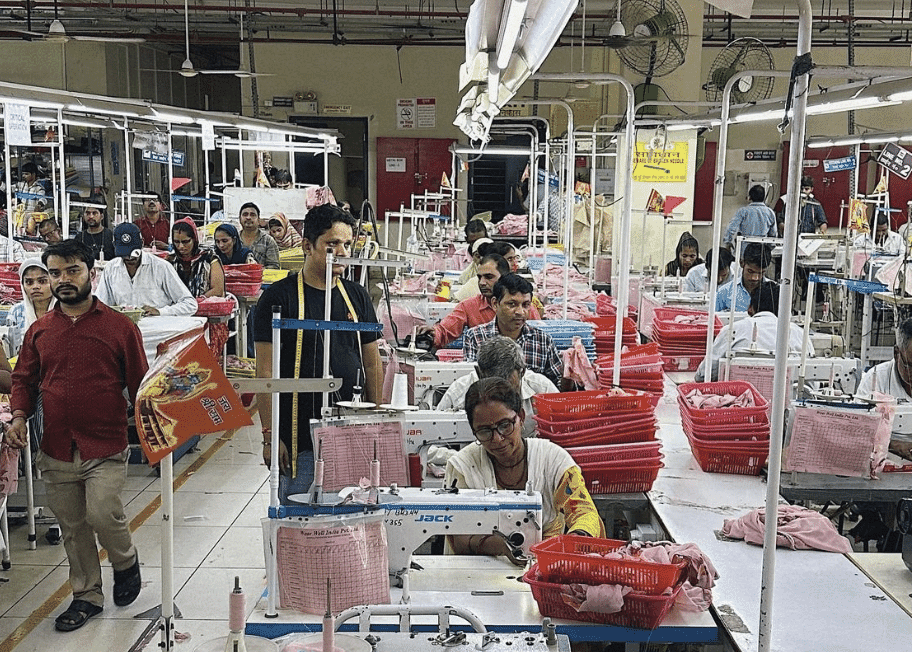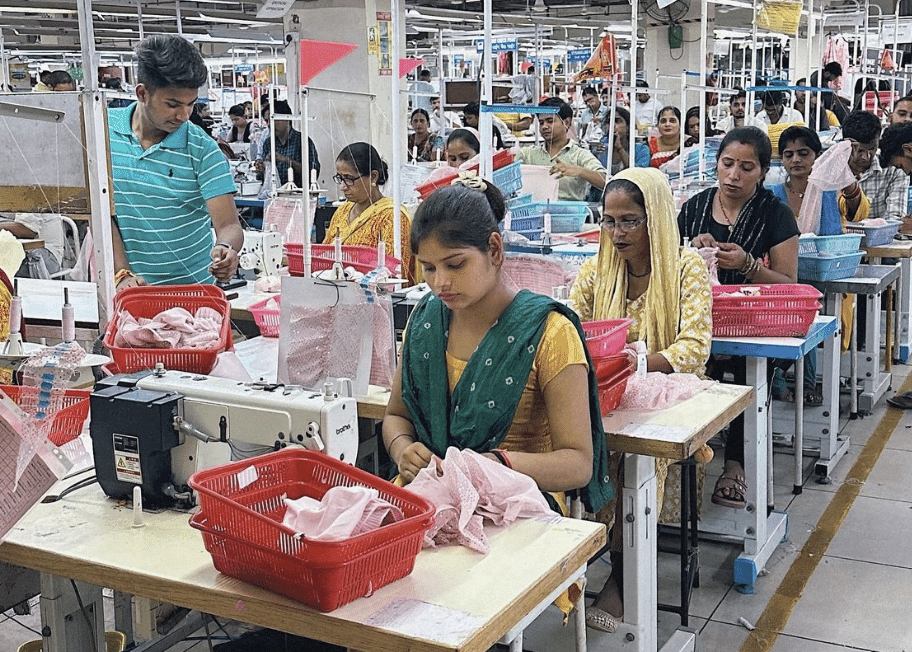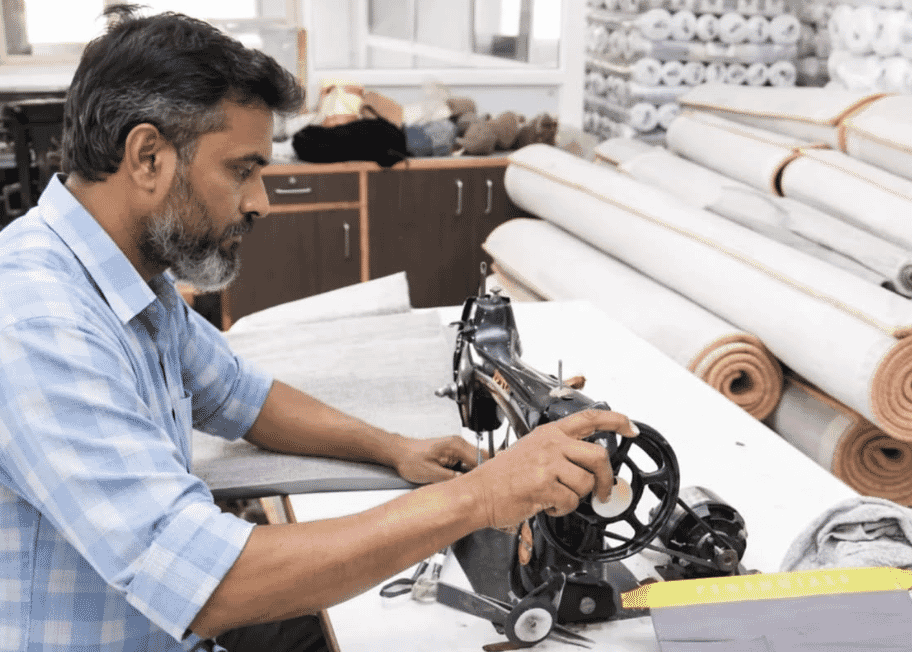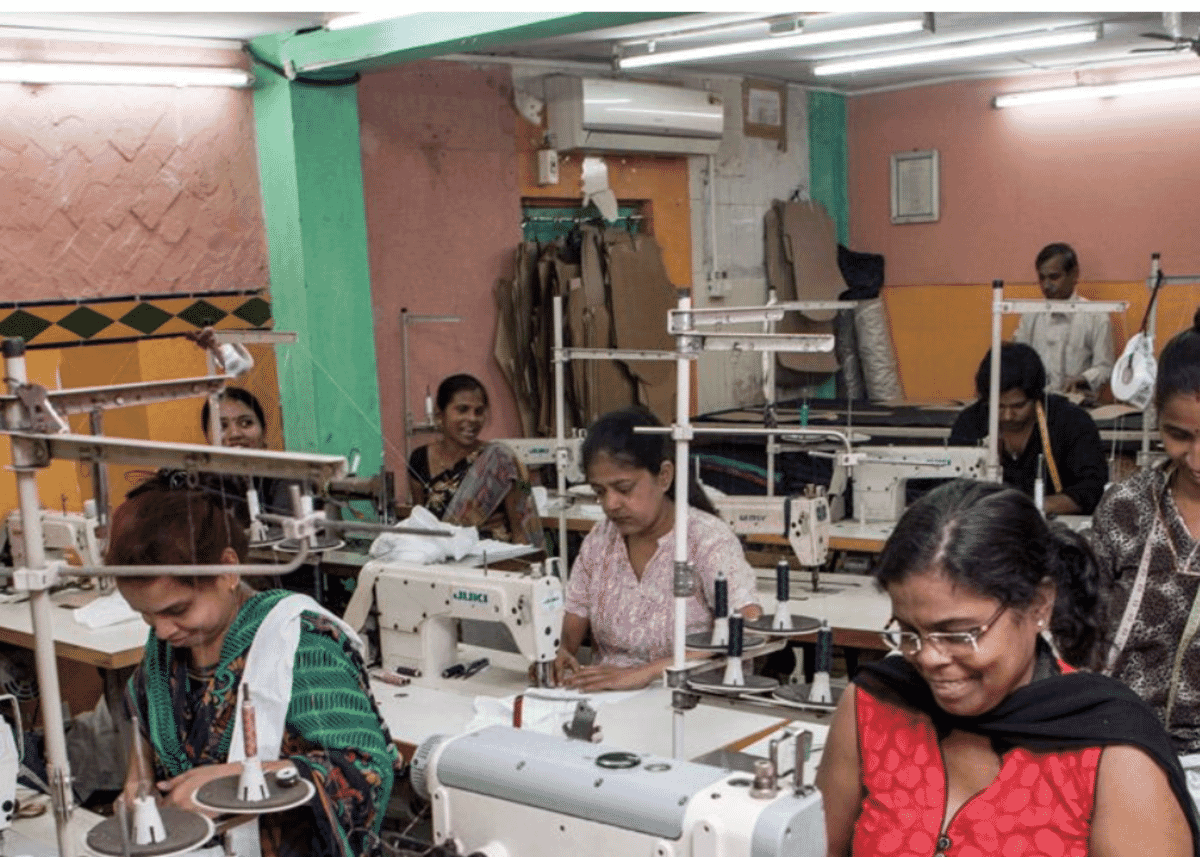
The Surat textile market is not a garment market. That single misunderstanding sends more foreign buyers to the wrong city than anything else in Indian sourcing. Surat is where fabric is made, printed and finished, and it supplies the cutting rooms in Tiruppur, Delhi and Ahmedabad rather than competing with them (Ministry of Textiles).
If your product is defined by its cloth, a viscose print, a poly-crepe, a digitally printed rayon, then your supply chain starts in Gujarat and the garment factory comes second. If your product is a cotton jersey tee, Surat has almost nothing for you.
This guide to the Surat textile market covers what Surat actually produces, how the markets and mills are organised, how a foreign brand buys fabric there without being in the room, what the minimums and price bands look like, and the categories where sourcing from Surat is a mistake.
Note: India Clothing Factory is a group of documented clothing factories in India, producing for brands from 100 units. Ranges in this guide are given as market ranges, not as quotes from a specific factory. Ranges come from published industry sources. We confirm exact MOQ and price with the factory when you send a brief.
Key takeaways
- Surat is India's man-made fibre capital: polyester, viscose, rayon and blends. It is a fabric cluster, not a garment cluster.
- The city runs on three separate trades: weaving, processing and trading. Most sellers you meet are in the third.
- Digital printing is Surat's genuine advantage. It collapses the minimum on a print from thousands of metres to hundreds.
- Fabric minimums are quoted per colour and per design, which is the number that catches brands out, not the total.
- A Surat trader will sell you fabric. Very few will ship it abroad, because export registration is rare in the market trade.
- Quality variance is the price of the price. Written specifications, GSM and shrinkage tolerances belong in the purchase order.
- Surat is the wrong answer for cotton knits, certified organic supply and structured tailoring fabrics.
What Is the Surat Textile Market?
A cluster of textile markets, weaving units and processing houses in Gujarat that together form India's largest concentration of man-made fibre production. It is organised as trading markets sitting on top of an industrial base, which means the shop you buy from and the mill that made the cloth are usually different businesses in different parts of the city.
Understanding that separation is the whole of understanding Surat. India's textile sector is overwhelmingly composed of micro, small and medium enterprises, and Surat is the clearest expression of that structure (Invest India). Weaving, dyeing, printing, finishing and trading are frequently five separate companies touching the same roll of cloth.
The consequence for a buyer is that responsibility fragments. When a shade fails or a fabric shrinks past tolerance, the trader points at the processor, the processor points at the weaver, and none of them signed anything with you. This is solvable, and the solution is written specification rather than a better relationship.
Citation Capsule: The Surat textile market in Gujarat is India's largest man-made fibre cluster, producing polyester, viscose, rayon and blended fabrics. It is structured as trading markets sitting above an industrial base of weaving, dyeing, printing and finishing units, which are typically separate companies. India's textile sector is predominantly composed of micro, small and medium enterprises.
Related reading: Clothing manufacturers in India · Clothing suppliers in India · Wholesale clothing from India
What Does Surat Actually Make?
Man-made fibre fabric, in every construction a mass market wants, plus the printing and finishing that goes on it. What it does not make in any depth is cotton knit, and buyers who arrive expecting jersey leave disappointed or, worse, leave with a viscose blend sold as cotton.
| Fabric family | Typical uses | Surat's depth |
|---|---|---|
| Polyester woven crepe, georgette, chiffon | Dresses, blouses, linings, scarves | Very deep. The core of the cluster |
| Viscose and rayon | Dresses, tunics, resortwear, soft drape | Deep, with wide quality variance at similar prices |
| Poly-viscose and poly-cotton blends | Shirting, uniforms, workwear | Deep and price competitive |
| Printed synthetics screen, rotary and digital | Anything print-led | The genuine specialism. Digital capacity is substantial |
| Embroidered and embellished fabric | Occasionwear, festive, bridal | Deep, largely serving the domestic market |
| Cotton woven | Shirting, dresses | Present but not the cluster's strength |
| Cotton knit | Tees, polos, jersey | Effectively absent. This belongs in Tiruppur |
Fabric families compiled from published cluster profiles and Ministry of Textiles cluster descriptions. The depth column describes concentration of capacity, not the existence of individual exceptions.
The bottom two rows are the useful ones. A Surat seller will quote you cotton knit because somebody in the market can obtain it, and what you receive will have travelled from Tamil Nadu with a margin attached. Buy knits where knits are made. Our guide to Tiruppur manufacturers covers that side.
Citation Capsule: Surat's fabric production is concentrated in man-made fibres. These are polyester wovens including crepe, georgette and chiffon, viscose and rayon, poly-viscose and poly-cotton blends, printed synthetics across screen, rotary and digital methods, and embellished occasionwear fabric. Cotton knit capacity is effectively absent from the cluster and is concentrated in Tiruppur instead.
Which Markets and Mills Should You Know?
Surat's trade is organised into large market complexes, each with thousands of individual shops, sitting alongside the weaving and processing estates that actually make the cloth. As a foreign buyer you are unlikely to transact in a market shop directly, but knowing the structure tells you what kind of company is answering your enquiry.
The market complexes in the Ring Road and Salabatpura areas are where the trading happens. A shop here holds stock and sample books, sells by the metre or the roll, and serves India's domestic garment trade. Minimums are low, prices are keen, and export capability is rare.
The weaving estates around Sachin, Pandesara and Katargam hold the powerloom and shuttleless weaving capacity. These units sell greige fabric, usually to processors rather than to end buyers, and their minimums are set by loom set-up rather than by demand. Our guide to textile manufacturers in India explains how those set-up minimums work across every segment.
The processing houses do dyeing, printing and finishing. For a brand with a specific colour or print, this is the tier that determines whether your product is possible, and it is the tier most buyers never speak to because a trader stands in front of it.
The export-registered mills are the smallest group and the one that matters to you. These hold an Importer Exporter Code and ship internationally as a matter of routine (DGFT). They are more expensive than the market and they are the only tier where a first transaction is likely to complete.
Which tier is answering your enquiry
- Quotes per metre with immediate stock availability: a market trader
- Quotes greige, sells by the beam or the loom run: a weaver
- Talks in shades, pantone and finishing routes: a processing house
- Quotes FOB Nhava Sheva and asks for your HS code: an export-registered mill
- Quotes everything and owns nothing: a trader with a wide address book
None of these tiers is the wrong one to talk to. The mistake is not knowing which one you have reached, and therefore not knowing who can fix a problem.
Skip the search: the India factory directory ($49) lists documented factories by category, city and capability, with the verification status of each. One-time payment, instant download.
How Do You Buy Fabric From Surat as a Foreign Brand?
Three practical routes, and the one most buyers try first is the one least likely to work. Buying directly in the market requires a presence in India, someone who can inspect rolls and arrange export, and an appetite for handling documentation that a market seller has never produced.
Through an export-registered mill or converter. Slowest to find, easiest to complete. The seller holds an IEC code, quotes on export terms, and understands packing lists and certificates of origin. You pay a premium over market prices and you receive goods.
Through your garment factory. The most common route and the most underrated. Your sewing unit buys the fabric on your behalf, inspects it on arrival, and carries the risk of a rejected lot because they cannot cut it. The fabric cost appears inside your garment price rather than as a separate import.
Through a buying agent with a Surat presence. Useful when the fabric is the point of the product and you want to select it yourself. Expect a disclosed percentage and insist that the inspection report comes to you rather than through the agent's supplier relationships.
For most brands making garments rather than selling cloth, the second route is right. Fabric imported separately has to be re-exported inside a garment, which means an additional customs movement and a reconciliation problem you did not need.
Citation Capsule: Foreign brands buy Surat fabric through three routes. The first is directly from an export-registered mill holding an Importer Exporter Code. The second is through their garment factory, which purchases and inspects the fabric as part of the garment price, and the third is via a buying agent with a local presence. Buying in the trading markets directly requires handling export documentation that domestic market sellers rarely produce.
What Are the Minimums in the Surat Textile Market?
Quoted per colour and per design, not per order, and that is the number that surprises people. A 3,000 metre order across six colourways is six separate 500 metre commitments as far as a dyeing house is concerned, because the dye bath is the unit of production.
| What you are buying | Indicative minimum | What sets it |
|---|---|---|
| Stock fabric, existing design | 50 to 100 metres | Nothing upstream. It already exists |
| Digital print, your artwork | 100 to 300 metres per design | Set-up and colour calibration, not the printing |
| Rotary screen print, your artwork | 1,000 to 3,000 metres per design | Engraving the screens, which is a fixed cost |
| Dyed to a specific shade | 300 to 600 metres per colour | The dye bath capacity |
| Commissioned weave, your construction | 2,000 metres and up | Loom set-up and beam length |
| Embroidered or embellished | 200 to 500 metres per design | Machine set-up and thread changes |
Market ranges compiled from published industry sources, expressed per design or per colour rather than per order. They are not quotes from any named mill and move with construction, season and capacity.
The strategic read: if you need many colours in small quantities, digital printing and stock fabric are the only two routes that work. Everything else in that table is designed around a mass domestic market that buys one design in enormous volume.
No tech pack yet? Factories quote from specifications, not from photographs. A factory-ready single-style tech pack is $79: measurements, construction, fabric, trims and labelling in the format an Indian factory costs from.
What Does Surat Fabric Cost?
Low, and quoted in ways that make comparison difficult. Fabric is sold by the metre in some transactions and by the kilo in others, at widths that vary between 44 and 58 inches, which means two quotes on the same cloth can differ by a third without either seller being dishonest.
| Fabric | Indicative band per metre | What moves it |
|---|---|---|
| Polyester crepe or georgette | $0.55 to $1.20 | Denier, finish and whether it is recycled content |
| Viscose rayon, plain | $0.90 to $1.90 | Quality of the base yarn, which varies enormously |
| Poly-viscose shirting | $1.10 to $2.40 | Blend ratio and finishing |
| Digitally printed viscose | $1.80 to $3.50 | Coverage, number of passes and base cloth |
| Rotary printed polyester | $0.90 to $1.80 | Number of colours in the design |
| Embroidered synthetic | $2.50 to $7.00 | Stitch density and whether it is hand finished |
Market ranges compiled from published industry sources, expressed per metre in USD before freight and duty. Fabric width is not standardised, so confirm width before comparing any two quotes.
Always convert to a cost per garment before comparing suppliers. A cheaper fabric at 44 inches can cost more per garment than a dearer one at 58 inches, because the marker efficiency changes and your consumption changes with it.
Why Is Surat the Centre of Digital Printing?
Because the cluster installed the capacity early and at scale, and because man-made fibres take digital pigment and disperse inks better than cotton does. The result is that Surat can print a few hundred metres of an original design economically, which nowhere else in India does at the same depth.
That matters more than it sounds. Rotary screen printing requires an engraved screen per colour, and the engraving is a fixed cost recovered across the run. Digital printing has no screen, so the set-up cost collapses and with it the minimum. For a brand launching four prints in three colourways, this is the difference between a possible collection and an impossible one.
The trade-offs are real and worth knowing before you commit. Digital output has a different hand-feel, colour fastness on some substrates is lower than rotary, and very large runs remain cheaper by screen. Ask for a wash-tested strike-off rather than a dry print sample.
Citation Capsule: Surat is India's principal centre for digital textile printing because man-made fibres accept digital inks well and the cluster installed capacity at scale. Digital printing eliminates the per-colour screen engraving cost required by rotary printing, reducing minimums from 1,000 to 3,000 metres per design to roughly 100 to 300 metres. That is what makes small original print runs viable.
How Do You Control Quality on Surat Fabric?
With a written specification and a pre-shipment test, not with a relationship. Quality variance in Surat is not usually deception. It is a supply chain with five owners and no shared tolerance, and the fix is to state the tolerance in the purchase order so that somebody is accountable to it.
Four parameters carry almost all the risk: fabric weight in grams per square metre, width, shrinkage after wash, and colour fastness. Each of them is testable, each has an international test method, and each is routinely omitted from purchase orders written by brands who then have no basis to reject a lot.
Independent testing is cheap relative to a rejected garment run. Where the fabric claim carries the price, as it does with anything described as organic, recycled or certified, verify the certificate number in the issuing database rather than accepting a document (Textile Exchange). Certificates in this trade are copied freely.
Put these five lines in the fabric purchase order
- GSM with a tolerance, for example 120 g/m² (3.5 oz) plus or minus 5 percent
- Cuttable width, stated separately from the full width including selvedge
- Shrinkage limit after a stated wash cycle, which is where most disputes live
- Colour fastness to washing and to rubbing, against a named test method
- Fibre composition, with the right to lab-test and reject at the seller's cost if it fails
A supplier who will not accept a shrinkage tolerance in writing is telling you they cannot hold one. That is useful information and it arrives before you have paid.
Where Surat Is the Wrong Answer
Three situations, and in all three the cluster's strengths become liabilities rather than being merely absent. They are cotton knitwear, certified organic supply, and structured tailoring fabric. The scale and speed in synthetics that make Surat useful are exactly what make it wrong for all three.
Cotton knitwear. The capacity is not here. Anything you are quoted has come from elsewhere with a margin, and the person selling it cannot resolve a quality problem on it.
Certified organic supply. India leads the world on GOTS-certified facilities, but that certification is concentrated in the cotton chain rather than in the man-made fibre cluster (Global Organic Textile Standard). If organic cotton is your product, Surat is structurally the wrong place to start.
Structured tailoring fabric. Wool suiting, heavy twills with reliable interlining behaviour, and the fabric engineering that goes with formal tailoring belong to other clusters. Ludhiana handles wool, and the heavier woven work sits in Delhi NCR.
Where Surat is right, it is unambiguously right: print-led product, soft-drape synthetics and viscose, small original print runs, and anything where the design lives in the cloth rather than in the construction.
Citation Capsule: Quality control on Surat fabric relies on four parameters written into the purchase order. They are weight in grams per square metre with a tolerance, and cuttable width stated separately from selvedge. The others are a shrinkage limit against a named wash cycle, and colour fastness to washing and rubbing against a named test method. Certification claims should be verified by number in the issuing database rather than accepted as a document.
Using Surat Inside a Garment Programme
Decide first whether the fabric or the make is the harder half of your product. If the fabric is harder, source it in Surat and let the fabric choose the sewing unit. If the make is harder, choose the factory first and let them buy the cloth.
Keep the fabric inside the garment price wherever you can. A separately imported fabric creates a customs movement, a reconciliation, and a question about who owns the roll when a lot fails inspection. Inside the garment price, the factory carries that risk because they are the ones who cannot cut a bad roll.
And write the four parameters down. GSM, width, shrinkage and fastness, with tolerances, in the purchase order. In a cluster where five companies touch the same roll, the written specification is the only thing that follows the cloth all the way through.
Frequently Asked Questions
What is the Surat textile market known for?
Man-made fibre fabric. Surat is India's largest cluster for polyester, viscose, rayon and blended cloth, together with the dyeing, printing and finishing that goes on it. It is a fabric cluster rather than a garment cluster, and it supplies cutting rooms elsewhere in India rather than making finished clothing at export scale.
Can a foreign brand buy fabric directly from Surat?
Only through a seller holding an Importer Exporter Code, which most market traders do not. The three workable routes are an export-registered mill or converter, your own garment factory buying the fabric inside the garment price, or a buying agent with a local presence. Market shops serve India's domestic trade and rarely handle export documentation.
What is the minimum order for fabric in Surat?
It depends on the method and is quoted per design or per colour rather than per order. Stock fabric runs from 50 to 100 metres, digital printing from 100 to 300 metres per design, dyeing to a specific shade from 300 to 600 metres per colour, and rotary screen printing from 1,000 to 3,000 metres per design because of screen engraving cost.
Why is digital printing cheaper in small runs?
Rotary screen printing needs an engraved screen for every colour in a design, and that fixed cost is recovered across the run. Digital printing has no screens, so the set-up cost collapses and the minimum falls with it. Above roughly 1,500 metres per design the screen cost has spread far enough that rotary becomes cheaper again.
Is Surat a good source for cotton clothing?
Not for cotton knitwear, which is concentrated in Tiruppur. Surat has some cotton woven capacity but it is not the cluster's strength, and cotton knits quoted there have usually been bought in from Tamil Nadu with a margin attached. For certified organic cotton specifically, the certified facility base sits in the cotton chain rather than the man-made fibre cluster.
Tell us the fabric and the garment. We place your production with the factory in our group built for that product, normally within 24 hours, and the fabric is bought and inspected inside the garment price. No commissions. No markups. The factory bills you directly.
Get in contact Download the directory ($49)Need a tech pack? Get a factory-ready single-style tech pack for $79. See what's included.
Editorial note: all company names, certification marks and trademarks referenced here are the property of their respective owners. MOQ, cost and lead-time figures are market ranges compiled from the published sources listed below, not quotes from any individual factory, and they vary by product, fabric and season. Tariff figures were correct at the date of publication and the 2026 position is still moving. Always verify your own HTS classification and confirm terms directly with the factory before committing.
Sources
- Global Organic Textile Standard: public database of GOTS-certified suppliers.
- Textile Exchange: certified company finder for recycled content and responsible fibre standards.
- Invest India: Textiles and apparel sector profile, covering cluster structure and enterprise composition.
- Directorate General of Foreign Trade: Importer Exporter Code module, the compulsory registration for exporting from India.
- Ministry of Textiles, Government of India: Annual reports covering cluster development and the man-made fibre segment.
Further Reading
Background references for this topic. These are not cited above.
- Sheng Lu, FASH455, University of Delaware (2025): WTO-based analysis of global textile and apparel trade.
- OEKO-TEX Label Check: public verification of certificate numbers.
- USITC Harmonized Tariff Schedule: the current classification schedule and duty rates.
- ASTM International: Standards covering textile test methods including dimensional change, colour fastness, abrasion and yarn count.
- India Brand Equity Foundation: Textile industry structure, man-made fibre capacity and cluster data.