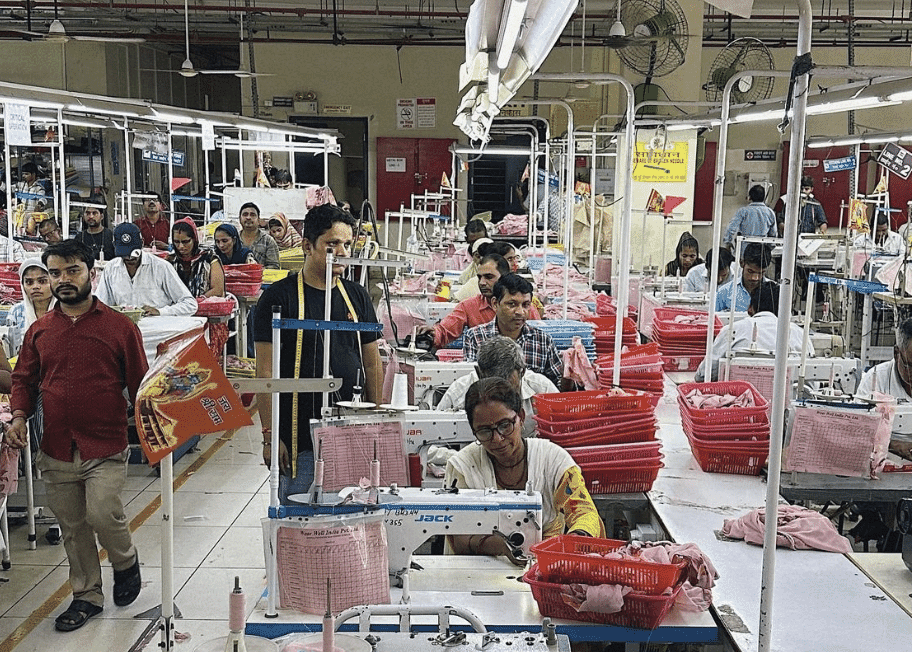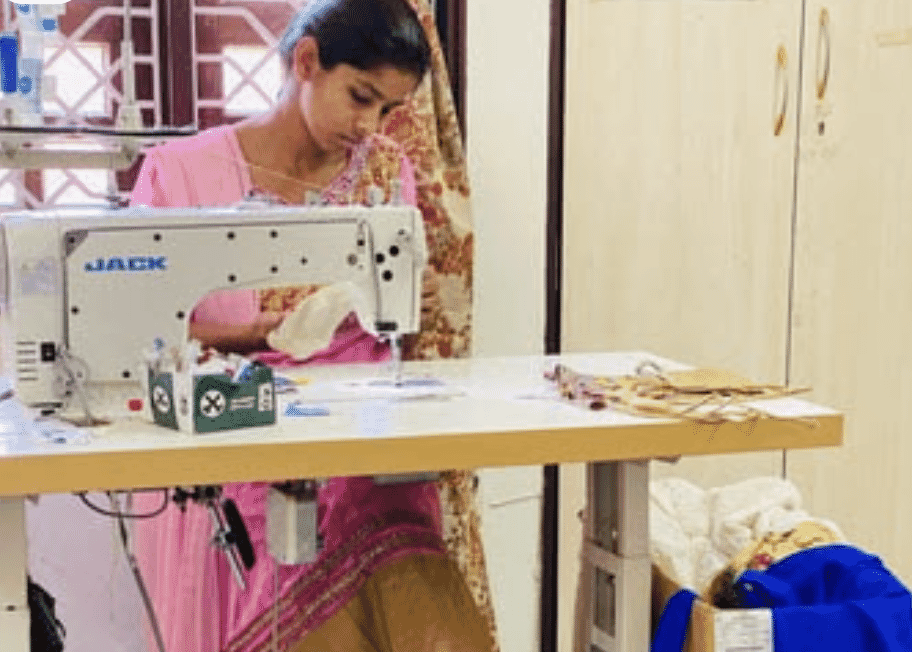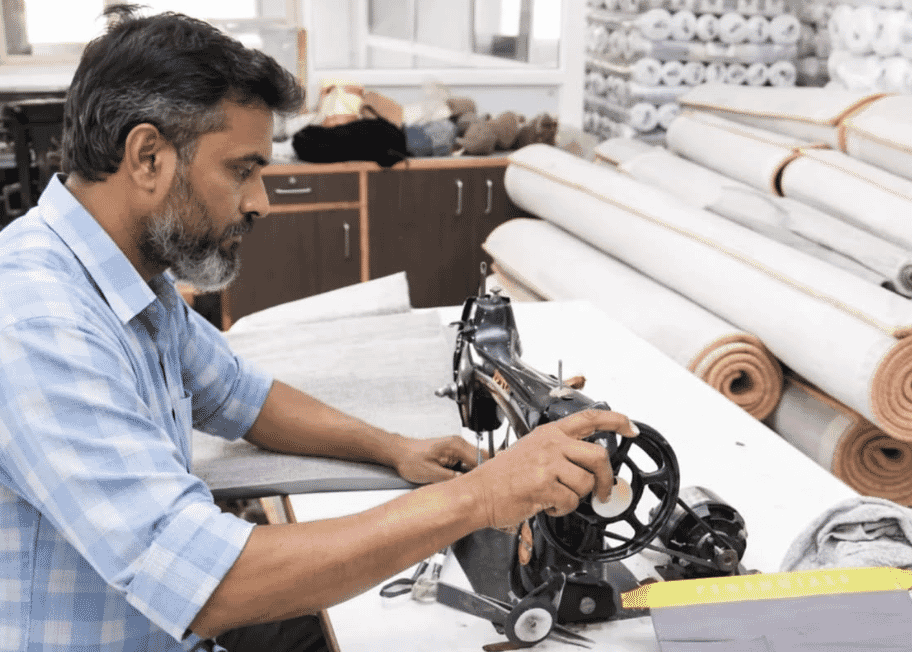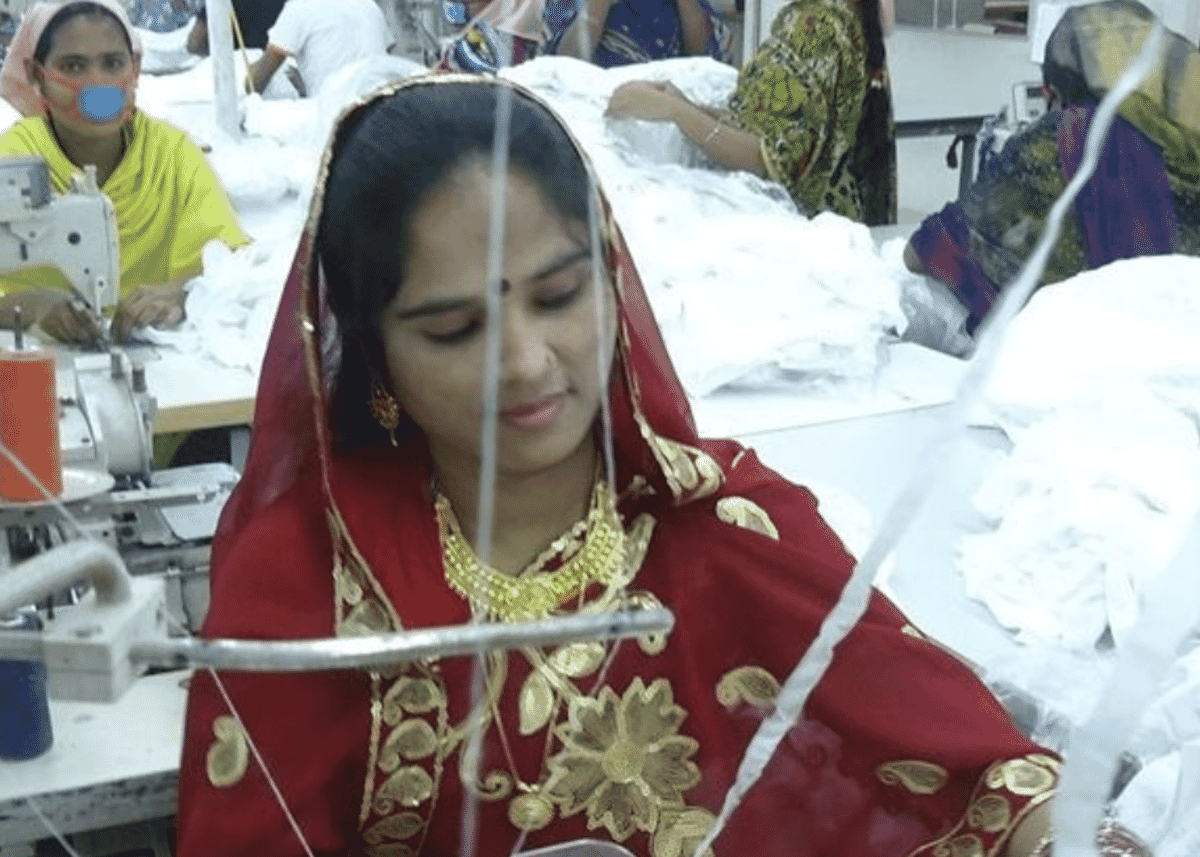
Knitwear in India means two completely different industries wearing the same word. Cut-and-sew knits, meaning jersey and fleece cut from rolls of fabric, are centred on Tiruppur and behave like garment manufacturing. Fully-fashioned knitwear, meaning sweaters knitted to shape, is centred on Ludhiana and behaves like nothing else in apparel. Both are named among India's main knitting hubs, with Kolkata and Kanpur (Apparel Resources, on the Ministry of Textiles knitwear scheme).
A brand that sends a sweater enquiry to Tiruppur can get a polite quote from a unit that will subcontract it, and a jersey enquiry sent to Ludhiana can go the same way. The cluster decision comes before the factory decision.
This guide to knitwear manufacturers in India covers both industries, what each can do at what minimum, which yarns India genuinely supplies, how gauge changes the garment and the price, and where knitwear programmes fail.
Note: India Clothing Factory is a group of documented clothing factories in India, producing for brands from 100 units per style. Minimums and cost shares in this guide are indicative ranges, not quotes from a specific factory. We confirm exact MOQ and price with the factory when you send a brief.
Key takeaways
- Two industries: cut-and-sew knits in Tiruppur, fully-fashioned sweaters in Ludhiana. They overlap very little.
- Cut-and-sew minimums start at 100 pieces. Wool sweaters usually start at 250 to 400 because of the yarn dye lot.
- India is strong in cotton, acrylic and blends, thin in fine merino and cashmere.
- Gauge decides the machine, the yarn, the price and the season. It is the first specification line, not a detail.
- Ludhiana is seasonal. Its winter-wear lines are busiest in the months before the Indian winter, so brief sweaters early.
- Fully-fashioned knitwear has no cutting stage, so consumption is set at the knitting machine.
- Linking and finishing, as much as knitting, decide how a sweater looks.
What Counts as Knitwear in India?
Anything made from looped yarn rather than woven cloth, which spans a T-shirt and a cable-knit sweater and almost nothing links the two commercially. The industry divides on how the garment gets its shape, and that division is more useful to a buyer than any product category list.
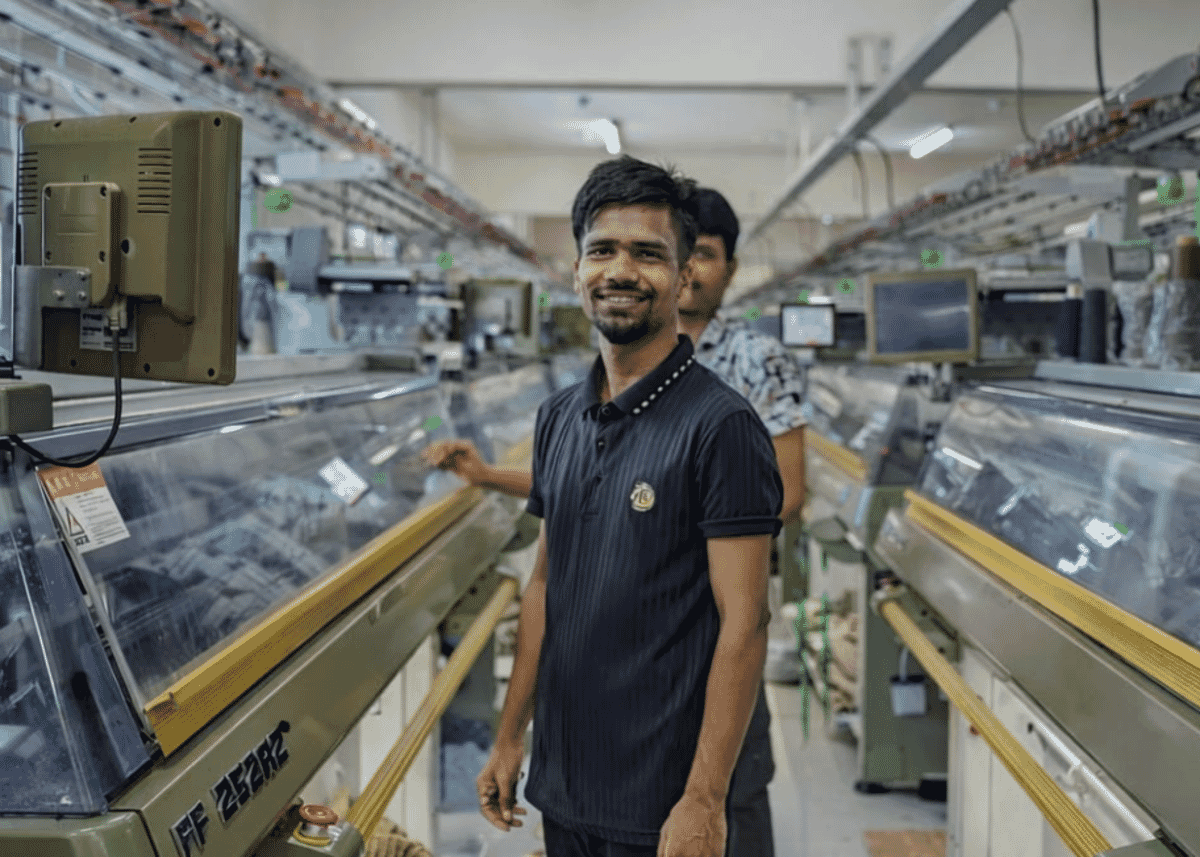
Cut-and-sew knitwear starts as fabric. Jersey, rib, interlock or fleece is knitted in rolls, then cut and sewn exactly as woven fabric would be. Tees, polos, sweatshirts and hoodies are all cut-and-sew, and the process is garment manufacturing with a knitted input.
Fully-fashioned knitwear never becomes fabric. Panels are knitted to shape on a flat-bed machine, then linked together rather than sewn. Sweaters, cardigans and fine-gauge tops are made this way, and the economics are governed by machine time and yarn rather than by cutting and sewing.
Citation Capsule: Indian knitwear divides into two distinct industries. Cut-and-sew knitwear is produced from knitted fabric rolls that are cut and sewn like woven cloth, covering T-shirts, polos and sweatshirts, and is concentrated in Tiruppur. Fully-fashioned knitwear is knitted to shape on flat-bed machines and linked rather than sewn, covering sweaters and cardigans, and is concentrated in Ludhiana.
Related reading: T-shirt manufacturers in India · Knitwear and sweaters · Clothing manufacturers in India · Fabric manufacturers in India
Where Are Knitwear Manufacturers in India Located?
Mainly in two clusters that specialise so far that the wrong one may subcontract your order rather than decline it. Tiruppur is the export knitwear centre: its exporters' association puts the cluster at nearly 60 percent of India's knitwear exports, over Rs. 46,000 crore in 2025-26 (Apparel Resources, June 2026). Ludhiana is the winter-wear centre, reported to account for over 90 percent of India's winter wear production (The Tribune, 2019). Ask which cluster the unit sits in before discussing price.
| Cluster | Makes | Strength | Usually not its strength |
|---|---|---|---|
| Tiruppur, Tamil Nadu | Cut-and-sew cotton knits, jersey, fleece, pique | Vertical integration, small minimums, cotton depth | Sweaters, wool, winterwear |
| Ludhiana, Punjab | Fully-fashioned sweaters, cardigans, socks, hosiery | India's main winter-wear cluster | Lightweight cotton jersey |
| Kolkata, West Bengal | Hosiery and cut-and-sew knits | A large hosiery base | Check export finishing on complex product |
| Delhi NCR | Mainly wovens, with some knit product | Coordination, embellishment | Knit fabric and yarn, which come from elsewhere |
Summary of where each cluster is strongest, not everything it makes. The last column is what a unit there is more likely to buy in than make.
The last column is the one to read. A subcontracted order is not necessarily worse, but it means the company you assessed is not the company making your garment, and the quality conversation has an extra party in it who never spoke to you.
Cut-and-Sew or Fully-Fashioned: Which Do You Need?
Cut-and-sew for anything jersey-weight and anything printed. Fully-fashioned for anything that reads as a sweater. The choice is usually made by the design rather than by you, and the consequences run through minimum, price and lead time. Cut-and-sew is cheaper per piece at small volumes because the fabric exists and the process is familiar. It loses some fabric at the cutting table, and that waste is priced in.
Fully-fashioned wastes almost nothing because each panel is knitted to its final shape, but it consumes machine time per garment rather than per marker. On a fine gauge with complex stitch structure, a single panel can occupy a machine for a long time, and that machine time is the cost.
Which route your design needs
- Printed or garment-dyed: cut-and-sew, because you need fabric to print on
- Rib trims and set-in sleeves at jersey weight: cut-and-sew
- Visible cable, intarsia or jacquard structure: fully-fashioned
- Shaped rib welts and linked shoulders: fully-fashioned
- Under 200 pieces in a heavy yarn: ask both, because the answer depends on yarn availability
The last line matters more than it looks. In heavy yarns the binding constraint is usually the dye lot rather than the machine, and that changes which route is actually cheaper.
What Minimums Apply to Knitwear?
As indicative ranges per style, 100 pieces in cut-and-sew on stock fabric and usually 250 to 400 for a wool sweater, and the gap is mostly about yarn. Our group's floor is 100 pieces per style, but for sweaters the yarn usually sets the minimum higher. A sweater needs its yarn dyed before knitting, and a dye lot has a minimum weight that has nothing to do with how many sweaters you want.
The practical move is the same as in wovens: take a stock yarn in a stock shade for the first run. A supplier holding acrylic or acrylic-blend yarn in a standing colour range can often produce a genuinely small first order, and the colour range is the thing to ask about before the minimum.
Citation Capsule: Knitwear minimums are set mostly by yarn availability rather than machine capacity. As indicative ranges per style, cut-and-sew knitwear on stock fabric is workable from 100 pieces, acrylic sweaters on stock yarn from around 250, and wool sweaters requiring a dyed yarn lot usually from 250 to 400. A dye lot has a minimum weight independent of the number of garments required.
Skip the search: the India factory directory ($49) lists documented factories by category, city and capability, with the verification status of each. One-time payment, instant download.
Which Yarns Can India Actually Supply?
Cotton in depth, acrylic and acrylic blends at volume, wool blends adequately, and fine merino or cashmere thinly and usually by import. Being honest about that list saves a season, because the yarn decides whether the product is possible before any factory is involved.
| Yarn | India's depth | Where it is spun or sourced |
|---|---|---|
| Cotton, combed and carded | Global strength | Tamil Nadu, Gujarat, Maharashtra |
| Acrylic and acrylic blends | Deep, and the backbone of Ludhiana | Ludhiana, Panipat |
| Wool blends wool with acrylic or polyester | Good, oriented to mid-weight winterwear | Ludhiana and other northern centres |
| Pure wool, coarse to medium | Adequate, often on imported wool | Ludhiana, often with imported fibre |
| Fine merino | Thin. Usually imported yarn | Imported, then knitted in Ludhiana |
| Cashmere and luxury blends | Very thin. Not an Indian strength | Imported, small volumes |
| Viscose and modal blends | Good for fine-gauge summer knits | Several states, Tamil Nadu among them |
Indicative summary from our team, not a census. Depth describes domestic spinning; imported yarn is available in every category at import prices and lead times.
The bottom of that list is where brands are most often disappointed. Fine merino and cashmere programmes are possible in India and they run on imported yarn, which means longer lead times, higher minimums and a cost base set outside the country. India is not the reason to choose those fibres.
What Does Knitwear Cost to Make?
As a rough guide, yarn is about half of the factory price, and machine time and linking most of the rest. The cost structure differs from cut-and-sew garments in a way that changes which negotiations are worth having: there is no cutting waste to argue about and no marker efficiency to improve.
Gauge drives machine time directly. A fine-gauge garment takes far longer on the machine than a chunky one because there are many more stitches in it, which is why a lightweight fine sweater can cost more than a heavy chunky one despite containing less yarn.
Linking is the hidden line. Fully-fashioned panels are joined on a linking machine by an operator matching stitch to stitch, which is skilled manual work. Poor linking is one of the most visible defects in a finished sweater and a common reason for rejected goods.
Citation Capsule: Fully-fashioned knitwear cost is driven by yarn, as a rough guide about half of the factory price, and by machine time, which is determined by gauge rather than by garment weight. A fine-gauge garment occupies a knitting machine substantially longer than a chunky one because it contains more stitches, so lightweight fine-gauge sweaters can cost more than heavier chunky ones.
No tech pack yet? Factories quote from specifications, not from photographs. A factory-ready single-style tech pack is $79: measurements, construction, fabric, trims and labelling in the format an Indian factory costs from.
How Does Gauge Change the Garment?
It changes the machine, the yarn, the price, the lead time and the season the product sells in. Gauge is the number of needles per inch on the knitting machine, and it is the first line of a knitwear specification rather than a technical footnote.
A 3 to 5 gauge machine makes chunky knits from heavy yarn, works quickly per garment and produces a bulky product for deep winter. A 12 to 14 gauge machine makes fine knits, takes far longer per garment and produces product that sells across a longer season.
The commercial consequence is that gauge and season are linked. As a rule of thumb, a brand selling into a mild autumn market looks at 7 to 12 gauge, and a brand selling deep winter at 3 to 7. Specifying a gauge that does not match the intended selling season produces a garment that is technically correct and commercially wrong.
Ask which gauges a unit actually has on the floor before discussing the design. Machines are expensive and units specialise. A factory quoting a gauge it does not own is subcontracting.
How Do You Specify Knitwear?
With yarn, gauge, stitch structure, garment weight and measurements. Knitwear specifications are less standardised than wovens and the gaps get filled by the factory, so what you leave out is what you receive. Name the yarn count, the gauge, the stitch structure, the garment weight, the trim construction and the linking specification.
Six lines every knitwear specification needs
- Yarn count and composition, for example 2/28 Nm 100 percent acrylic
- Gauge, stated as needles per inch, matched to the selling season
- Stitch structure, naming plain, rib, cable, jacquard or intarsia by area
- Garment weight in grams for a base size, which is how knitwear consumption is checked
- Trim construction, the welt, cuff and neck rib depth and whether they are shaped
- Linking specification, naming which seams are linked and which are overlocked
Garment weight is the line that separates a specification from a wish. It is how a factory costs the yarn and how you verify that the delivered sweater is the one you approved.
Why Does the Calendar Matter More in Knitwear?
Because Ludhiana is a seasonal cluster serving a seasonal domestic market, and its winter-wear capacity is busiest when an export brand also wants it. Ludhiana manufacturers normally switch to summer garments around the turn of the year (The Tribune), so winter product is made in the months before. Tiruppur's cotton knits are less tied to one season.
India has its own winter selling season, and domestic demand for sweaters peaks in the months a northern hemisphere export brand is also in production. A unit choosing between a large domestic order and a small export one during that window will make a commercial decision.
Diwali sits inside that window. It closes most units for one to two weeks in October or November on a date that moves annually, and output is degraded either side as workers travel. Layering an export deadline on top of the peak domestic season and a moving holiday is how knitwear programmes miss.
Book early. Orders for winter stock queue up in summer, so a sweater brief sent early in the year is in a better position than the same brief sent in August.
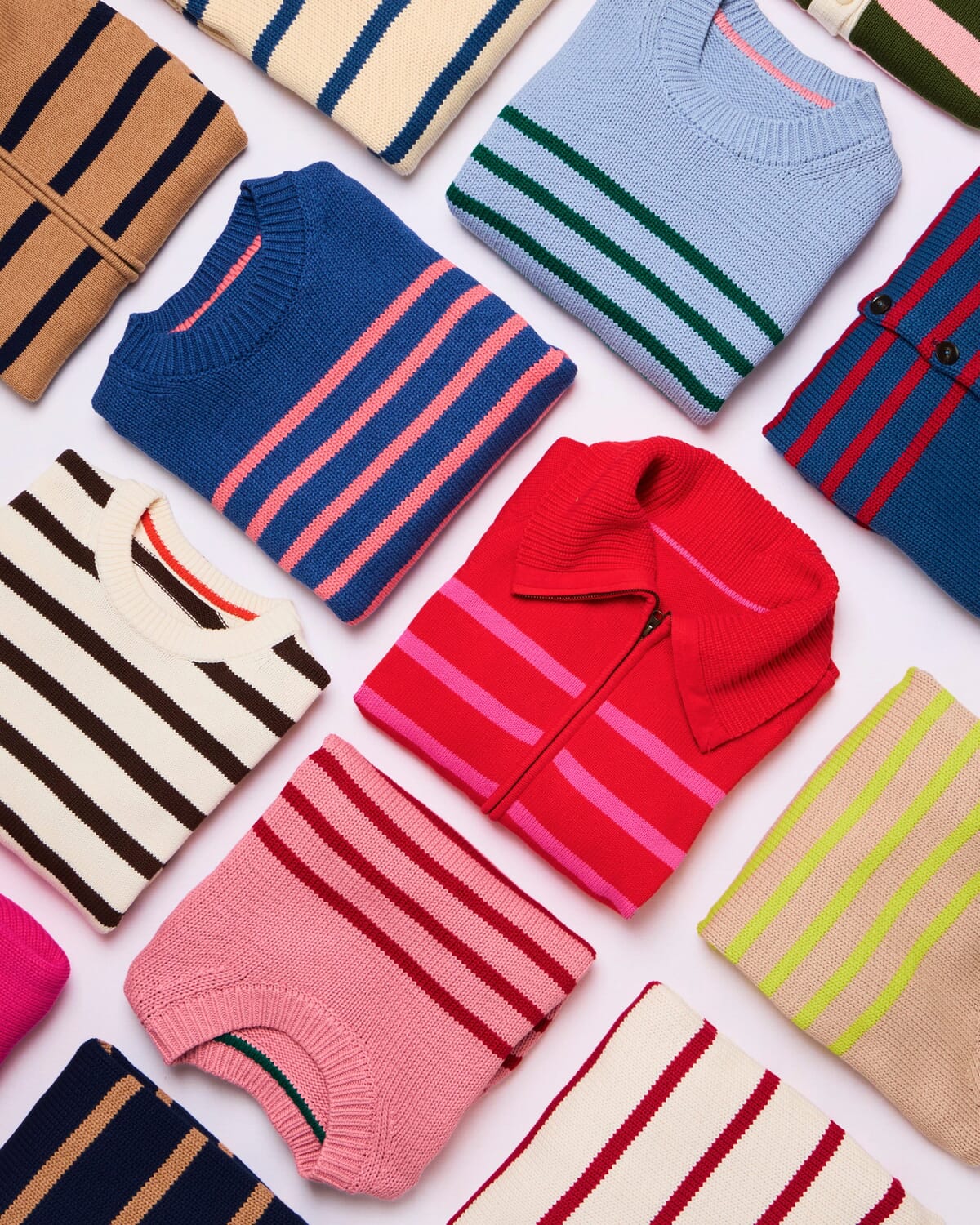
Citation Capsule: Gauge, the number of needles per inch on a knitting machine, determines machine time, yarn weight, price and selling season. Coarse 3 to 5 gauge produces chunky deep-winter product quickly; fine 12 to 14 gauge takes substantially longer per garment and yields product sellable across a longer season. A factory quoting a gauge it does not have installed is subcontracting the order.
Citation Capsule: Ludhiana, reported to make over 90 percent of India's winter wear, runs a seasonal calendar: winter product is made in the months before the Indian winter, when northern hemisphere export brands are also in production. Diwali closes most units for one to two weeks in October or November on a date that moves annually. Briefing sweaters early is the main defence.
Where Knitwear Production Fails
Four common failures, and only one of them starts at the knitting machine. They are poor linking, weight drift away from the approved sample, shade variation between dye lots, and pilling or a changed hand feel after washing. Only weight drift starts at the machine.
Poor linking. Mismatched stitch counts at the shoulder or armhole produce a visible ridge and a garment that hangs wrong. It is a labour quality problem and it is why linking should be specified rather than assumed.
Weight drift. A sweater delivered lighter than the approved sample means less yarn, which usually means a looser tension. Prevented by specifying garment weight with a tolerance and weighing production.
Shade variation between dye lots. Two lots of the same yarn shade differ, and on a garment with body and sleeves from different lots the difference is obvious. Prevented by specifying that one garment uses one lot.
Pilling and hand-feel change after washing. Frequently a yarn quality issue in acrylic blends. Pilling resistance has a published method behind it (ASTM D3512), and the test belongs on the actual production yarn rather than on a sample skein, as the fabric testing sequence sets out.
When Is India the Wrong Choice for Knitwear?
Three situations. Fine merino and cashmere programmes, where the yarn is imported anyway and India adds little advantage. Seamless or whole-garment knitting, which needs specialised machines that only some units have, so ask to see them. And a first order needed faster than the usual 12 to 16 weeks from approved sample, especially in the run-up to the Indian winter.
Where India is right it is very right: acrylic and cotton knitwear at commercial volumes, chunky and mid-gauge winter product, hand-finished detail at a competitive cost, and cut-and-sew cotton knits from 100 pieces in Tiruppur. For sweaters, see our knitwear and sweater page.
How Do You Choose Between Knitwear Manufacturers in India?
Pick the cluster from the construction before anything else. Cut-and-sew is Tiruppur, fully-fashioned is Ludhiana, and a unit answering an enquiry outside its own cluster is likely to buy the product in. Ask which gauges are on the floor and which yarns are held in stock shades. Those two answers tell you more about what is actually possible, and at what minimum, than a capability deck will.
And put garment weight in the specification. In a product with no cutting stage and no marker, weight is the measurement that connects the yarn you paid for to the sweater you received.
Frequently Asked Questions
What is the difference between cut-and-sew and fully-fashioned knitwear?
Cut-and-sew knitwear is made from knitted fabric rolls that are cut and sewn like woven cloth, covering tees, polos and sweatshirts. Fully-fashioned knitwear is knitted to shape on flat-bed machines and the panels are linked rather than sewn, covering sweaters and cardigans. They are made in different clusters by different companies.
What is the minimum order for knitwear in India?
As indicative ranges per style: 100 pieces for cut-and-sew on stock fabric, around 250 for an acrylic sweater on stock yarn, and usually 250 to 400 for a wool sweater needing a dyed yarn lot. The constraint is the dye lot minimum weight, which is unrelated to how many garments you want.
Where is knitwear made in India?
Cut-and-sew cotton knits in Tiruppur, Tamil Nadu, and fully-fashioned sweaters and hosiery in Ludhiana, Punjab. Kolkata and Kanpur are also named among India's knitting hubs, and Delhi NCR mainly makes wovens.
Can India make merino or cashmere knitwear?
Yes, on imported yarn. Domestic spinning depth in fine merino and cashmere is thin, so those programmes run on imported fibre with longer lead times, higher minimums and a cost base set outside India. India is not the reason to choose those fibres; it is where they get knitted.
Why does gauge matter in knitwear?
It sets the machine, the yarn, the price and the selling season. Gauge is needles per inch: 3 to 5 makes chunky deep-winter product quickly, while 12 to 14 makes fine knits that take far longer per garment. A fine lightweight sweater often costs more than a heavy chunky one despite containing less yarn.
Tell us the construction, the yarn and the quantity. We place your production with the factory in our group built for that knit, our team normally replies within 24 hours, and you work with the factory directly. No commissions. No markups. The factory bills you directly.
Get in contact Download the directory ($49)Need a tech pack? Get a factory-ready single-style tech pack for $79. See what's included.
Editorial note: all company names, certification marks and trademarks referenced here are the property of their respective owners. Minimums and cost shares are indicative ranges, not quotes from any individual factory, and they vary by product, yarn and season. Confirm terms directly with the factory before committing.
Sources
- Apparel Resources (28 February 2019): Ministry of Textiles scheme for the knitting and knitwear sector, naming Tirupur, Ludhiana, Kolkata and Kanpur as knitting hubs.
- Apparel Resources (29 June 2026): Tiruppur Exporters' Association on the cluster's 2025-26 exports and share of India's knitwear exports.
- The Tribune (1 January 2019): Ludhiana's share of India's winter wear production and its seasonal switch to summer garments.
- ASTM D3512: pilling resistance of textile fabrics, random tumble pilling tester.