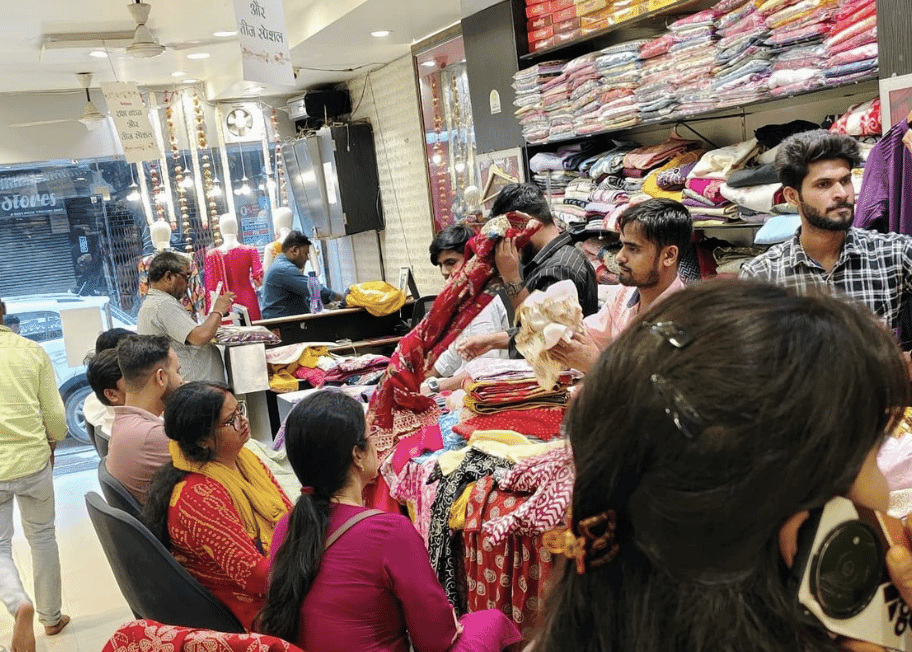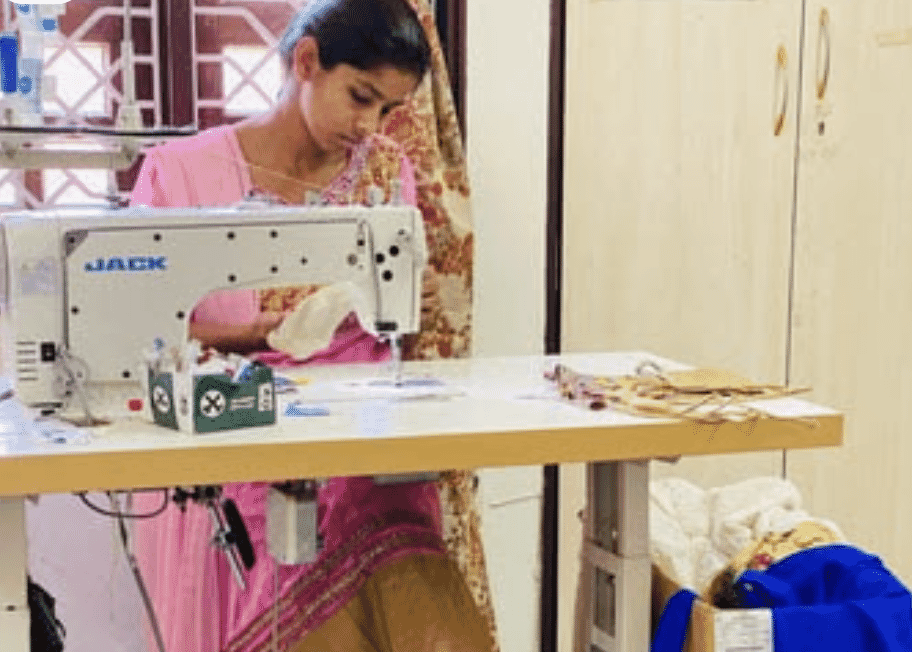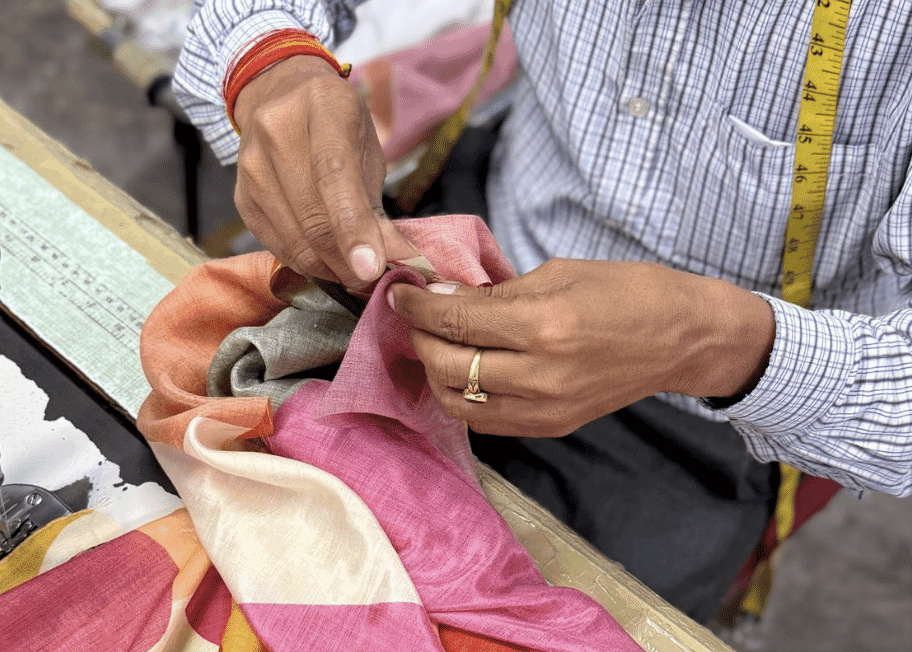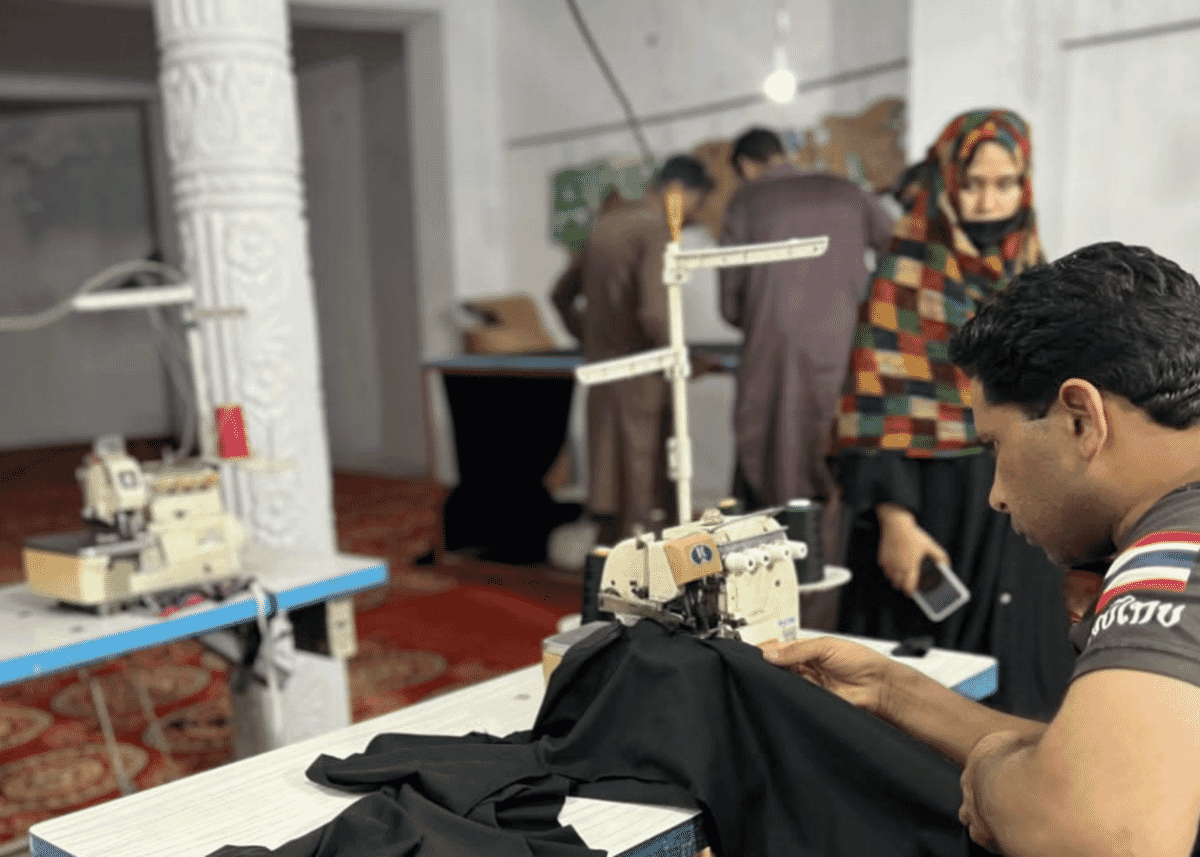
A T-shirt is the easiest garment to make and the hardest to get right. T-shirt manufacturers in India work in one of the strongest places in the world to make one. The reason is Tiruppur, where spinning, knitting, dyeing, printing and sewing sit inside one cluster. That is why a 100-piece order is workable here when many countries start much higher.
What separates a cheap tee from an expensive one is rarely the sewing. It is the yarn, the knit construction and the finishing, and understanding those three is the whole of buying tees well.
This guide to T-shirt manufacturers in India covers where T-shirt manufacturing happens in India, what minimums are realistic, what drives the price, how to specify a tee so quotes are comparable, and where Indian knit production is the wrong answer.
Note: India Clothing Factory is a group of documented clothing factories in India, producing for brands from 100 units. Ranges in this guide are indicative market ranges, not quotes from a specific factory. We confirm exact MOQ and price with the factory when you send a brief.
Key takeaways
- Tiruppur is the cluster. Vertical integration there is why 100-piece knit orders work in India at all.
- Realistic minimums: 100 pieces per style with our group; the fabric sets the real minimum once you ask for your own colour or yarn.
- Price is set by yarn, GSM and finishing. Cut-make-trim is the smallest variable line.
- India is one of the largest bases of GOTS-certified facilities, which matters most in exactly this product.
- Specify GSM, yarn count, knit structure and shrinkage or your quotes are not comparable.
- Shrinkage is the defect that most often sinks a tee programme. It is a fabric problem found after sewing.
- For engineered performance knits and bonded seams, look outside India.
Where Are T-Shirt Manufacturers in India Located?
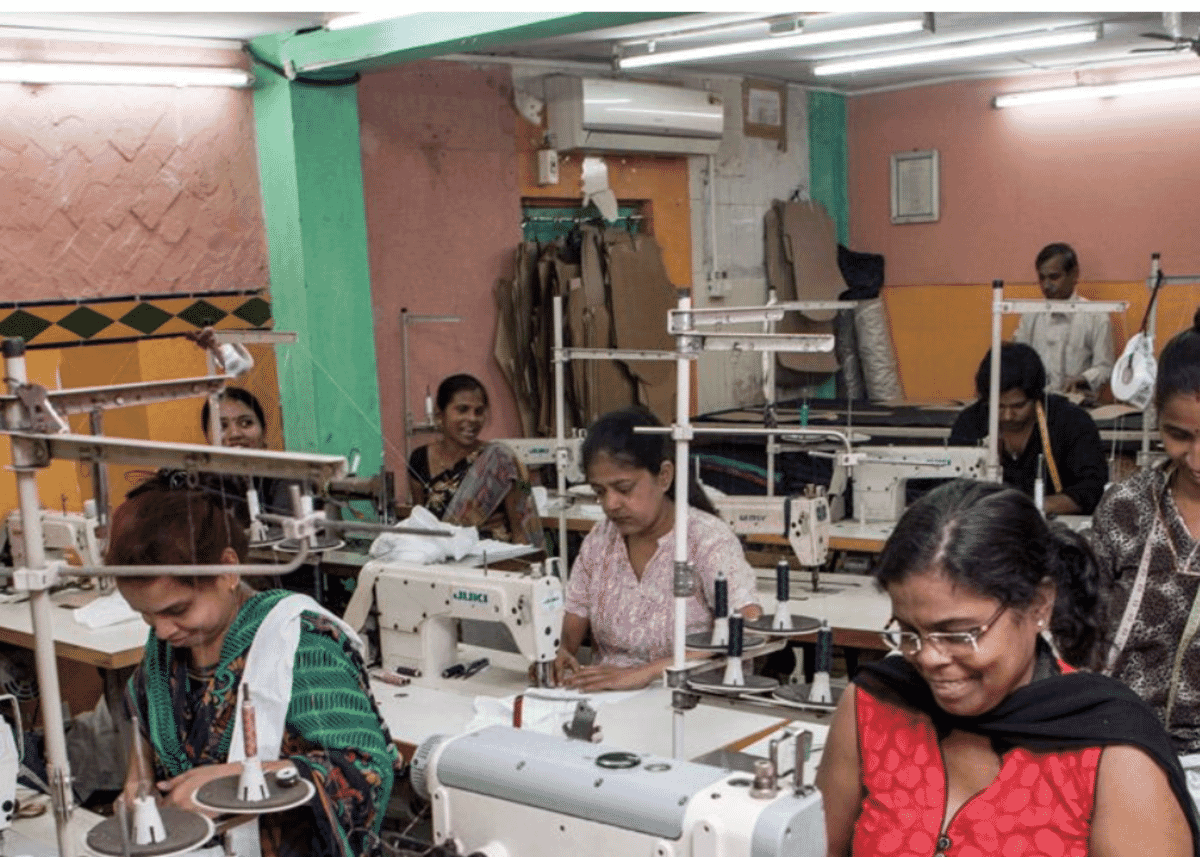
In Tiruppur, overwhelmingly, with secondary capacity in Kolkata, Ludhiana and Delhi NCR (Ministry of Textiles). Tiruppur's advantage is not mainly labour cost. It is that the entire knit chain is local, so a small order does not have to travel between four cities and four companies before it becomes a garment.
That integration is what makes low minimums viable. When the spinner, the knitter, the dye house and the sewing unit are neighbours, nobody has to hold inventory or absorb freight to serve a 200-piece order, and much of the coordination cost that makes small runs hard elsewhere disappears.
The secondary clusters are real but narrower. Kolkata handles a substantial domestic knit trade, Ludhiana is winterwear-oriented and better for heavier weights and fleece, and Delhi NCR is mainly a woven cluster, where knit capacity tends to support brands already producing there. For sweaters and other fully-fashioned knits, see our guide to knitwear manufacturers in India.
Citation Capsule: T-shirt manufacturing in India is concentrated in Tiruppur, Tamil Nadu, where spinning, knitting, dyeing, printing and sewing operate within one geographic cluster. This vertical integration removes the coordination and freight costs that make small knit orders uneconomic elsewhere, which is why 100-piece minimums are achievable there. Secondary capacity sits in Kolkata, Ludhiana and Delhi NCR.
Related reading: Clothing manufacturers in India · Clothing manufacturers in Tiruppur · T-shirt production in India · Fabric manufacturers in India
What Minimum Order Quantity Is Realistic?
One hundred pieces per style on stock yarn and stock colours, rising as soon as anything upstream has to be made for you. The number moves with what you are asking the mill to do, not with what you are asking the sewing line to do, and that distinction explains almost every quoted minimum you will see.
| What you are asking for | Workable minimum | What sets the floor |
|---|---|---|
| Stock jersey, stock colour | 100 pieces | Nothing upstream. Fabric already exists |
| Stock jersey, your colour | Set by the dye lot | The dye bath, which has a minimum capacity |
| Certified organic jersey | Set by the fabric | Dye lot plus certified fabric availability |
| Custom yarn count or blend | Set by the mill | Spinning and knitting set-up |
| Garment-dyed or specialist wash | Set by the wash batch | Wash machine batch size |
| All-over print, rotary | Set by the printer | Screen engraving per colour |
Our group starts from 100 pieces per style. Above that, the fabric sets the real minimum, per colourway rather than per order, and we confirm it with the factory when you send a brief.
The lever most brands miss is colour. Four colourways at 100 pieces each is not a 400-piece order to a dye house; it is four separate dye lots, and it is a common reason a quoted minimum comes back higher than expected. Running one colour at launch and adding colours on the reorder is usually cheaper than negotiating. The same logic runs through any private label programme in India.
Getting a genuinely low tee minimum
- Take a stock colour for the first run, because the dye bath is the constraint
- One fabric across styles, so a tee and a long-sleeve share a single lot
- Screen print rather than all-over print, which avoids screen engraving on fabric
- Accept a standard GSM the mill already runs rather than specifying an unusual one
- State an annual estimate, since a first order inside a programme is judged differently
Every line here moves the minimum by changing what the mill has to do. Negotiating the number without changing the request rarely moves it at all.
What Drives the Price of a T-Shirt?
Yarn quality, fabric weight and finishing, in that order. Cut, make and trim is the line brands negotiate hardest and it is the smallest variable component. Two tees quoted far apart usually differ in yarn and GSM, not in how well they were sewn.
Yarn is where quality is decided. Combed cotton is smoother and stronger than carded because the short fibres have been removed; ring-spun is softer than open-end because of how the yarn is formed. A combed ring-spun tee and a carded open-end tee are different products, yet both can carry the same "100% cotton" label, because fibre-content labelling names the fibre, not how the yarn was made (FTC). Only the specification tells them apart.
Fabric weight is the second lever and the most visible one. A 150 g/m² (4.4 oz) tee and a 200 g/m² (5.9 oz) tee use meaningfully different amounts of yarn, and the heavier one costs more for the straightforward reason that there is more cotton in it.
Citation Capsule: T-shirt cost in India is driven principally by yarn and fabric, which typically represent around half of FOB, followed by dyeing and finishing. Cut, make and trim typically accounts for roughly a fifth. Yarn quality differences between combed and carded cotton, and between ring-spun and open-end construction, account for much of the price variation between apparently comparable quotes.
No tech pack yet? Factories quote from specifications, not from photographs. A factory-ready single-style tech pack is $79: measurements, construction, fabric, trims and labelling in the format an Indian factory costs from.
How Do You Specify a T-Shirt?
With four fabric parameters and a measurement chart, and without them no two quotes describe the same garment. This is the difference between a shortlist you can compare and a set of numbers that mean nothing. Name the GSM, the yarn count, the knit structure and the finish.
| Parameter | Example | Why it matters |
|---|---|---|
| Fabric weight | 180 g/m² (5.3 oz) | Sets yarn consumption and therefore most of the cost |
| Yarn count and type | 30s combed ring-spun | Decides hand-feel, pilling and strength |
| Knit structure | Single jersey, 24 gauge | Changes drape, stretch and opacity |
| Shrinkage limit | Maximum 5 percent after one home wash | The parameter that ends tee programmes when omitted |
| Neck construction | 1x1 rib, self-fabric tape, twin-needle cover stitch | The most visible quality signal on a finished tee |
| Points of measure | Chest, length, sleeve, shoulder, with tolerances | Makes fit reproducible across a reorder |
Specification fields drawn from standard apparel technical packages and published textile test methods. Tolerances should be stated for every dimension, not only the chest.
The neck row rewards attention out of proportion to its cost. It is the first thing a customer touches, it is where cheap tees fail first, and specifying it costs nothing at the quoting stage. Leaving it open means the factory chooses the fastest construction.
Is India the Right Place for Organic Cotton Tees?
Yes, more clearly than for most products. Global Standard reported 17,800 GOTS-certified facilities worldwide across 95 countries in 2025, up 15.3 percent year on year (Global Standard, 2025). India is one of the largest national bases in that count, and its certified capacity concentrates in exactly the cotton knit chain a tee runs through.
The practical difference from a conventional programme is modest: expect to pay more for the fabric (the premium depends on the count, the mill and the season), a higher minimum because certified fabric availability is narrower, and a documentation requirement that conventional orders do not carry.
That documentation is where claims fail. A scope certificate says the company can produce certified goods. A transaction certificate covers a specific shipment of certified goods, and it is the document that ties a GOTS claim to your lot (Global Organic Textile Standard). Check scope and expiry as well as existence.
Citation Capsule: India is one of the largest national bases of GOTS-certified facilities, out of 17,800 certified facilities across 95 countries (Global Standard, 2025). This capacity concentrates in the cotton knit chain used for T-shirt production. Certified organic jersey costs more than conventional, and a transaction certificate covering the specific shipment is what supports the claim, not the supplier's scope certificate alone.
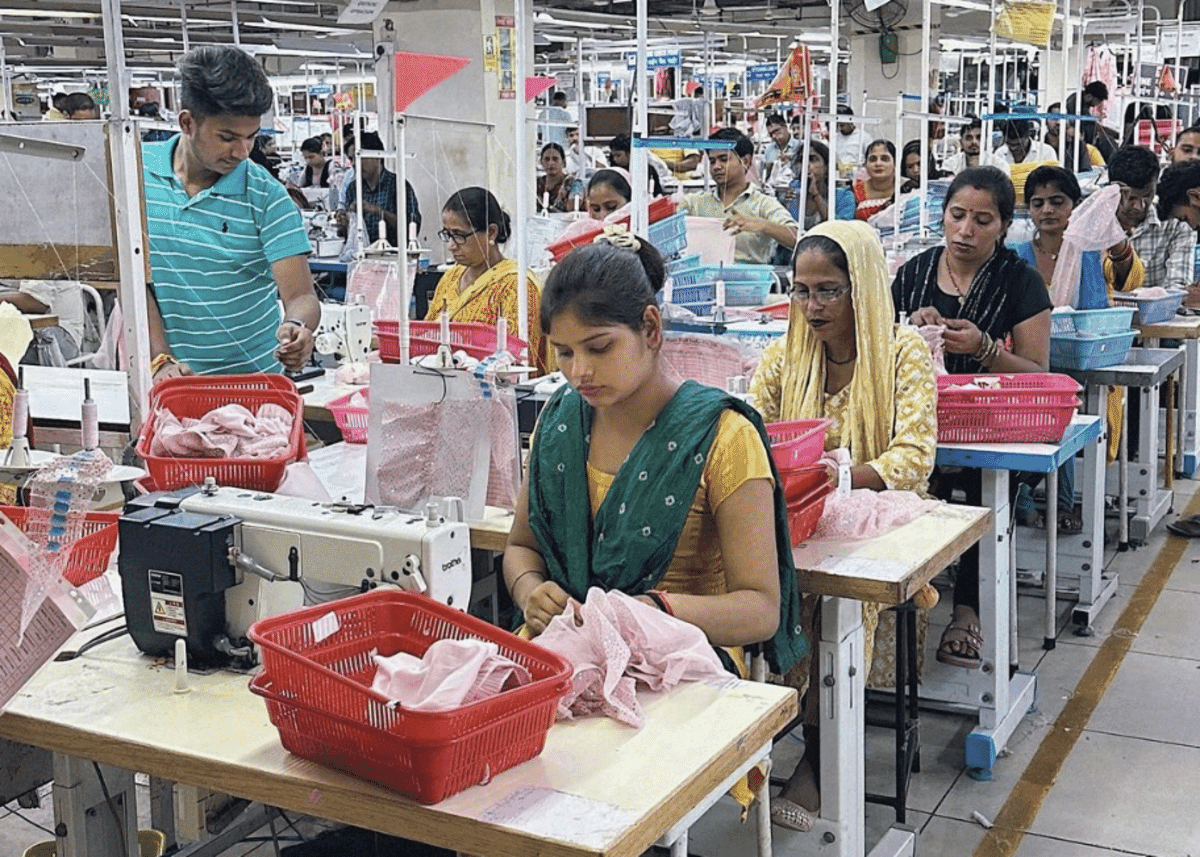
India is the right place for organic cotton tees more often than not, because the growing base and the certified processing sit in the same country and frequently in the same cluster. What changes is the minimum rather than the capability: certified fabric is often made to order in larger lots, so a programme that works at 100 pieces in conventional cotton may start at several hundred in certified. Ask for the certified minimum separately.
Which Print Method Should You Use?
Screen print for most small programmes, digital direct-to-garment for very small runs with many designs, and all-over print only when the design demands it. The choice affects your minimum far more than it affects your unit price. Screen printing charges per colour per position because each colour needs its own screen. A four-colour front print is four screens, and that cost is recovered across the run, which is why a 100-piece order with a four-colour print carries an awkward set-up charge per unit.
All-over printing happens on fabric rather than on the garment, which moves the minimum upstream to the printing house and pushes it into the thousands of metres. Brands who design an all-over print for a 200-piece launch are often surprised by this, and the fix is digital fabric printing rather than rotary, which the Surat printing houses do at scale.
Citation Capsule: Print method changes a T-shirt programme's minimum more than its unit price. Screen printing charges per colour per position because each colour requires its own screen, recovered across the run. All-over printing happens on fabric rather than on the garment, moving the minimum upstream to the printing house and into thousands of metres unless digital fabric printing is used instead of rotary.
What Goes Wrong With Tee Production?
Four failures come up again and again, and most of them start in the fabric or its specification and surface after the garment exists, which is what makes them expensive. They are shrinkage beyond tolerance, shade variation between panels, neck growth and pilling. Of the four, only shade variation is reliably visible at a pre-shipment inspection; the others appear after washing or wear.
Citation Capsule: Four common failure modes in T-shirt production are shrinkage beyond tolerance, shade variation between body and sleeve panels, neck growth from an underspecified rib and tape, and pilling from open-end or carded yarn. Most of them start in the fabric or its specification and show up only after the garment has been sewn, washed or worn, which is what makes them expensive rather than merely inconvenient.
Shrinkage beyond tolerance. A tee that measured correctly before washing and fails after it is a fabric problem discovered in a finished garment. Prevented by testing shrinkage on bulk fabric before cutting, not on the swatch.
Shade variation between panels. Body and sleeves cut from different sections of a spread, or different dye lots, produce a garment that looks wrong under shop lighting. Prevented by bundling by layer at the cutting table.
Neck growth. A neckline that stretches out after wearing is a rib and tape specification problem. Prevented by specifying the rib construction and the tape rather than leaving it to the line.
Pilling. Usually a yarn problem: open-end or carded yarn in a product sold on softness. Prevented by specifying combed ring-spun where the price supports it.
Test these before the fabric is cut
- Shrinkage on bulk fabric, after the wash cycle your customer will actually use
- GSM against specification, with the tolerance you agreed in writing
- Colour fastness to washing and rubbing, particularly on deep shades
- Pilling resistance where the tee is sold on hand-feel (standard test methods: ASTM)
- Print adhesion after washing, on the actual fabric rather than a test cloth
All five are inexpensive relative to a cut order. Every one of them becomes a finished-goods loss if it is discovered after the fabric has been through the cutting table.
When Are T-Shirt Manufacturers in India the Wrong Choice?
Three situations, and they are all about what the fibre and the finishing can do rather than about the sewing. They are engineered performance knits, very large single-SKU programmes, and compressed timelines that leave no room for a fabric lead time. For training wear and team kit, see our guide to sportswear manufacturers in India.
Engineered performance knits. Four-way stretch technical polyester, moisture management engineered at the knit, bonded seams and laser finishing are not where India's cotton-led knit base is strongest. A quote for these from an Indian knit unit often means fabric bought in from abroad, and activewear production in India runs into the same question.
Very large single-SKU programmes. India's hosiery and knitting segment is decentralised (IBEF), which serves small runs well. A single order of, say, 200,000 identical units is often split across several units, and tolerance variation between them becomes the thing to manage.
Compressed timelines. Twelve to sixteen weeks for a first order is the honest number, as the production process sets out, and the fabric lead time alone can break an eight-week deadline from a standing start.
Where India wins on tees it wins clearly: certified organic cotton at real scale, genuine 100-piece minimums in stock fabric, and a cluster where the whole chain sits in one place.
How Do You Choose Between T-Shirt Manufacturers in India?
Start in Tiruppur unless you have a specific reason not to. The integration there is the product advantage, and a knit quote from a woven cluster may well be bought in from Tamil Nadu with a margin on it. Specify the fabric before you compare prices. Weight, yarn count and type, knit structure and shrinkage tolerance turn a set of unrelated numbers into a comparison, and without them the cheapest quote is simply the one that assumed the least.
And test shrinkage on bulk. It is one of the cheapest tests in apparel and it prevents one of the most expensive failures in this product.
Frequently Asked Questions
What is the minimum order for T-shirts in India?
One hundred pieces per style using stock jersey in a stock colour. Above that, the fabric sets the real minimum: your own colour needs a dedicated dye lot, and certified organic jersey or a custom yarn count carries the mill's own minimum, which can be far higher. Each colourway is a separate dye lot, not part of one order.
Why do T-shirt quotes from India vary so much?
Because yarn and fabric are around half the cost and they differ enormously between apparently similar tees. Combed ring-spun cotton at 180 g/m2 and carded open-end cotton at 150 g/m2 are different products. Cut, make and trim, which buyers negotiate hardest, is only about a fifth of the price.
Where are T-shirts made in India?
Predominantly in Tiruppur, Tamil Nadu, where spinning, knitting, dyeing, printing and sewing all sit within one cluster. That integration is why 100-piece minimums work there. Secondary knit capacity exists in Kolkata, in Ludhiana for heavier winter weights, and in Delhi NCR supporting woven programmes.
Is India good for organic cotton T-shirts?
Yes. India is one of the largest bases of GOTS-certified facilities, and that capacity sits in exactly the cotton knit chain a tee uses. Expect to pay more for certified fabric and to meet a higher minimum. Ask for a transaction certificate covering your shipment, not just the supplier's scope certificate.
What causes T-shirts to fail quality inspection?
Mostly fabric problems found after sewing: shrinkage beyond tolerance, shade variation between body and sleeve panels, neck growth from an underspecified rib and tape, and pilling from open-end or carded yarn. Testing shrinkage and GSM on bulk fabric before cutting prevents many of them.
Send the weight, the yarn and the quantity from 100 units. We place the brief with the factory in our group built for knits, normally within 24 hours, and you work with the factory directly. No commissions. No markups. The factory bills you directly.
Get in contact Download the directory ($49)Need a tech pack? Get a factory-ready single-style tech pack for $79. See what's included.
Editorial note: all company names, certification marks and trademarks referenced here are the property of their respective owners. MOQ, cost and lead-time figures are indicative market ranges, not quotes from any individual factory, and they vary by product, fabric and season. Always confirm terms directly with the factory before committing.
Sources
- Global Organic Textile Standard: public database of GOTS-certified suppliers.
- Federal Trade Commission: fibre content labelling requirements under the Textile and Wool Acts.
- Global Standard: Annual Report 2025, reporting 17,800 GOTS-certified facilities across 95 countries, up 15.3 percent.
- ASTM International: standards publications, including test methods for dimensional change, pilling and colour fastness of textiles.
- India Brand Equity Foundation: overview of the Indian textile industry, including its decentralised power loom, hosiery and knitting segment.
- Ministry of Textiles, Government of India: annual reports on the textile sector and its clusters.
Further Reading
Background references for this topic. These are not cited above.
- Sheng Lu, FASH455, University of Delaware (2025): WTO-based analysis of global textile and apparel trade.
- USITC Harmonized Tariff Schedule: the current classification schedule and duty rates.
- OEKO-TEX: Standard 100 testing criteria applicable to cotton knit fabric and printed garments.