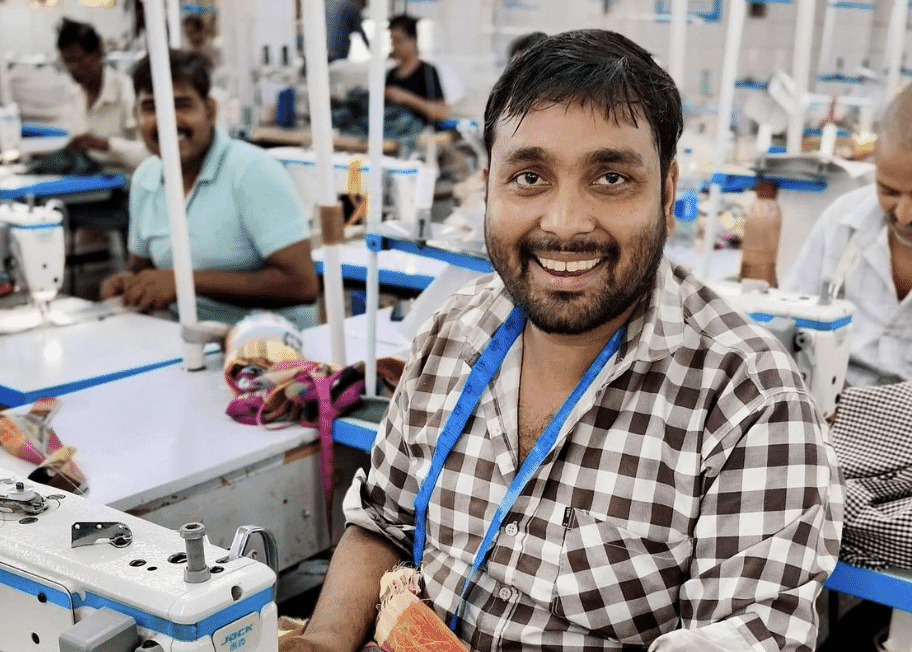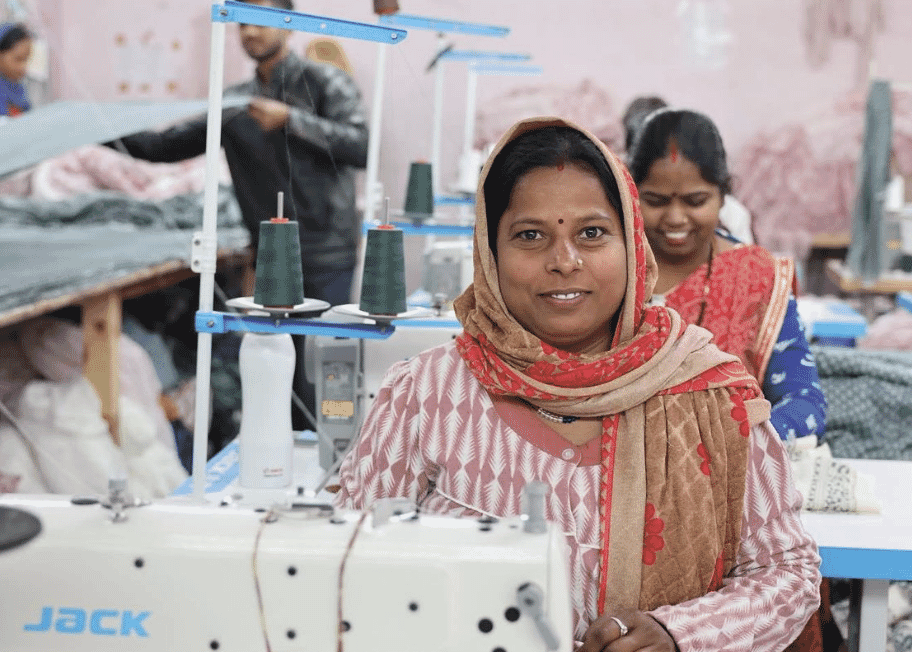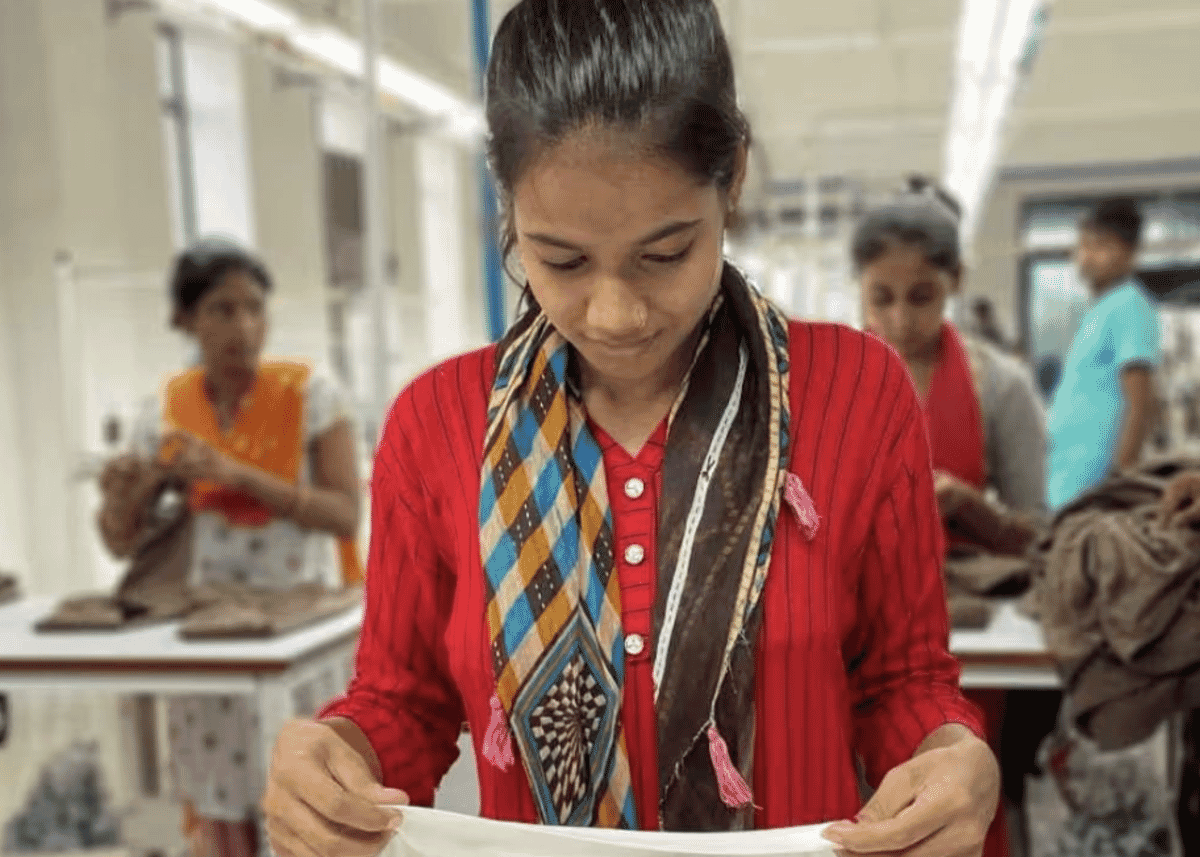
Workwear is the apparel category where the specification matters more than the design. Cotton drill trousers, poly-cotton shirting, coveralls and aprons are ordinary woven-garment work. Flame-resistant, arc-rated, high-visibility and chemical-protective garments are different: they are certified products, and the claim rests on tested fabric, trims and construction.
The dividing line is certification. Protective workwear is tested to named standards, such as NFPA 2112 for flame-resistant clothing for industrial personnel (NFPA).
This guide to workwear manufacturers in India covers what the country makes in the category, and how the certification question changes sourcing. It sets out how minimums work, what to specify, and when a protective garment programme is easier to run near its fabric.
Note: India Clothing Factory is a group of documented clothing factories in India, producing for brands from 100 pieces per style. In workwear the fabric usually sets the real minimum. Standards are described as their issuing bodies state them; this guide gives no price figures. We confirm exact MOQ and price with the factory when you send a brief.
Key takeaways
- Non-protective workwear (drill trousers, coveralls, poly-cotton shirting, aprons, uniforms) is ordinary woven-garment work. Specify it in numbers.
- Certified protective workwear (flame-resistant, arc-rated, high-visibility, chemical) rests on a named standard and a test report.
- Ask where the certified fabric and retroreflective tape come from, and whether they are imported.
- With our group the minimum is 100 pieces per style; in workwear the woven fabric usually sets the real minimum.
- Durability is a fabric and seam specification, not a quality aspiration. Write the numbers down.
- Certified product means certified fabric with a test report, verified per lot rather than per company.
- Sizing runs larger and wider than fashion. Use a workwear block, not a fashion one.
What Can Workwear Manufacturers in India Make?
Start with one question: does your garment need to be certified? The two halves are different businesses with different suppliers, so establish which half you are in before approaching anybody.
| Product | Certification | What to ask |
|---|---|---|
| Cotton and poly-cotton drill trousers | None required | Fabric weight, seam strength, laundry cycle |
| Coveralls and boiler suits (non-protective) | None required | Fabric weight, reinforcement, sizing block |
| Work shirting, poly-cotton | None required | Colour fastness at the laundry temperature used |
| Aprons, tabards, hospitality workwear | None required | Which colours the mill holds in stock |
| High-visibility garments | ANSI/ISEA 107 or EN ISO 20471 | Who supplies the background material and retroreflective tape; test report |
| Flame-resistant and arc-rated | NFPA 2112, ASTM F1506, EN ISO 11612 | Which certified fabric, from which mill; lot test report; thread and trims |
| Chemical and particulate protection | A named chemical-protection standard | Certified fabric and seam construction; previous work to that standard |
Our editorial summary. Capability varies factory by factory, so ask for the standard and the test report rather than relying on a description.
Read the bottom three rows together. For certified product the sewing is only part of the claim: the fabric, the trims and the construction all have to be the ones that were tested.
Citation Capsule: Workwear sourcing splits into two halves. Non-protective workwear such as drill trousers, coveralls, work shirting and hospitality wear is ordinary woven-garment work specified by durability numbers. Certified protective workwear, including flame-resistant, arc-rated, high-visibility and chemical-protective garments, rests on a named standard and a test report, so the fabric, trims and construction must be the ones that were tested.
Related reading: Fabric manufacturers in India · Clothing manufacturers in India · Wholesale Clothing India
How Does Certification Change the Sourcing Question?
It moves the decision from the factory to the fabric mill, and it moves the verification from an inspection to a test report. A certified garment is certified because the fabric passed a standard test and because the garment was made to a construction that preserves that performance.
Neither half works without the other. Certified fabric sewn with the wrong thread, or with a seam construction that fails under heat, produces a garment that cannot carry the claim. This is why protective workwear is usually made by a narrower set of companies than ordinary workwear.
The practical question to ask an Indian supplier is not whether they can make a flame-resistant coverall. It is which certified fabric they will use, who supplies it, and whether they can provide the test report for the specific lot. The answers arrive quickly from a unit that does this and slowly from one that does not.
Test methods for protective performance are published and standardised (ASTM International). A legitimate claim is therefore always accompanied by a named standard and a report, rather than by a description.
Which Standards Apply to Protective Workwear?
A short list covers most enquiries, split between the US and European frameworks. The descriptions below follow the titles and scopes published by the issuing bodies. Knowing the designations before the conversation starts is the difference between asking a supplier a real question and accepting a description. The table below is the working set.
| Standard | Covers | Framework |
|---|---|---|
| NFPA 2112 | Flame-resistant clothing for protection of industrial personnel against short-duration thermal exposures from fire | US |
| ASTM F1930 | Test method: evaluation of flame-resistant clothing against fire simulations using an instrumented manikin | US test method |
| ASTM F1506 | Performance specification for flame-resistant and electric arc rated protective clothing worn by workers exposed to flames and electric arcs | US |
| ANSI/ISEA 107 | High-visibility safety apparel, designated by Type (expected use setting) and Performance Class (amount of visible material and design attributes) | US |
| EN ISO 20471 | High visibility clothing: requirements for colour, retroreflection, minimum areas and placement of materials | Europe / international |
| EN ISO 11612 | Protective clothing to protect against heat and flame: minimum performance requirements | Europe / international |
| EN ISO 11611 | Protective clothing for use in welding and allied processes | Europe / international |
Titles and scopes as published by NFPA, ASTM International, ANSI/ISEA and ISO (checked October 2026). Editions change, so ask for the edition the certificate was issued against rather than the family name.
The two frameworks are separate standards with their own requirements. A buyer serving both the US and Europe should expect to certify a high-visibility garment to ANSI/ISEA 107 and to EN ISO 20471 separately.
ASTM F1930 mounts single-layer garments on an instrumented manikin and gives a predicted human skin burn injury under a fire simulation (ASTM F1930). It tests the garment as made, which is why the fabric, the thread and the construction all have to be the ones that were tested.
Behind the standards sits the reason anyone buys certified product at all. When engineering, work practice and administrative controls are not feasible or not enough, US employers must provide personal protective equipment to their workers and ensure its proper use (OSHA). That obligation is what turns a specification into a purchase order.
Questions for a certified workwear enquiry
- Which standard? Named, with the edition, rather than a general claim
- Which certified fabric, from which mill? And whether it is imported
- Test report for the lot, not a report for a fabric made two years ago
- Thread and trim specification, since these must meet the fabric's performance
- Care labelling, because protective performance degrades with incorrect laundering
A supplier who answers all five in a day is in this business. One who answers the first and deflects the rest is quoting a garment they intend to learn how to make.
What Minimums Apply to Workwear?
With our group, from 100 pieces per style. In workwear, though, the fabric usually sets the real minimum. Workwear fabrics are mostly woven, and a mill dyeing or weaving a colour for you has its own minimum, separate from the sewing line's. Ask which workwear fabrics and colours the unit or its mill already holds.
Colour is the usual lever. A colour the mill already holds in stock can clear at a lower quantity than a bespoke corporate colour that has to be dyed for you, so ask what is held before you fix the shade.
Citation Capsule: In workwear the fabric usually sets the real minimum. Workwear fabrics are mostly woven, and a mill dyeing or weaving a colour for a buyer has its own minimum, separate from the sewing line. Colours a mill already holds in stock can clear at lower quantities than a bespoke corporate colour.
No tech pack yet? Factories quote from specifications, not from photographs. A factory-ready single-style tech pack is $79: measurements, construction, fabric, trims and labelling in the format an Indian factory costs from.
How Do You Specify Durability?
As numbers against named test methods, because durability is the entire product in this category and it is not visible in a sample. A workwear garment that looks identical to another and fails at a third of the wash cycles is a different product at the same price.
| Parameter | Why it matters | How to specify |
|---|---|---|
| Fabric weight | The main driver of abrasion resistance | g/m² with an ounce conversion and a tolerance |
| Tensile and tear strength | Where a garment fails under snag load | Minimum values against a named test method |
| Abrasion resistance | Knee, seat and elbow wear | Minimum cycles against a named method |
| Seam strength | Seams are a common failure point | Minimum seam strength plus stitches per inch |
| Colour fastness to washing | Industrial laundry is harsher than domestic | Fastness rating at the laundry temperature used |
| Dimensional stability | Industrial laundering shrinks garments hard | Maximum shrinkage after the actual laundry cycle |
Specification parameters drawn from published textile test standards. Values should be stated against a named test method and edition, since results are method-dependent.
Each of those rows has a published method behind it. Fabric weight is mass per unit area (ASTM D3776), and abrasion resistance can be assessed in cycles on a rotary platform abrader (ASTM D3884, a standard guide). A number without a method is not a specification.
The last row is the one specific to this category. Workwear is frequently laundered industrially at temperatures and agitation levels domestic testing does not replicate. A garment specified against a home wash cycle will not survive the real one.
Durability in workwear is specified rather than assumed, and the fields that carry it are tensile and tear strength, abrasion resistance, seam slippage and colour fastness to industrial washing. Each has an established test method and a number you can put in a purchase order. A garment described as hard-wearing has been specified with an adjective. An adjective cannot be tested, which means it cannot be enforced when the first replacement cycle comes round early.
What Drives Workwear Cost?
Fabric leads as usual, but the construction share is higher than in fashion, because workwear garments have more operations. Those are reinforced pockets, bar tacks, multiple seams, and heavier machinery running slower. The economics also differ because volumes are usually larger and styles fewer. A programme of a few styles at large quantities is a more attractive order to a factory than many styles at small quantities, and it prices accordingly.
Where the fabric is certified and bought in from abroad, ask for it to be quoted as its own line. Its price is set by the mill, not the factory, and it can dominate the garment cost. Compare that with making the garment near the mill before you decide.
Citation Capsule: Workwear cost structures carry a higher making-charge share than fashion apparel because garments include reinforced pockets, bar tacks and multiple seams sewn on heavier, slower machinery. Where certified protective fabric is bought in, its price is set by the mill and it can dominate the garment cost, so it should be quoted separately and compared with making the garment near the mill.
Why Is Workwear Sizing Different?
Because it is worn over other clothing, by a population that is not a fashion size range, and because movement matters more than silhouette. A workwear block is cut wider through the chest and seat, and longer in the body. It also carries more room at the shoulder than a fashion block of the same nominal size.
Brands that adapt a fashion pattern to workwear produce a garment that fits nobody on a site. The fix is to start from a workwear block the factory already has, which also shortens development considerably.
Size ranges run wider at both ends too. A workwear programme typically needs sizes a fashion range would not carry, and grading across that wider range needs specifying rather than extrapolating from a base size.
How Do Corporate Workwear Programmes Differ?
They run on replenishment rather than seasons, which changes almost everything about how you buy them. A fashion order is placed, shipped and sold. A corporate uniform programme is placed once and then drawn down over several years as staff join, leave and change size.
That structure rewards a different set of decisions. Fabric continuity matters more than price, because a garment issued in year three has to look the same as one issued in year one. Two dye lots eighteen months apart in a corporate colour will differ unless a shade band was agreed at the start.
Size curve is the second difference. A corporate programme needs a size distribution based on the actual population wearing it, not on a retail curve. Getting that wrong produces dead stock in the sizes nobody needs and shortages in the sizes everyone does.
Reorder minimums are the third. A programme drawing down 200 garments a quarter needs a supplier willing to hold fabric or to run small repeats. That willingness should be agreed at the first order rather than discovered at the second. Put both in the first purchase order.
Setting up a corporate workwear programme
- Agree a shade band and hold a signed reference swatch for the life of the programme
- Base the size curve on the population, not on a retail distribution
- Agree reorder minimums and whether the supplier will hold fabric between runs
- Specify the laundry cycle the garments will actually see, including temperature
- Fix the construction in a sealed sample, because year-three garments are compared to year one
Continuity is the whole product in corporate workwear. A programme that looks identical across three years of issue is doing something a seasonal order never has to do.
Citation Capsule: Corporate workwear programmes operate on multi-year replenishment rather than seasonal cycles, which prioritises fabric and shade continuity over unit price. Garments issued years apart must look the same, requiring an agreed shade band and a retained reference swatch. Size curves should reflect the wearing population rather than a retail distribution, and reorder minimums should be agreed at the first order.
Citation Capsule: Workwear patterns differ structurally from fashion patterns. They are cut wider through the chest and seat, longer in the body and roomier at the shoulder. The garment is worn over other clothing, and movement matters more than silhouette. Size ranges extend further at both ends than retail ranges, and grading across that wider range requires specification rather than linear extrapolation.
Corporate workwear programmes differ from industrial ones mainly in how they are ordered. The garment is simpler, but the size curve is drawn from a real population rather than a retail assumption. The shade has to hold across repeat orders for years, and replenishment runs in small quantities against fabric the supplier holds. The sourcing question is therefore less about capability than about whether the supplier will commit to holding cloth.
When Should You Source Workwear Elsewhere?
Three situations, and all three are about certification. They are flame-resistant and arc-rated garments whose certified fabric comes from abroad, chemical and particulate protection, and anything where the governing standard changes frequently.
Flame-resistant and arc-rated garments. Ask where the certified fabric is woven. If it comes from abroad, you add a fabric leg and a certification chain held across two countries, and making the garment near the mill may be simpler.
Chemical and particulate protection. These need specialist construction such as sealed seams. Check that the unit has made garments to the named standard before, with reports to show for it.
Anything where the standard changes frequently. A supply chain spanning two countries and a certification body is slow to respond to a standard revision, and workwear standards do revise.
The pattern across all three is the same. Certification lives in tested fabric and construction, and a garment programme is easiest to run close to its most regulated component. None of that is a comment on sewing quality.
There is a fourth situation worth naming: programmes where the standard is European rather than American. Certification bodies, test houses and fabric mills cluster around the standard they serve. A supply chain assembled for one regulatory framework is slower and more expensive when asked to serve another.
Where India fits workwear well is durable cotton and poly-cotton garments, coveralls, hospitality and service uniforms, and corporate workwear programmes on domestically woven fabric.
How Do You Choose Between Workwear Manufacturers in India?
Establish first whether your product is certified or not, because that single answer decides which suppliers and which questions apply. For non-certified workwear, specify durability as numbers against named test methods and against the laundry cycle the garment will actually see. Durability is the product, and it is the one thing a sample cannot show you.
Ask for the test report and the laundry specification before the first sample, not before the first shipment. Both are cheap to request at enquiry stage and both become contentious once a garment has been made to the wrong assumption.
And start from a workwear block. Adapting a fashion pattern is the most common development error in this category and it produces a garment that is technically correct and unwearable on a site.
Frequently Asked Questions
Can India make flame-resistant workwear?
Garments can be sewn in India. The question is the certified fabric: ask which mill makes it, whether it is imported, and for the test report on the lot. If the fabric comes from abroad, compare making the garment in India with making it near the mill, since the certification chain is easier to hold in one place.
What is the minimum order for workwear in India?
With our group, from 100 pieces per style. In workwear the woven fabric usually sets the real minimum, because a mill dyeing or weaving a colour for you has its own minimum. Colours the mill already holds can clear at a lower quantity than a bespoke corporate colour.
How do I specify workwear durability?
As numbers against named test methods. That means fabric weight in grams per square metre, minimum tensile and tear strength, and abrasion resistance in cycles. It also means seam strength with stitches per inch, and colour fastness at the laundry temperature used. The last field is maximum shrinkage after the actual industrial laundry cycle, not a home wash.
Is high-visibility clothing made in India?
Yes. Ask which standard is claimed (ANSI/ISEA 107 or EN ISO 20471), who supplies the background material and the retroreflective tape, whether either is imported, and whether a test report exists for the specific production lot.
Why does workwear need a different pattern from fashion clothing?
Because it is worn over other clothing, by a population outside a fashion size range, and movement matters more than silhouette. A workwear block is wider through the chest and seat, longer in the body and roomier at the shoulder. Adapting a fashion pattern produces a garment that fits nobody on a site.
Tell us the fabric, the construction and the quantity. Our team replies within 24 hours, then we place your production with the factory in our group built for durable woven product. No commissions. No markups. The factory bills you directly.
Get in contact Download the directory ($49)Need a tech pack? Get a factory-ready single-style tech pack for $79. See what's included.
Editorial note: all company names, certification marks and trademarks referenced here are the property of their respective owners. Standards are described by the titles and scopes their issuing bodies publish (checked October 2026); ask for the edition a certificate was issued against. This guide gives no price or market MOQ figures. Confirm terms directly with the factory before committing.
Sources
- NFPA: Standard 2112 on flame-resistant clothing for industrial personnel, the basis of certified protective workwear.
- ASTM International: Standards and publications covering protective clothing, abrasion, tensile and seam strength test methods.
- ASTM International: F1930: instrumented manikin test method for evaluating flame-resistant clothing against fire simulations.
- ASTM International: D3776/D3776M: test methods for mass per unit area, the basis of a fabric weight specification.
- ASTM International: D3884: standard guide for abrasion resistance of textile fabrics (rotary platform abrader method).
- ASTM International: F1506: performance specification for flame-resistant and electric arc rated protective clothing.
- ANSI/ISEA 107-2020: American National Standard for High-Visibility Safety Apparel, designated by Type and Performance Class.
- ISO 20471:2013: High visibility clothing, test methods and requirements.
- ISO 11612:2015: Protective clothing to protect against heat and flame, minimum performance requirements.
- ISO 11611:2024: Protective clothing for use in welding and allied processes.
- OSHA: Personal protective equipment overview, covering the US employer obligation to provide PPE and ensure its proper use.