Karnataka · south India

Clothing manufacturers in Bangalore

Structured garments, outerwear and formalwear, with the compliance maturity that large-brand production built.

Send your brief and we place it with the factory in our group built for that product. One point of contact from sample to delivery, and the factory bills you directly. No commissions.

Free brief · Reply within 24 hours · No commissions
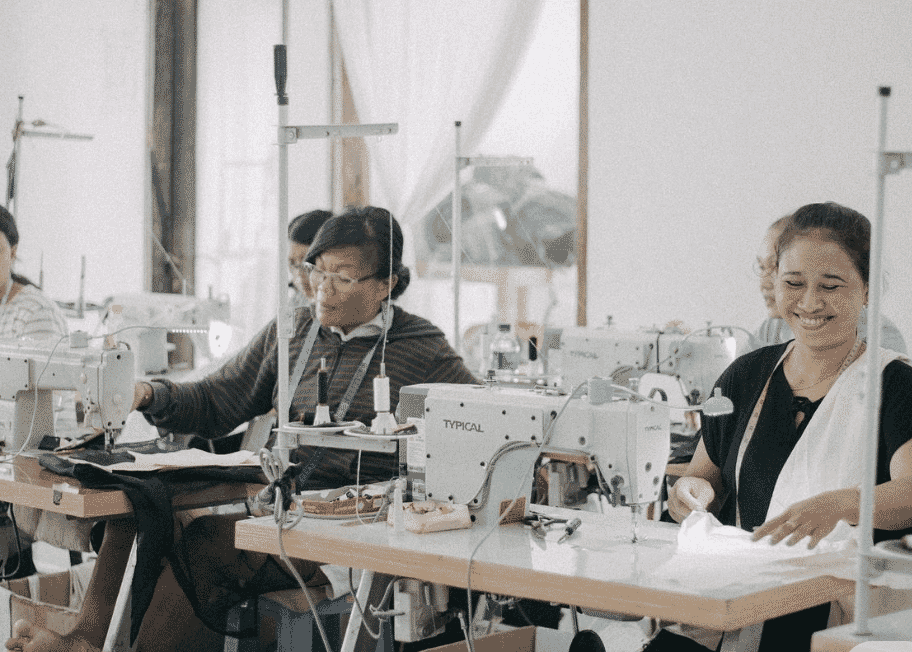
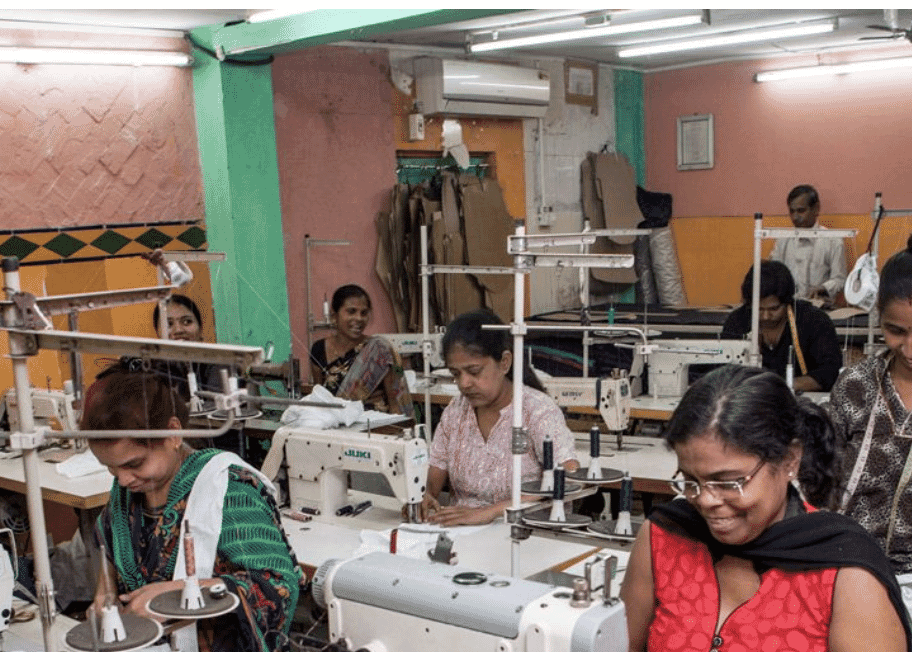
Two machinists sewing samples in a bright workroom
300
pieces per style
structured woven on stock fabric
Sampling machinists at work
  • StateKarnataka, south India
  • Best forStructured garments, outerwear, formalwear
  • Weak onVery small orders

Every brief

  • Free brief
  • Reply in 24 hours
  • From 100 pcs per style
  • No commissions
  • 80+ documented factories

What Bangalore makes best

Structure, tailoring and compliance

Bangalore is where India makes structured product for larger programs: jackets, coats, formalwear, with the paperwork buyers expect.

Best for

Programs that need audits and structure

Outerwear, formalwear and structured pieces for brands whose buyers ask for social compliance paperwork.

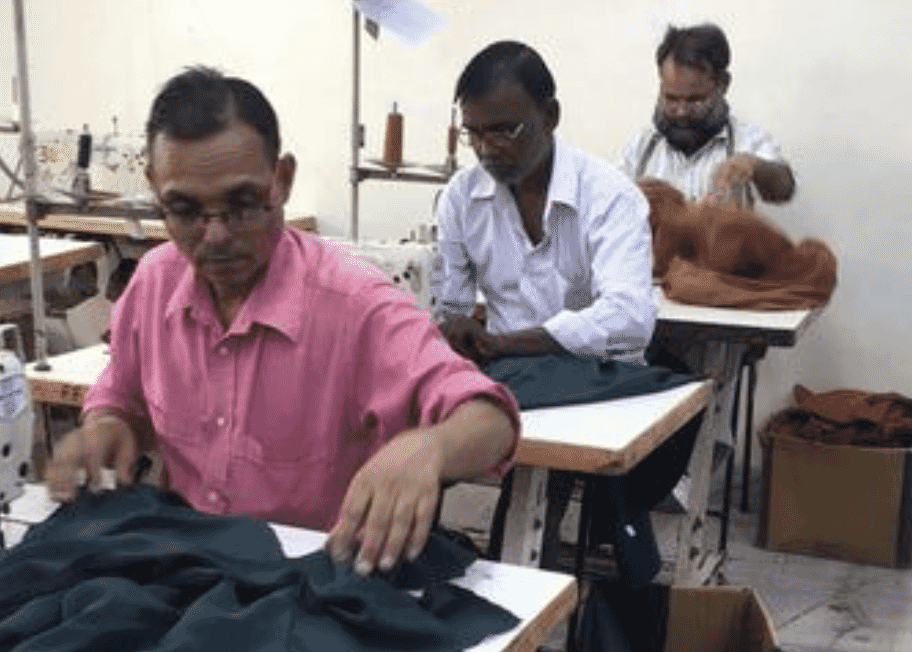
A tailoring workroom with operators at single-needle machines
Why it works here

Compliance maturity

Large-brand production has shaped this cluster, and compliance practice is mature here. The Directory notes which factory holds which certificate; we don’t list certifications we haven’t verified.

Photo: Tailoring workroom with single-needle machines
What it makes
  • Structured garments
  • Outerwear
  • Formalwear
  • Tailored pieces

Specializations describe where a cluster is strongest, not the only thing it makes.

Put this in your brief

Construction and trims list

Send the construction (lining, interlining, closures) and the trims list, and say early if a buyer requires a specific audit or certificate.

Market floor

300pieces

Structured woven on stock fabric. Very small orders are where Bangalore struggles. Market range, not a quote.

Honest limits

Where Bangalore is the wrong call

A cluster set up for larger programs is not where a 100-piece first drop gets the best attention.

Where it struggles

Very small orders

Lines here are organized for larger programs. A first drop of 100 pieces per style is usually better placed in a cluster that runs small batches every week.

What to do instead

Start small elsewhere, scale here

Place the first run where small batches are normal, then move the styles that sell to a larger program. One brief can plan both steps.

Worth knowing

Complex hardware is often imported

Zips, buckles, magnetic closures and molded components are frequently imported into India. That adds cost and a lead-time dependency, so confirm trims before you approve the sample.

If no factory in our group is built for your product, we tell you by email before any fee is discussed.

Minimums and timing

What sets the minimum in Bangalore

Structured wovens follow the fabric; outerwear follows our group’s floor for the family. These are market ranges and live group figures, not quotes; we confirm the exact figure with the factory.

Structured and woven

  • Woven shirt or formal topStock fabric: the roll length sets the floor.300Stock fabric
  • Structured piece, commissioned fabricThe mill’s own weaving minimum.1,000+Mill fabric

Outerwear

  • Jackets and coatsOur group’s usual floor for outerwear.150Group floor

Woven figures are market ranges compiled from published industry sources; the outerwear floor is our group’s. Neither is a quote from a named factory.

From brief to shipped

  1. BriefReply within 24 hours

    We read it, check the fit and quote our fee in writing before any work starts.

  2. Sampling3–5 weeks

    Longer if the fabric has to be commissioned. Approve fit, fabric and finish here.

  3. Fabric3–6 weeks

    Usually the critical path. Ask for the fabric delivery date, not only the ship date.

  4. Production4–6 weeks

    Once fabric is in house: cutting, sewing, finishing and the factory’s own checks.

  5. Shipped12–16 weeks

    From approved sample to goods shipped on a first order. Repeat orders: 8–10 weeks.

Plan around the calendar

  • Imported trims: If hardware comes from abroad, its delivery date can decide your ship date. Ask for it with the fabric date.
  • Diwali: October or November, and the date moves every year. Most factories close for 1–2 weeks, with slower output a week either side.
  • Monsoon: June to September. Humidity slows dyeing and drying, so add buffer on anything dyed or washed.

On the floor

Structure is built in stages

Bundles move station to station, then every piece is checked before it is packed.

Production photos from garment factories in India. We caption the step, not the place: a photo should never suggest a specific factory.

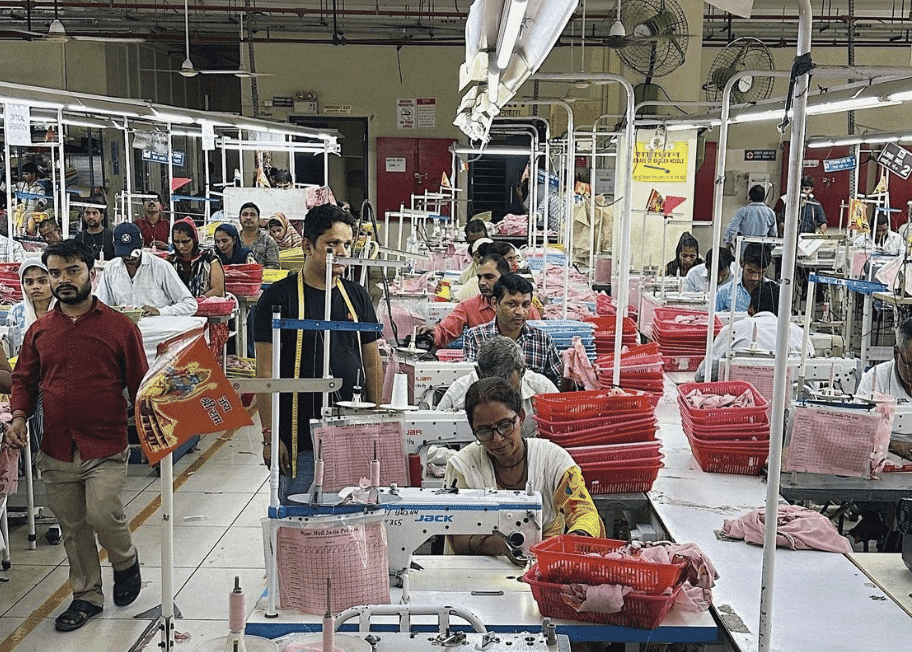
  • A busy sewing floor with bundle crates at every station
    Bundle flowSewing floor with bundle crates on every station
  • Garment workers sewing and checking cut pieces at their stations
    Sewing and checkingOperators sewing and checking cut pieces
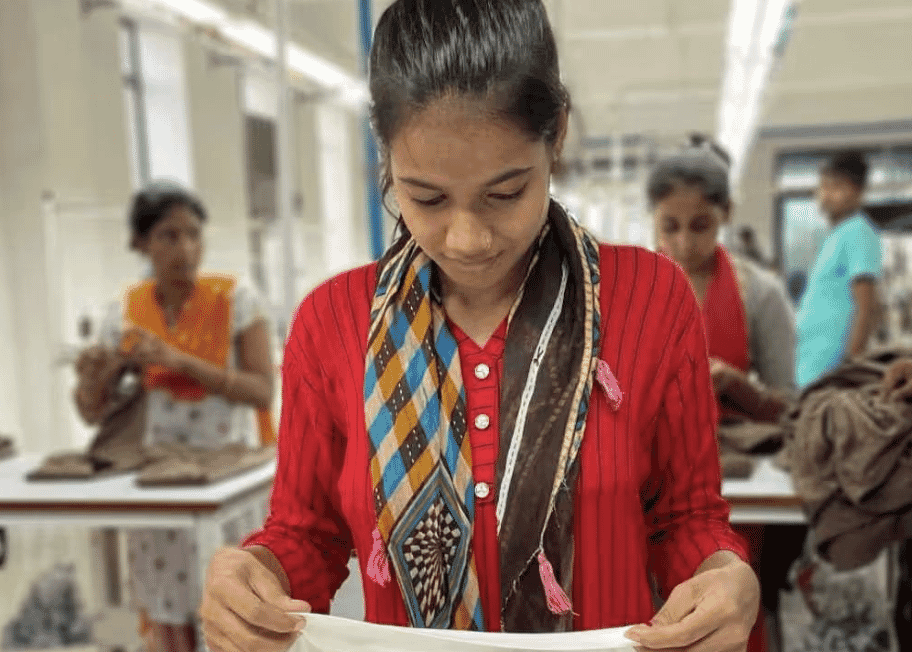
  • A worker checking a finished garment piece for defects
    Checking a pieceChecking a finished piece against the light

Questions about Bangalore

Bangalore, answered

Minimums, compliance and timing for structured product. If yours isn’t here, put it in your brief.

Ask us directly

Email oneaimapparel@gmail.com. A person on our team replies within 24 hours.

Send a free brief

Making structured garments in Bangalore

Five questions brands ask before a first run.

Structured garments, outerwear and formalwear, and large-brand production with mature compliance practice. It is the wrong cluster for very small orders.

It is not where we would place a 100-piece first drop. Outerwear in our group starts from 150 pieces per style, and structured wovens on stock fabric from about 300. For smaller first runs we place it in a cluster where small batches are normal.

Factories may hold GOTS, OEKO-TEX Standard 100, GRS, BSCI, SA8000, ISO 9001, bluesign, REACH, ISO 14001 or OCS. The Directory notes which factory holds which; we don’t list certifications we haven’t verified. Check any certificate number in the issuing database.

Plan 3–5 weeks for sampling, then 12–16 weeks from approved sample to goods shipped on a first order, and 8–10 weeks on a repeat. Imported hardware can add its own lead time.

Diwali (October or November, date moves every year) closes most factories for 1–2 weeks.

We place by product, not by city: your brief goes to the factory in our group built for it. The Directory ($39) lists 80+ documented factories with region, specialties, MOQs and certifications.

Send a brief

Structured product? Send us the construction.

One short form, read by a person on our team. If a factory in our group is built for it, we place it. If not, we say so, free.

What to put in your brief

  • Product
  • Pieces per style
  • Fabric
  • Target price
  • Ship date

Free brief · Reply within 24 hours · No commissions

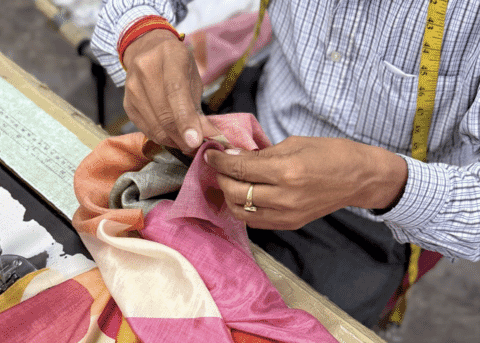
Hands checking the collar and seams of a printed woven garment
Collar check
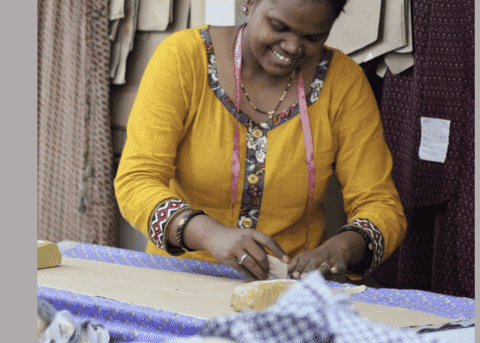
A worker hand finishing woven fabric on a cutting table
Hand finishing
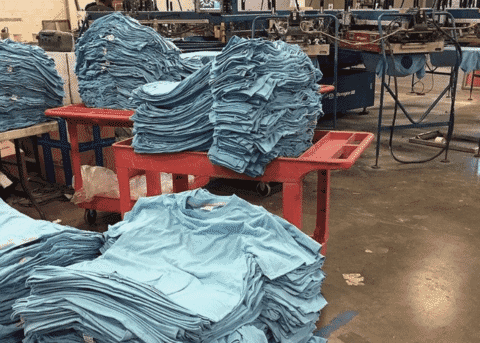
Stacks of finished light blue t-shirts on tables waiting for inspection
Ready for inspection
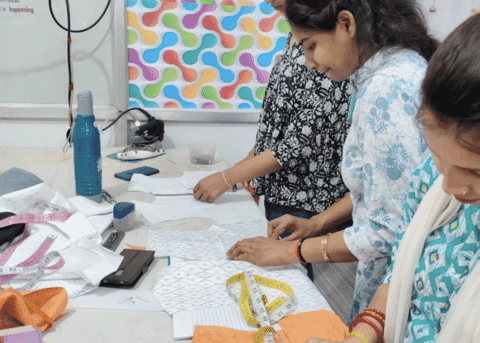
Pattern makers marking and cutting on a sampling table
Pattern cutting
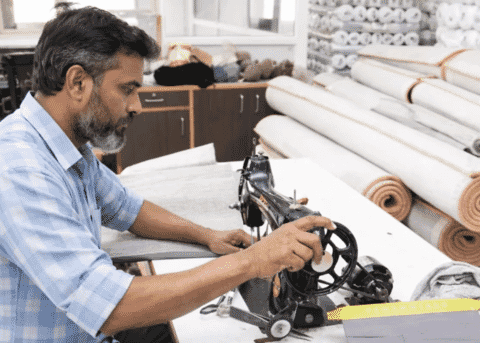
A sample maker at a hand-wheel sewing machine beside rolls of fabric
Sample room
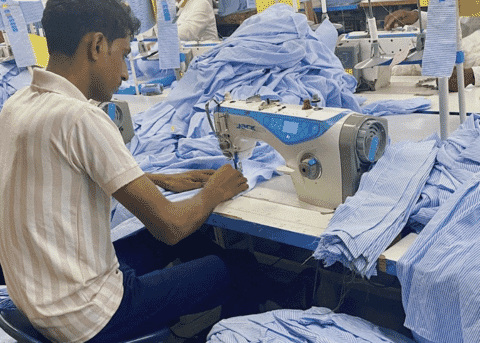
An operator sewing blue striped woven shirts on a single-needle machine
Woven shirts