Example production runs

What a first run in India looks like

Five typical runs, each with the spec, the minimum and what sets it, a cost range from our calculator and an honest timeline, calendar included.

Examples, not client orders
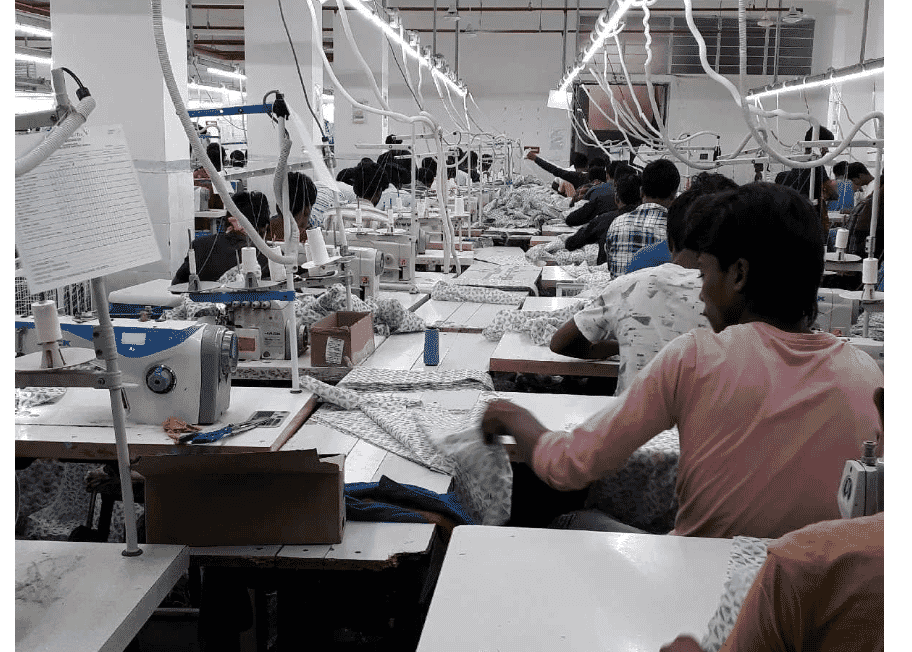
Rows of sewing stations on a large garment factory floor in India
Long sewing lines on a garment factory floor

Every brief

  • Free brief
  • Reply in 24 hours
  • From 100 pcs per style
  • No commissions
  • 80+ documented factories

Five example runs

Spec, minimum, cost and the real calendar

Each run shows what we would put in front of a factory, what sets its minimum, a cost range from our calculator and the timeline we would plan. Examples, not client orders.
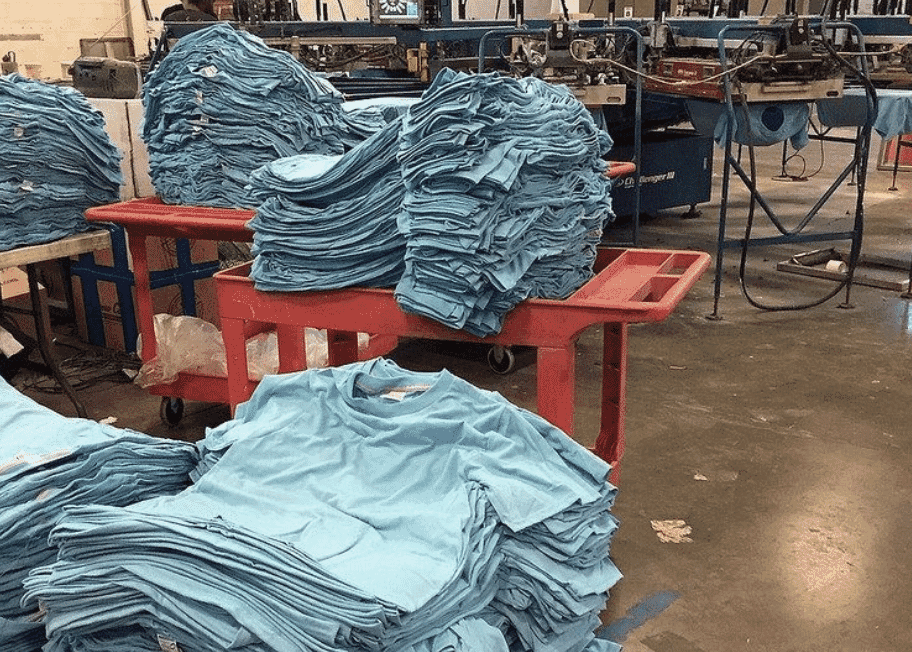
  1. Stacks of finished light blue t-shirts on tables waiting for inspection
    Stacks of finished tees waiting for inspection

    Example, not a client order

    Run 01

    200 cotton jersey tees

    T-shirts & jersey · typical cluster: Tiruppur

    Fabric
    100% combed cotton single jersey, 180 gsm, one stock color
    Build
    Set-in short sleeve, 1x1 rib neck, coverstitch hems, overlocked side seams
    Trims
    Woven main label, printed care and size label, folded and poly-bagged
    Sizes
    S to XL, one colorway

    The minimum and what sets it. 100 pieces works here: yarn, knitting and dyeing sit in the same cluster, so nothing upstream forces a bigger run. The fabric sets the floor, not the sewing line.

    Indicative cost

    Per piece, ex-factory$7.17–$12.27
    Run of 200 pieces$1,434–$2,454
    GarmentT-shirt
    Fabric tierMid
    Quantity band100–300
    ConstructionSimple
    ExtrasCustom woven labels, Care & size labels, Poly bags

    Calculator inputs as listed. Before freight and duty; not a quote.

    Timeline

    Brief inShipped

    12–16 weeks from approved sample to shipped, after 3–5 weeks of sampling: plan about 15–21 weeks from brief to shipped. A repeat order: 8–10 weeks.

    • Jersey is dyed before cutting. If dyeing falls between June and September, the monsoon can add days: build in a buffer.
    • If bulk overlaps Diwali (October or November, the date moves every year), plan for 1–2 weeks closed and slower output either side.

    What could go wrong

    • Shrinkage: ask for the fabric’s wash test before cutting, or the fit moves after the first wash.
    • Color: approve a lab dip against your reference before bulk dyeing.
    • Neck rib: a rib that is too loose or too tight is the most common tee reject; check it on the sample.
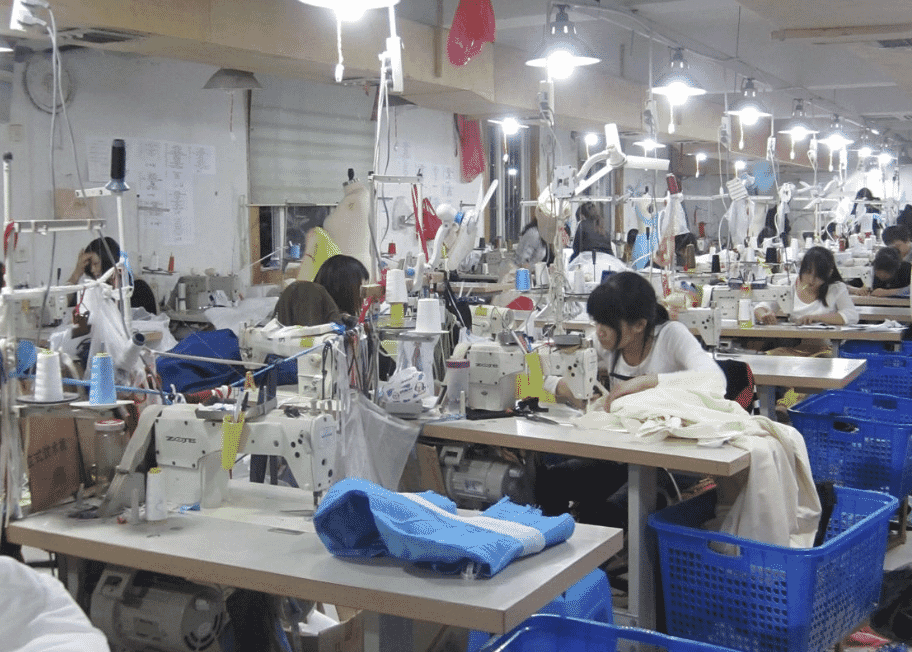
  2. A sewing floor with blue fleece pieces and bundle crates
    Sewing floor with fleece pieces in the crates

    Example, not a client order

    Run 02

    300 fleece hoodies

    Hoodies & fleece · typical cluster: Tiruppur

    Fabric
    Cotton-rich brushed-back fleece, about 320 gsm
    Build
    Double-layer hood, flat drawcord, kangaroo pocket, rib cuffs and hem
    Trims
    Woven label, care label, chest embroidery, poly-bagged
    Sizes
    S to XL, one colorway

    The minimum and what sets it. Knit polos, fleece and hoodies usually need 150–250 pieces: trims, rib and cord sourcing set that floor. 300 sits comfortably above it.

    Indicative cost

    Per piece, ex-factory$16.85–$26.85
    Run of 300 pieces$5,055–$8,055
    GarmentHoodie
    Fabric tierMid
    Quantity band300–500
    ConstructionStandard
    ExtrasCustom woven labels, Care & size labels, Poly bags, Embroidery

    Calculator inputs as listed. Before freight and duty; not a quote.

    Timeline

    Brief inShipped

    12–16 weeks from approved sample to shipped, after 3–5 weeks of sampling: plan about 15–21 weeks from brief to shipped. A repeat order: 8–10 weeks.

    • Fleece is dyed and brushed: monsoon months (June to September) slow dyeing and drying.
    • Embroidery is a separate step, often at a specialist unit: add a few days and check it on the sample.
    • Diwali (October or November, date moves yearly) closes most factories for 1–2 weeks.

    What could go wrong

    • Rib and fleece color match: ask for both in the same dye lot, or the cuffs read a shade off.
    • Weight drift: agree a gsm tolerance in writing; lighter fleece is the quiet way cost gets cut.
    • Drawcord and eyelets: if they are imported, their lead time becomes yours.
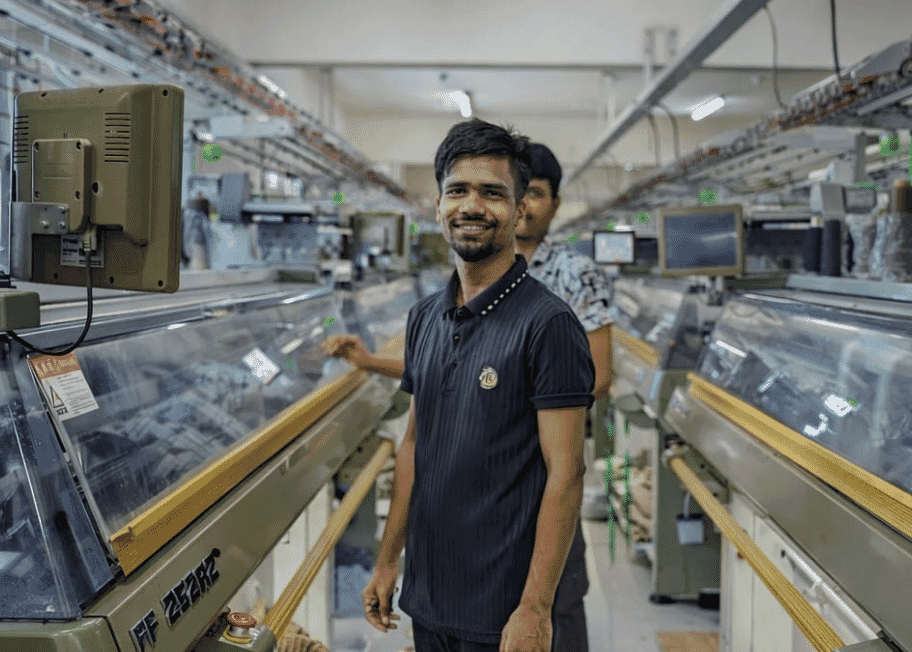
  3. Rows of computerized flat knitting machines with a technician
    Flat knitting machines on a knitwear floor

    Example, not a client order

    Run 03

    250 wool sweaters

    Knitwear & sweaters · typical cluster: Ludhiana

    Yarn
    Wool or wool blend, dyed yarn, one color
    Build
    Crew neck, flat-knitted panels, linked seams, rib trims
    Trims
    Woven label, care label, folded and poly-bagged
    Sizes
    S to XL, one colorway

    The minimum and what sets it. Wool sweaters usually start at 250–400 pieces: the yarn dye lot sets the floor. 250 is at the bottom of that range, so confirm it with the factory first.

    Indicative cost

    Per piece, ex-factory$25.53–$41.85
    Run of 250 pieces$6,383–$10,462
    GarmentSweatshirt
    Fabric tierLuxury
    Quantity band100–300
    ConstructionStandard
    ExtrasCustom woven labels, Care & size labels, Poly bags

    The calculator has no fully-fashioned knit type, so this uses its nearest match: a sweatshirt with luxury (wool) fabric. Treat it as the roughest of the five ranges.

    Calculator inputs as listed. Before freight and duty; not a quote.

    Timeline

    Brief inShipped

    12–16 weeks from approved sample to shipped, after 3–5 weeks of sampling: plan about 15–21 weeks from brief to shipped. A repeat order: 8–10 weeks.

    • Orders for winter stock queue up in summer: plan early and ask for a yarn booking date.
    • Diwali (October or November, date moves yearly) closes most factories for 1–2 weeks, right when winter goods are finishing.

    What could go wrong

    • Yarn dye lot: split lots mean shade differences between pieces. Ask for one lot for the whole run.
    • Measurements after washing: knitwear relaxes. Measure the sample after a wash, not straight off the machine.
    • Pilling: ask for the yarn’s pilling grade before you approve it.
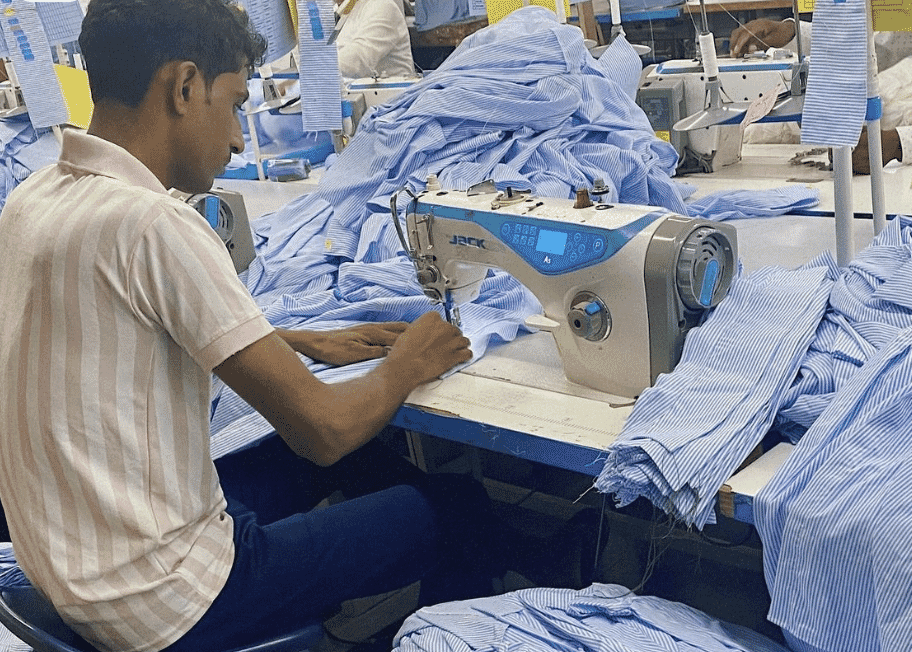
  4. An operator sewing blue striped woven shirts on a single-needle machine
    Sewing woven striped shirting

    Example, not a client order

    Run 04

    300 woven poplin shirts

    Shirts, dresses & wovens · typical cluster: Delhi NCR

    Fabric
    100% cotton poplin from stock, one color
    Build
    Long sleeve, two-piece collar with stand, 7 buttons, one chest pocket
    Trims
    Woven label, care label, hang tag, folded and poly-bagged
    Sizes
    S to XL, one colorway

    The minimum and what sets it. A woven shirt on stock fabric usually starts around 300 pieces: the fabric roll length sets it. On fabric commissioned from a mill, the minimum moves to about 1,000.

    Indicative cost

    Per piece, ex-factory$16.40–$29.40
    Run of 300 pieces$4,920–$8,820
    GarmentShirt
    Fabric tierMid
    Quantity band300–500
    ConstructionStandard
    ExtrasCustom woven labels, Care & size labels, Poly bags, Hang tags

    Calculator inputs as listed. Before freight and duty; not a quote.

    Timeline

    Brief inShipped

    12–16 weeks from approved sample to shipped, after 3–5 weeks of sampling: plan about 15–21 weeks from brief to shipped. A repeat order: 8–10 weeks.

    • Stock fabric keeps the timeline short. Commissioned fabric adds the mill’s weaving time, usually the critical path.
    • Diwali (October or November, date moves yearly) closes most factories for 1–2 weeks.

    What could go wrong

    • Stock runs out: confirm the stock fabric is reserved for your bulk the day you approve the sample.
    • Collar: the collar and stand take the most skill; judge the sample collar before anything else.
    • Buttons: agree the button type and thread color in the tech pack, or the factory picks.
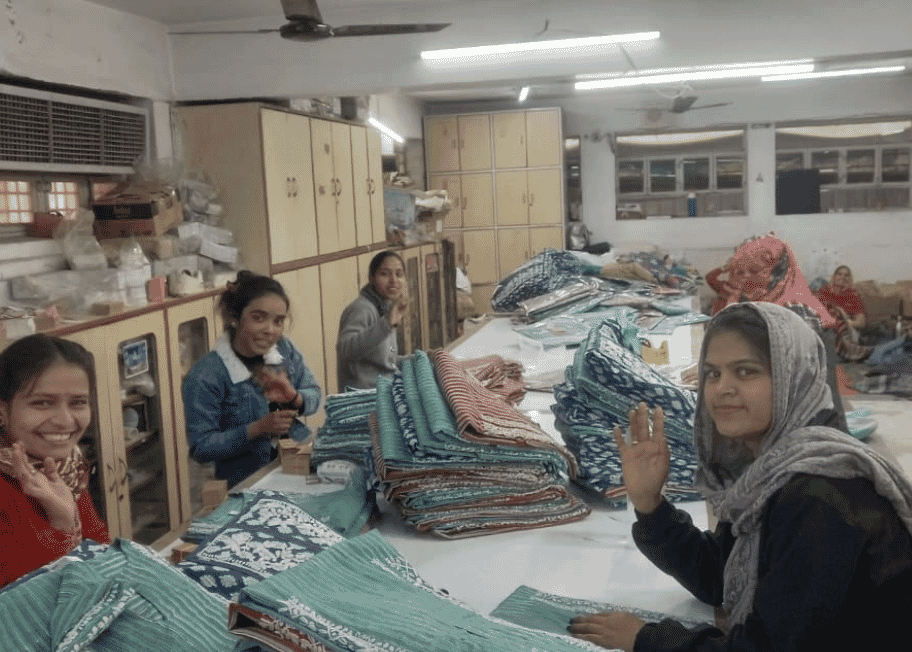
  5. Workers folding stacks of hand block printed cotton textiles
    Folding hand block printed textiles

    Example, not a client order

    Run 05

    150 hand block-printed dresses

    Embroidery & block print · typical cluster: Jaipur

    Fabric
    Cotton voile or cambric, hand block printed, one print in two colors
    Build
    Simple shift dress, gathered sleeve, side seam pockets
    Trims
    Woven label, care label, folded and poly-bagged
    Sizes
    XS to L, one colorway

    The minimum and what sets it. Block print and hand work usually start at 150–300 pieces: the batch size of the printing table sets the floor. 150 is at the bottom of that range.

    Indicative cost

    Per piece, ex-factory$22.65–$46.65
    Run of 150 pieces$3,398–$6,998
    GarmentDress
    Fabric tierMid
    Quantity band100–300
    ConstructionStandard
    ExtrasCustom woven labels, Care & size labels, Poly bags

    Hand block printing is not in the calculator. The printer quotes it by the meter; it comes on top of this range.

    Calculator inputs as listed. Before freight and duty; not a quote.

    Timeline

    Brief inShipped

    12–16 weeks from approved sample to shipped, after 3–5 weeks of sampling: plan about 15–21 weeks from brief to shipped. A repeat order: 8–10 weeks.

    • Hand-printed and naturally dyed fabric dries in the open: the monsoon (June to September) slows both.
    • Diwali (October or November, date moves yearly) closes most workshops for 1–2 weeks.

    What could go wrong

    • Hand work varies piece to piece and between printing batches. Approve a sample and agree in writing what counts as acceptable variation.
    • Repeat runs will not match a previous batch exactly. If you need identical pieces in the thousands, digital print is the better choice.
    • Color fastness: ask for a wash test on the printed fabric before cutting.

How we built these

Where the numbers come from

Nothing here is a quote or a past order. Costs come from our calculator, timelines from the lead times we plan every brief with.

Indicative cost per piece, USD

Ex-factory ranges from the calculator inputs on each card. Zero-based scale to $50.

Up to the low endLow to high endHighest range of the five

  • Costs

    From the calculator, inputs shown

    Each card lists the garment type, fabric tier, quantity band, construction and extras we entered in the cost calculator. The run total is the per-piece range times the pieces in the example. Freight and duty come on top.

  • Timelines

    The conservative figures

    Sampling 3–5 weeks, then 12–16 weeks from approved sample to shipped for a first order (8–10 on a repeat). Fabric, 3–6 weeks, is usually the critical path.

  • Calendar

    No festival dates, on purpose

    Diwali falls in October or November and moves every year; the monsoon runs June to September. We check both against your dates when we plan the real run.
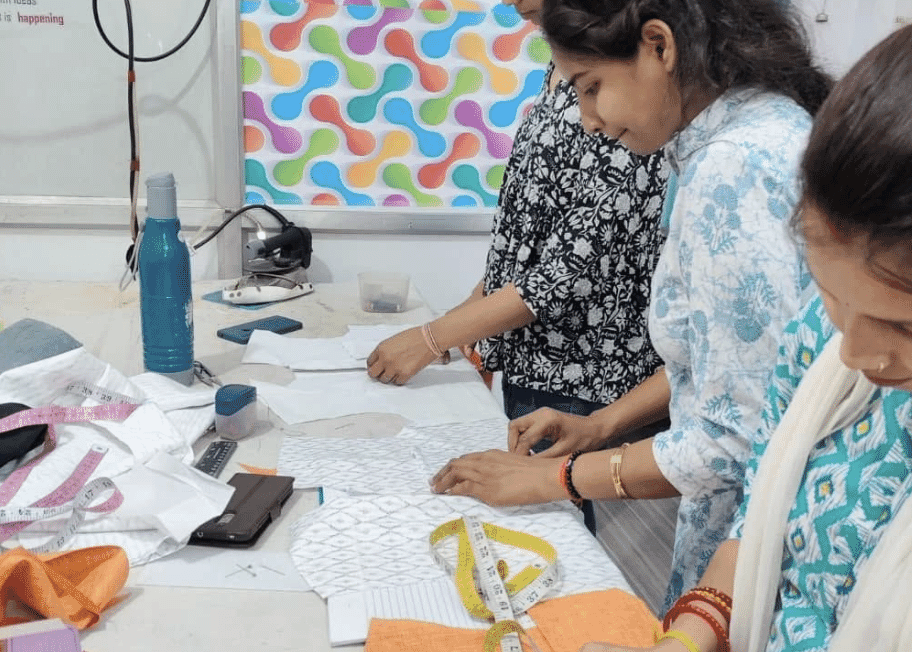
  • Pattern makers marking and cutting on a sampling table
    Marking patterns on the cutting table

About these examples

How to read an example run

Where the numbers come from, and what changes when your own brief arrives.

Ask us directly

Email oneaimapparel@gmail.com. Our team replies within 24 hours.

Send a free brief

Example production runs

Five questions, answered plainly.

No. Each run is an example, not a client order. We built them to show how minimums, timelines and costs behave for five typical products. No client names, results or photos of a client’s goods are used.

From our cost calculator, with the inputs listed on each card: garment type, fabric tier, quantity band, construction and extras. They are indicative ex-factory ranges before freight and duty, not quotes. Your factory quotes from your tech pack.

Because fabric is usually the critical path. Sampling takes 3–5 weeks, fabric 3–6 weeks and production 4–6 weeks once the fabric is in. That is why we plan a first bulk order at 12–16 weeks from approved sample to shipped, and a repeat at 8–10 weeks.

Because the date moves every year. Diwali falls in October or November and closes most factories for 1–2 weeks, with slower output a week either side. We check the year’s calendar with the factory when we plan your run. The monsoon, June to September, slows dyeing, washing and drying.

Our group starts at 100 pieces per style, but the fabric sets the real floor. Jersey tees on stock yarn can run from 100; wool sweaters usually need 250–400 because of the yarn dye lot; wovens on commissioned fabric start around 1,000. Send a brief and we confirm the minimum with the factory.

Send a free brief

Start your brief

Two questions, then we take it from there

Pick what you’re making and how many per style. The rest of the brief takes about three minutes.

Step 1 of 20 selected
What are you making? Pick all that apply. The figure is the usual minimum per style in India.
How many pieces per style? Our minimum is 100 per style. A rough number is fine.

Your brief so far

    Free · Reply within 24 hours · No commissions